The Business Amanda Scarborough Built After Softball
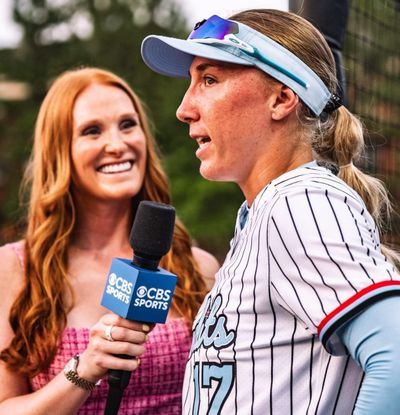
Amanda Scarborough was back at Texas A&M when professional softball reached a television milestone. She had arrived early for the broadcast, eager to get into the booth despite the Texas heat. When Beth Mowins brought them on air for the first professional softball game broadcast on network television, Scarborough felt the significance of the moment from several directions at once.
She was proud of her alma mater, proud of the AUSL and proud of ESPN. She was also working alongside someone who had called her games when she was a college athlete. The experience brought her career full circle in a way she couldn't have anticipated when she first stepped onto the field at Texas A&M.
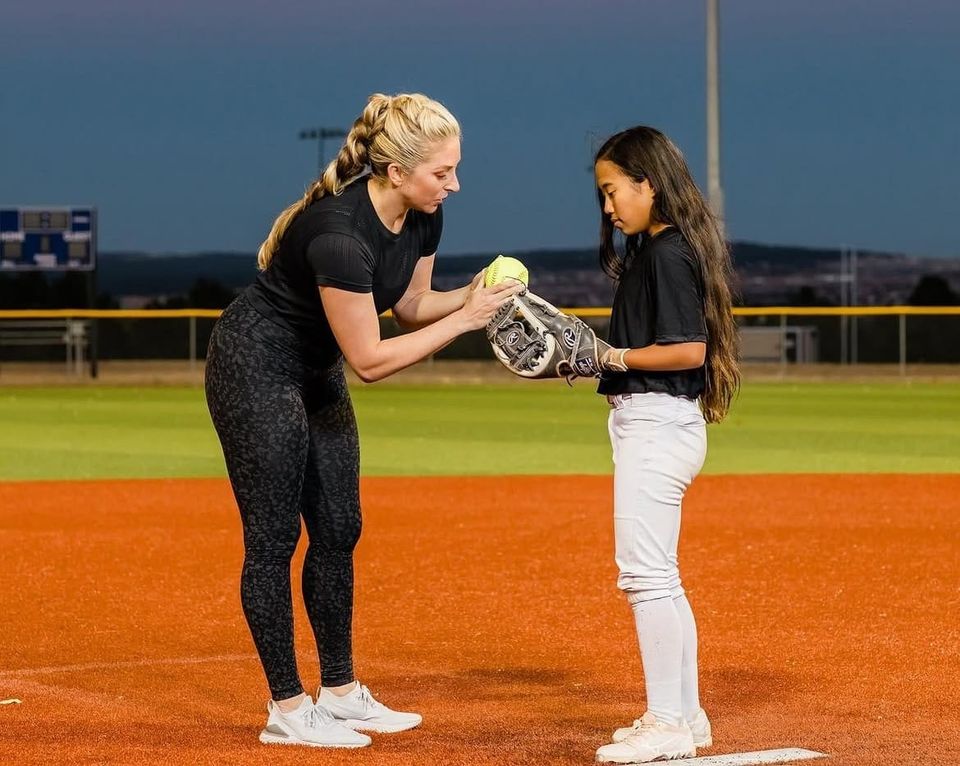
Scarborough has spent much of her professional life explaining softball to people watching from home. Away from the broadcast booth, however, she has built another business around a different audience: young pitchers trying to figure out the game for themselves.
Through Pitching Angel, Scarborough has turned years of instruction, experience and accumulated knowledge into an online coaching business. Its beginnings predate the current athlete-creator economy, and its growth reflects a larger opportunity in sports: athletes can build careers around their expertise long after they stop competing.
For Scarborough, that opportunity emerged from a playing career that ended before she was ready.
When the Playing Career Ends, the Knowledge Doesn't
Scarborough's senior season at Texas A&M was supposed to be another year of competing with the teammates who had helped take the program back to the Women's College World Series. Instead, a foot injury approximately three weeks into the season gradually brought her playing career to an end.
Initially, Scarborough believed she might return. She continued attending games and even tried pitching from her knee. When her condition failed to improve, further examination revealed that the injury was considerably more serious than originally diagnosed.
She wouldn't play again that season. Her collegiate career was over.
Rather than immediately searching for an entirely new direction, Scarborough found another way to contribute to the team she was already part of. She called her coach, gathered her teammates to explain what had happened and began transitioning into what she describes as a player-coach role.
She continued attending practices and supporting the players around her. Although she couldn't participate physically, she still had years of experience and knowledge to contribute.
That transition would become an early example of something Scarborough has repeated throughout her career: finding a different way to use the skills she already possesses.
In 2009, the year after she finished playing, she called her first ESPN softball game, a super regional between Missouri and UCLA. The experience brought back the uncertainty of her first college practice. She was meeting producers and directors, learning an unfamiliar professional environment and discovering how much she still needed to learn.
Yet the expertise she had developed as a player gave her a starting point. Broadcasting offered a way to apply that knowledge to a different part of the sport, while coaching offered another.
Eventually, Scarborough would build a business around the latter.

From Pitching Lessons to a Scalable Business
Scarborough began sharing pitching instruction online around 2010, long before short-form instructional videos became a standard part of an athlete's social media presence. She posted drills, wrote blogs, built an email list and continued giving lessons and clinics in person.
For years, those activities operated largely under her own name. In November 2019, she launched Pitching Angel as a separate platform dedicated specifically to pitchers. Her own announcement at the time described it as a place for instruction, encouragement and a community of athletes navigating the same demanding position.
The timing turned out to be significant. A few months later, COVID-19 interrupted the softball season and Scarborough's usual travel schedule. With in-person work disrupted, she began organizing the knowledge she had accumulated over years of coaching into structured online courses.
She developed training progressions for pitching foundations, accuracy and velocity, transforming material she had previously delivered in person into something athletes could access independently.
That shift changed the economics of her coaching business.
An individual pitching lesson requires Scarborough to be present for every athlete she teaches. An online course allows her to organize instruction once and make it available to pitchers in different locations and on different schedules. Her current course offerings include a six-week foundational program and a bundled 16-week training progression.
The distinction is important for athletes considering how to turn their playing experience into a career. Scarborough didn't need to invent an entirely new skill to build Pitching Angel. She needed to find a way to package, communicate and distribute the expertise she already had.
Her broadcasting career operates on a similar principle. On ESPN, she translates the complexities of softball for viewers. Through Pitching Angel, she translates the mechanics and challenges of pitching for young athletes and their families. Both careers draw from the same playing experience, but serve different audiences.
A Business Built Around a Problem She Understands
Scarborough could have built Pitching Angel exclusively around mechanical instruction. Instead, she chose a name rooted in something her mother used to tell her when she was a young pitcher struggling with pressure.
“Your angels are always with you.”
The message stayed with Scarborough because she remembers how isolating pitching could feel. She wasn't consistently the No. 1 pitcher on her youth teams, and she considered quitting more than once when her effort wasn't producing the results she wanted.
Now, she wants Pitching Angel to provide the kind of support she needed during those years.
“I want them to not feel alone,” Scarborough said. “I want them to feel like they have a place to turn to, a video to watch, someone to look to.”
That mission gives the business a clearer purpose than simply selling pitching instruction. Its audience includes young athletes learning mechanics, but also pitchers trying to decide whether they want to continue playing and parents who aren't always sure how to support them.
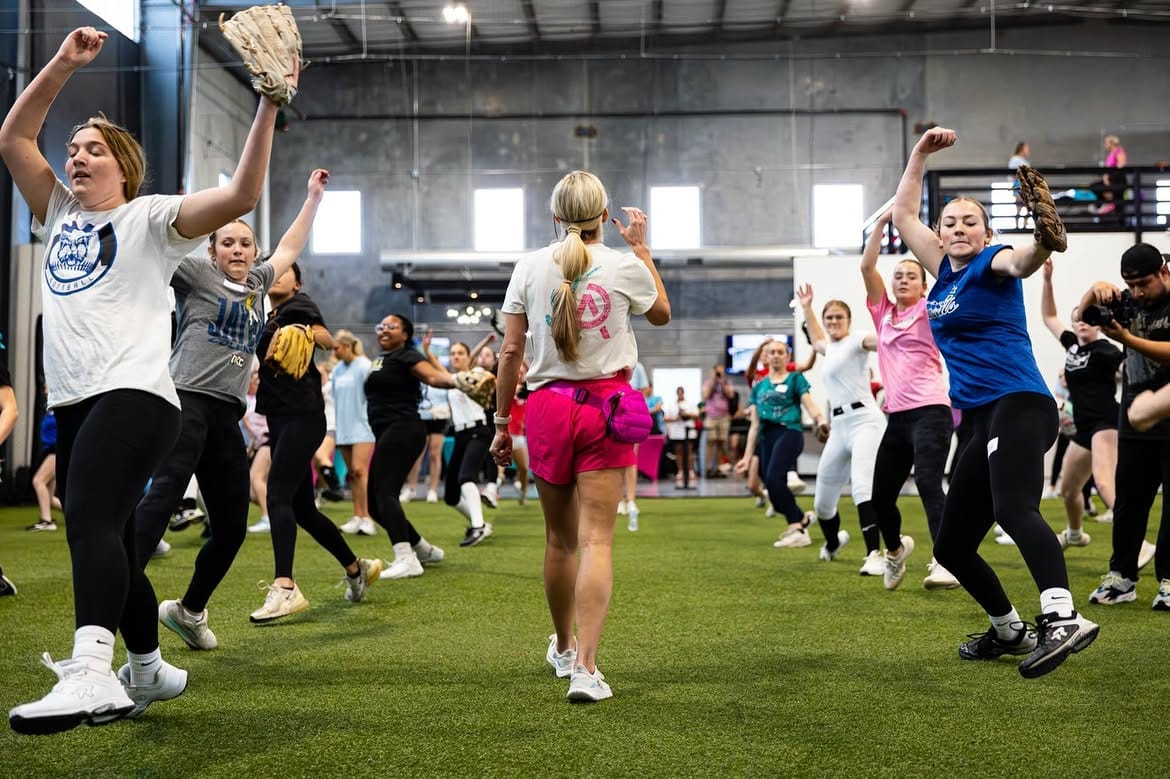
The company's offerings reflect that broader relationship. Alongside online courses, Pitching Angel provides instructional resources for parents and coaches, while its in-person Pitching Angel Experience combines technical training with preparation for the pressures of competition.
Scarborough is selling access to her expertise, but she's also building a business around a problem she experienced personally. Her playing career gives her credibility; her understanding of the young pitcher gives the business its direction.
The Work Behind the Opportunity
Building a business around something you love doesn't eliminate the difficult parts of running it.
During her conversation on Out of Left Field, Scarborough admitted she was questioning whether to hold her annual three-day Pitching Angel Experience. The event takes place between Christmas and New Year's and requires considerable preparation. She wanted to deliver something meaningful for the athletes attending, but she was also confronting the workload and perfectionism that came with producing it.
The situation reminded her of being a seventh grader crying in her garage because pitching had become so difficult.
The difference was that she was now responsible for creating the experience that might help another young pitcher through a similar moment.
Scarborough described returning to the reasons she had started the event, particularly hearing from girls who were looking forward to attending. Those reminders helped her reconsider whether the work involved was worth continuing.
It's a revealing part of the athlete-to-entrepreneur transition. Playing experience can provide the foundation for a business, but it doesn't automatically make someone a business operator. Developing courses, producing events, maintaining an audience and continually finding ways to serve customers introduce responsibilities that extend well beyond the original athletic expertise.
Scarborough's business has grown because she has continued learning how to do those things, often while maintaining a substantial broadcasting schedule.
The Next Generation Can See More Than One Future
Scarborough's career has unfolded alongside a significant change in the professional opportunities available to softball players.
During her playing years, a long-term career in the sport wasn't necessarily an obvious path. Today, young athletes can watch college softball, follow their favorite players into the AUSL and see former athletes working as broadcasters, coaches, creators and business owners.
Scarborough has participated in that evolution from several positions. ESPN confirms that she began broadcasting in 2009 and has been part of its Women's College World Series coverage since 2015. Her Pitching Angel business has also allowed her to reach pitchers beyond the geographic limits of traditional private instruction.
Her career illustrates an important distinction in the growth of women's sports. More professional roster spots matter, but a sustainable sports industry also creates opportunities for people whose playing careers have ended.
There are businesses to build around coaching, education, media, events and the communities that form around the sport. Former athletes possess valuable knowledge of those markets because they have spent years participating in them.
Scarborough didn't have a plan for all of those opportunities when her senior season ended. She began by finding a way to remain involved with her team, then followed her expertise into broadcasting and instruction. Over time, the lessons she had once delivered individually became the foundation of a business capable of reaching athletes far beyond the field where she started.
The playing career ended. The knowledge accumulated during it continued creating value.
And now, when a young pitcher wonders whether all the work is worth it, Scarborough has built an entire business around helping her find a reason to keep going.