Is Ken Griffey Jr. Baseball’s Most Marketable Player Ever?
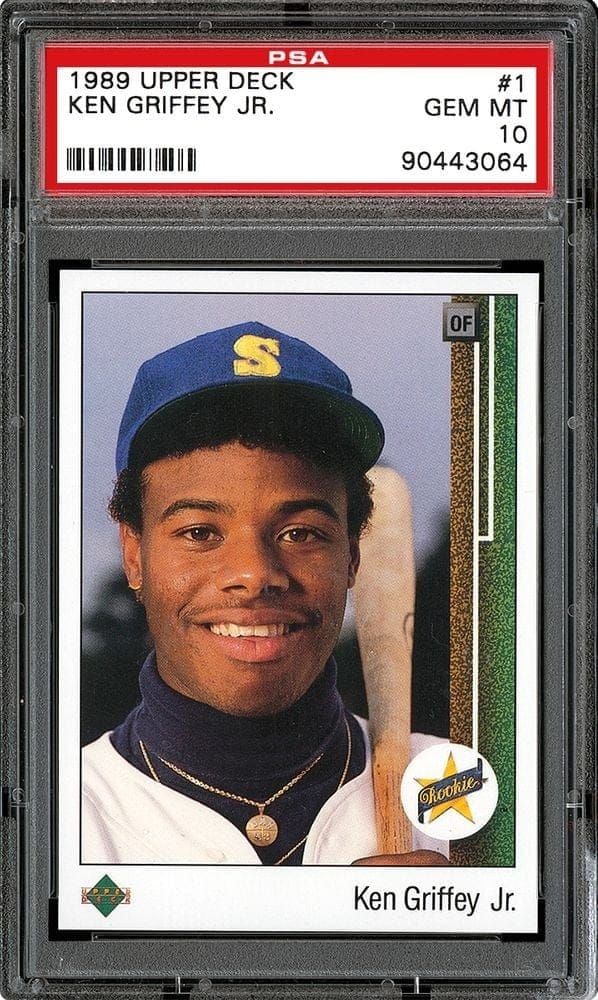
There may not be a piece of cardboard that better explains the lasting appeal of Ken Griffey Jr. than the first card in the 1989 Upper Deck baseball set.
It isn’t because the card is particularly rare. In fact, the exact opposite is true. More than 200,000 copies of the 1989 Upper Deck Ken Griffey Jr. rookie card have now been graded across PSA, Beckett, SGC and CGC. According to GemRate's Universal Population Report, the card recently became the first sports card ever to cross that threshold.
In a hobby increasingly obsessed with scarcity—serial numbers, short prints, one-of-ones and increasingly elaborate ways of manufacturing rarity—that is what makes the Griffey card so fascinating. Everybody knows it exists. Thousands upon thousands of collectors already own one, yet people continue buying them, grading them and chasing better examples.
That milestone got me thinking about something bigger than the card itself: Is Ken Griffey Jr. the most marketable player baseball has ever produced?
There are obviously other names that belong in the conversation. Babe Ruth became one of America's first celebrity athletes. Mickey Mantle occupies a place in the sports-card hobby that may never be replicated. Derek Jeter spent two decades as the face of the Yankees, while Shohei Ohtani is currently expanding what global baseball stardom can look like.
Griffey's case, though, is different. Every time another piece of sports culture has become collectible, fashionable or commercially valuable, he seems to find his way back into the middle of it.
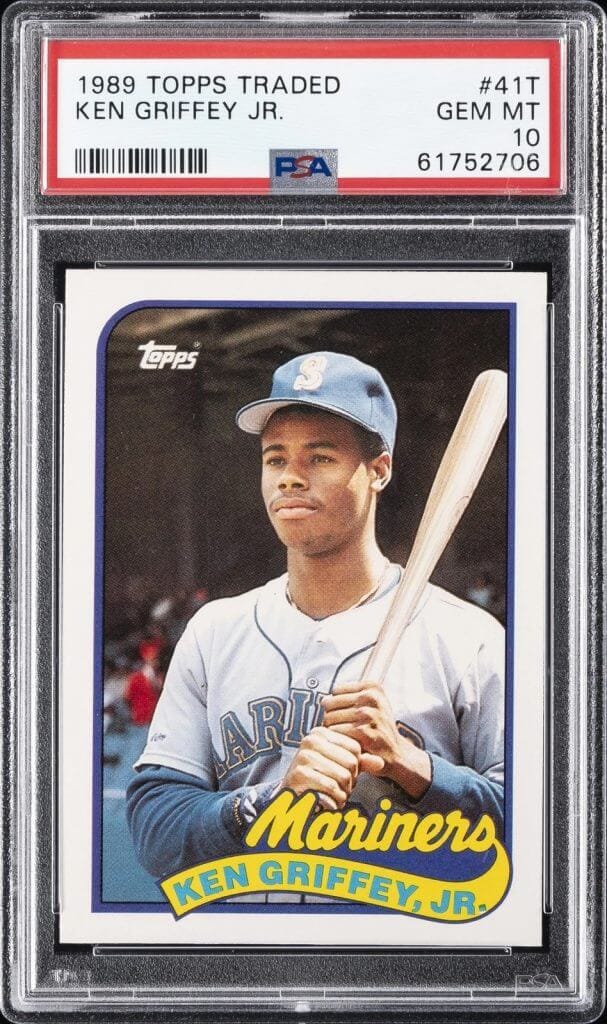
The Perfect Card at the Perfect Time
Upper Deck entered the baseball-card market in 1989 with the intention of changing what a baseball card could be.
The company introduced glossy white stock, higher-quality photography, pictures on both sides, tamper-resistant foil packaging and holograms designed to make counterfeiting more difficult. Packs cost around a dollar, significantly more than the traditional products kids had been opening for years, and baseball cards were beginning to look less like disposable pieces of cardboard and more like premium collectibles.
Then Upper Deck made Ken Griffey Jr. card No. 1.
He hadn't even played a Major League game when the set was produced. Griffey was still a 19-year-old prospect, but Upper Deck placed his smiling face at the front of its inaugural checklist and attached its new brand to one of the most anticipated young players in baseball.
The timing couldn't have been much better. Griffey debuted in April, started producing highlights almost immediately and quickly became the type of player capable of justifying all the attention surrounding him. The card and the player essentially grew in popularity together.
That is an important distinction when looking back at the card boom of the late 1980s and early 1990s. Griffey did not create that market by himself. Baseball cards were already exploding, companies were producing enormous quantities of product, and an entire generation of kids was beginning to think of cards as something worth saving.
Griffey simply became the perfect face for what the hobby was becoming.
When Baseball Found Cool Again
The statistics eventually became historic: 630 home runs, 10 Gold Gloves, 13 All-Star selections and a Hall of Fame career that made Griffey one of the greatest center fielders the game has ever seen.
The numbers, though, have never completely explained his marketability.
It was the swing, maybe the most aesthetically pleasing left-handed swing baseball has ever seen. It was the smile, the home-run robberies and the way he seemed to glide through center field. It was the earring, the hat turned backward and the youthful energy that made him feel noticeably different from the traditional baseball superstar.
Most importantly, very little of it felt manufactured.
Griffey has explained that wearing his hat backward began when he was a kid wearing his father's hats. The bill would fall over his eyes, so he turned the hat around. Something that simple eventually became part of his identity, and by the 1990s, it had also become part of the visual language of baseball culture.
Today we constantly talk about athletes building brands, creating content and developing audiences away from the field. Griffey built one of baseball's most recognizable brands before athletes ever really talked that way.
He largely did it by being himself.
Baseball Gets Its Signature Sneaker
Nike understood exactly what it had.
In 1996, Griffey received the Air Griffey Max 1, a shoe that became connected to the Swingman identity and established something incredibly rare for a baseball player: a signature sneaker with cultural relevance beyond baseball.
Basketball had Michael Jordan and Jumpman. Baseball suddenly had Junior and Swingman.
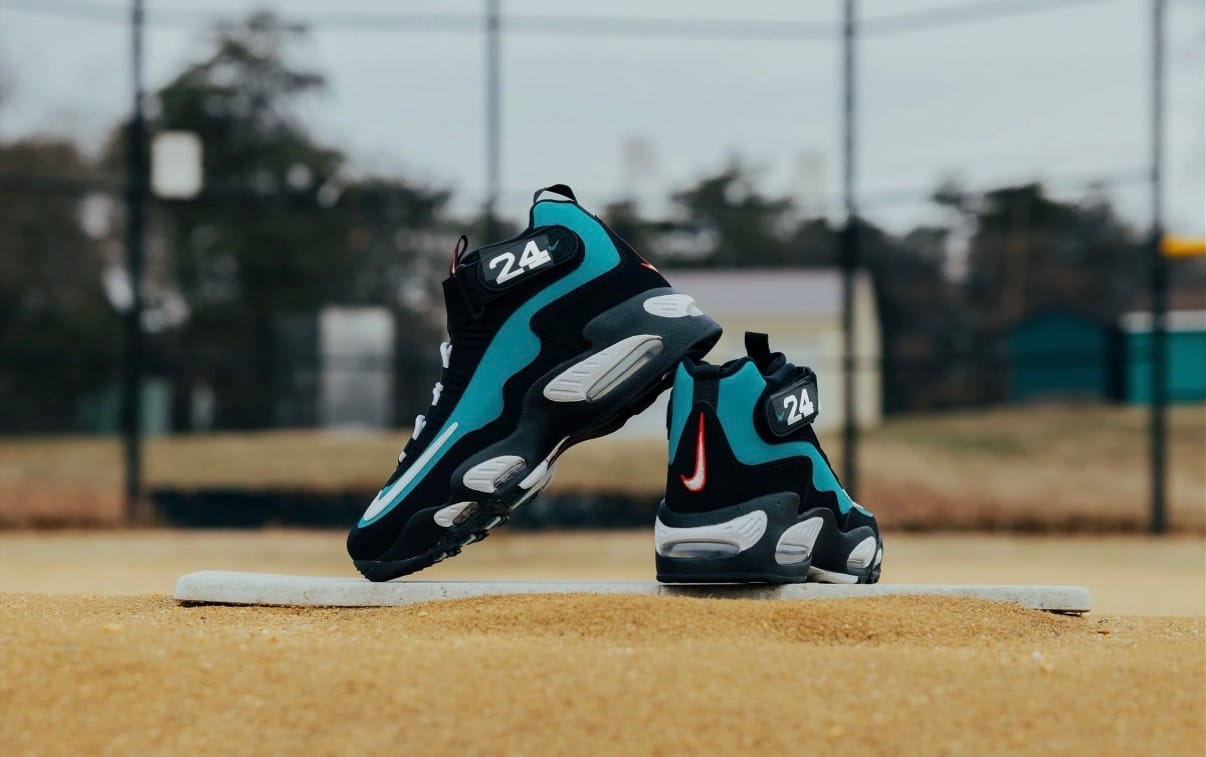
Nike's famous “Griffey in '96” campaign jokingly ran him for president, turning the most exciting baseball player in America into something closer to a pop-culture figure. At his commercial peak, Griffey had endorsement relationships with companies including Nike, Pepsi, Wheaties, Nintendo and Gargoyles.
What makes the sneaker especially interesting is that it didn't disappear when his playing career ended. Nike has continued bringing Griffey models back years later, selling the same silhouette to adults who remembered wanting them as kids and to younger consumers who may have never watched him play.
For a baseball player, that kind of crossover is remarkably uncommon.
Nintendo, Junior and the Childhood Economy
For a certain generation of kids, Ken Griffey Jr. wasn't only someone they watched play baseball.
He was a video game.
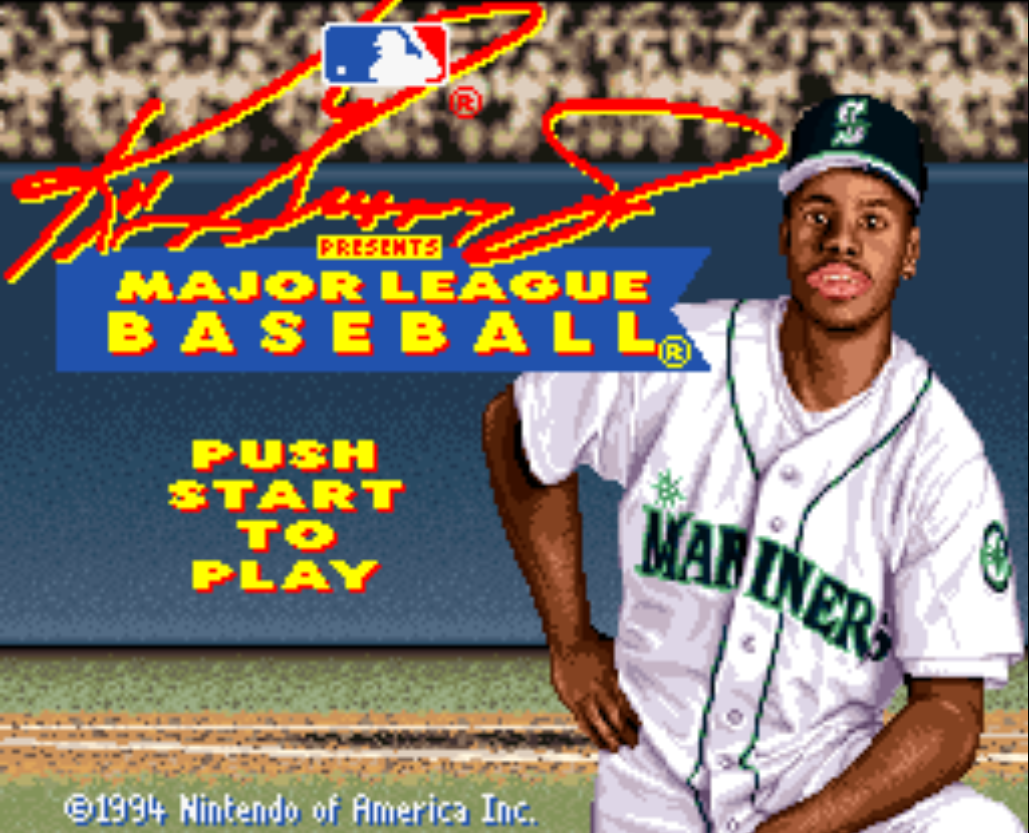
Ken Griffey Jr. Presents Major League Baseball arrived on Super Nintendo in the 1990s, and Griffey became the player whose identity anchored an entire baseball-gaming experience. Nintendo eventually signed him to a broader multi-year relationship as both a spokesman and adviser on game development.
When you begin stacking these products next to one another, his marketability becomes easier to understand. A kid could open an Upper Deck pack looking for Griffey, put on Griffey sneakers, play a Griffey Nintendo game and then head outside wearing a Mariners hat backward while trying to imitate his swing.
Thirty years later, those kids have disposable income.
That is where nostalgia becomes one of the most powerful forces in the collectibles business. People aren't always buying the object itself. Often they are buying access to a feeling, a memory or a version of themselves that existed when that object first meant something.
Even the Common Cards Became Icons
Maybe the best example isn't his rookie card at all.
It might be the 1995 Pinnacle #128.
Griffey is sitting in front of his locker with his hat backward, eyes wide and an enormous bubble of gum covering half his face. It is not his most important card financially, nor is it particularly scarce, but very few baseball cards capture a player's personality as naturally.
That's why the image continues to work.
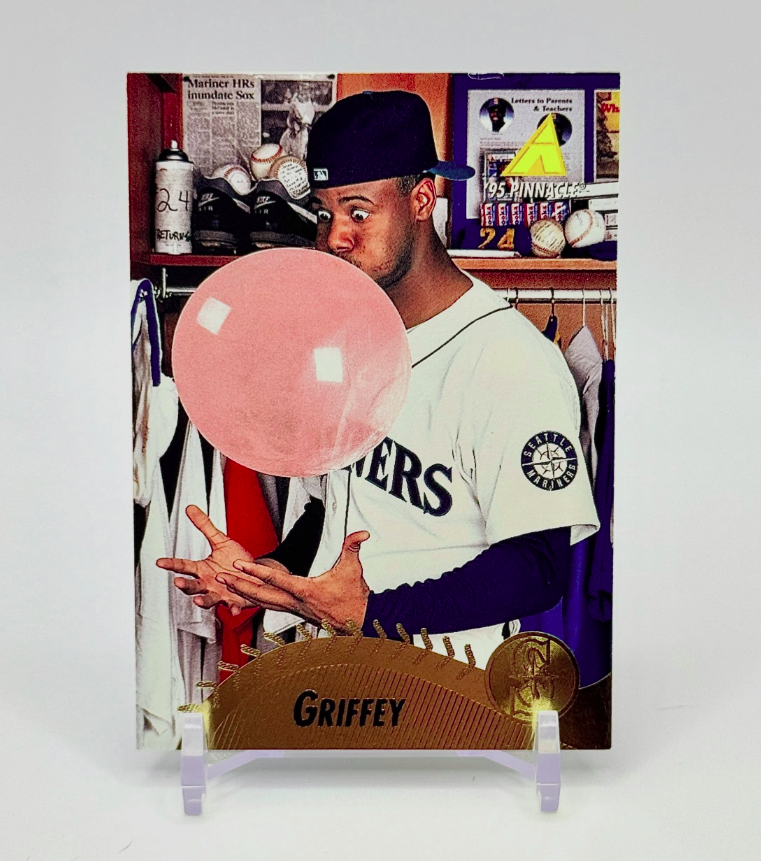
As someone who spent years around the sports-card business, that distinction interests me because collectors don't always behave rationally around scarcity or traditional investment value. Sometimes an image simply connects, and once enough people associate it with a player, era or childhood memory, it develops a completely different kind of value.
Baseballism has since built licensed Griffey apparel around that nostalgia economy and has even paired clothing with limited-edition Griffey cards through its “Cloth & Cardboard” concept. It is a pretty remarkable evolution: a baseball card becomes an iconic image, the image becomes apparel, and eventually the apparel becomes connected to another collectible.
The Kid Becomes the Photographer
There is an almost perfect final chapter to this timeline.
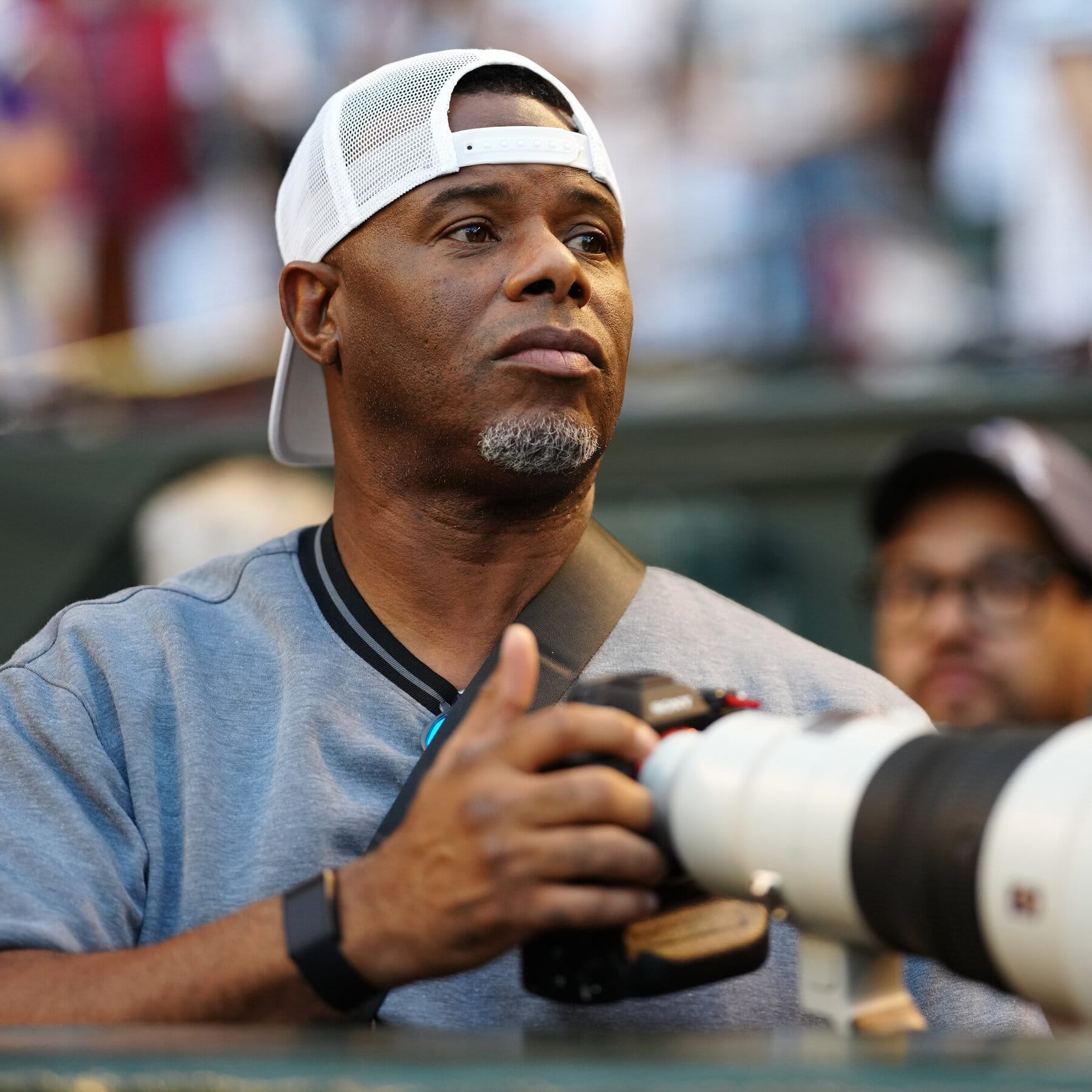
Ken Griffey Jr. is now taking baseball-card photographs.
After his playing career, Griffey developed a serious interest in photography and began shooting major sporting events. Eventually Topps brought young Major League players together for a baseball-card shoot and surprised them by putting Griffey behind the camera.
A player whose face helped define an era of baseball cards was suddenly standing on the other side of the lens, helping create cards for the next generation.
It is a small moment, but it says a lot about the longevity of his relationship with the hobby. He isn't simply a retired player being inserted into another nostalgia set. More than 35 years after Upper Deck placed him at the beginning of its first checklist, Griffey remains connected to the culture surrounding baseball cards themselves.
Marketability Before the Personal Brand
Today's collectible business is significantly more intentional about connecting athletes directly with collectors. Fanatics and Topps have built partnerships that can include autographs, appearances, marketing content and social-media participation, with individual player agreements increasingly expanding beyond simply giving a card company permission to put someone's photograph on cardboard.
That strategy makes sense, and it is clearly helping drive engagement in the modern hobby. It also makes Griffey's rise even more interesting.
There was no Instagram account showing Junior opening a box of baseball cards. There was no TikTok video of him reacting to a one-of-one, no live breaking stream and no carefully orchestrated content strategy designed to turn the player into an extension of the collectible.
Fans largely discovered Griffey through baseball games, SportsCenter highlights, magazines and commercials. His cards became popular because people loved watching him play. Nike could build around him because kids thought he was cool. Nintendo could put his name on a video game because an entire generation wanted to be him.
The business followed the connection, rather than creating it.
That distinction is worth remembering in an era where leagues, brands and athletes are constantly trying to engineer the next viral moment.
So, Is Griffey Baseball's Most Marketable Player Ever?
There probably isn't an objective way to answer that question.
Babe Ruth belongs in his own category in the history of athlete celebrity. Mickey Mantle remains one of the defining names of traditional sports-card collecting. Derek Jeter represents another version of baseball marketability entirely, while Shohei Ohtani is building an international commercial footprint the sport has rarely seen.
Griffey's case is that few players have crossed so naturally between performance, personality and consumer culture.
More than three decades after Upper Deck made him card No. 1, his rookie card has become the first sports card ever graded more than 200,000 times. His sneakers still return to shelves. His old cards become apparel. His video games remain nostalgic artifacts, and now he is behind the camera helping photograph players for the same hobby that helped make him famous.
Maybe that is the simplest way to understand Junior's marketability.
Baseball has produced plenty of icons.
Very few have remained this collectible.