Haylie McCleney Hanson Is Building the Future She Once Played For

The Olympic silver medalist walked away from softball while she could still compete at the highest level. Now, through broadcasting and her work with the Athletes Unlimited Softball League, she's helping build the opportunities the next generation will inherit.
Haylie McCleney Hanson spent much of her life trying to reach the biggest stage in softball. Today, she spends her working hours trying to make that stage bigger.
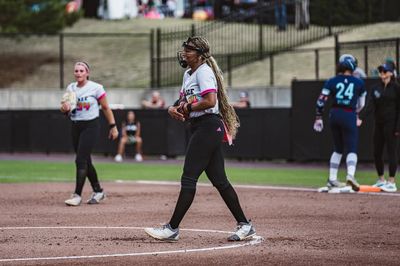
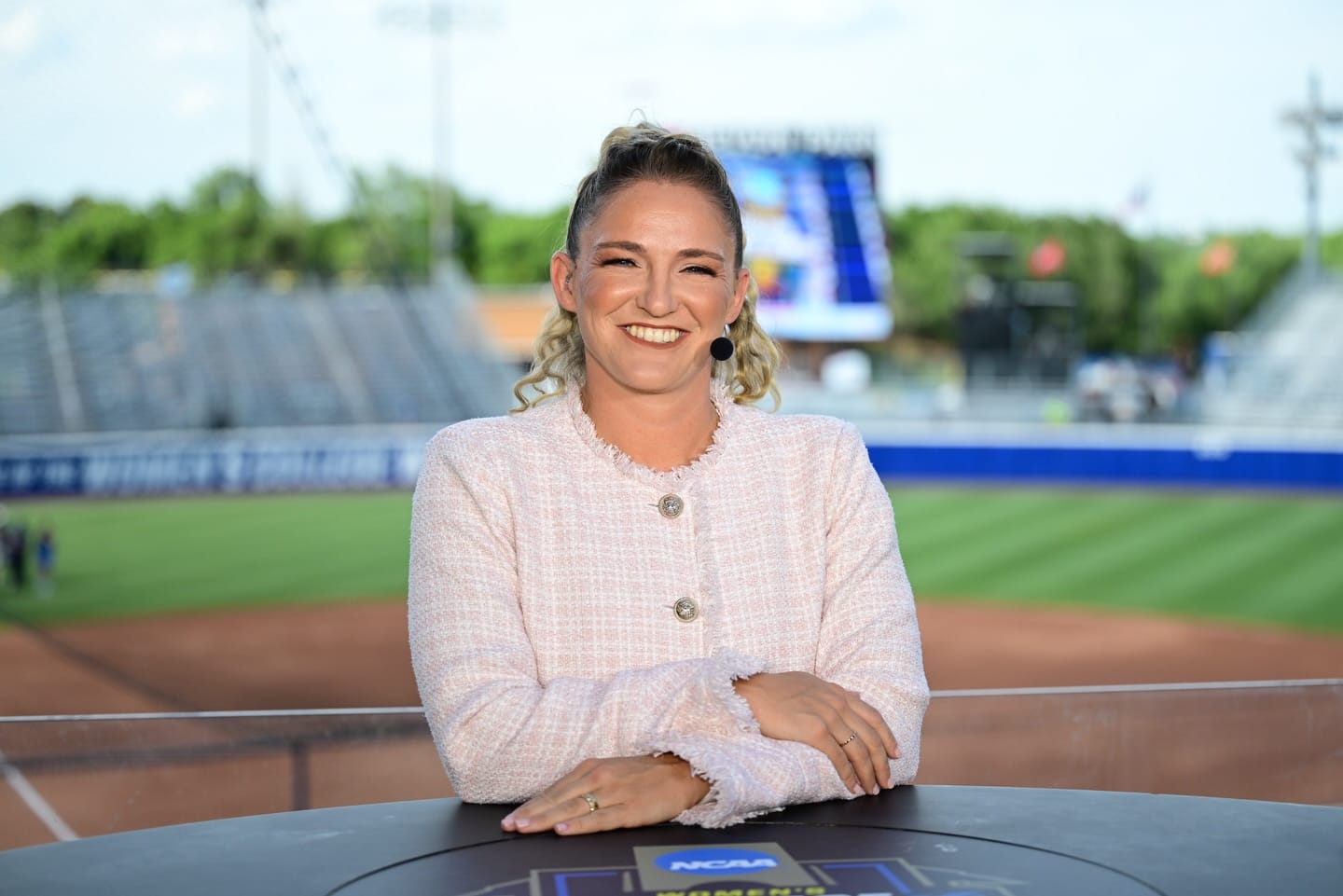
The former Alabama All-American and Olympic silver medalist retired from professional competition in 2024, but her relationship with the sport has only expanded. As a member of the Athletes Unlimited Softball League's partnerships team, she works to bring brands into professional softball. As a broadcaster, she helps introduce audiences to the players and stories shaping its future.
The transition has given her a different kind of responsibility. For years, McCleney Hanson helped build softball's audience through her performance. Now, she is working on the commercial relationships and visibility that could allow future players to build longer, more sustainable careers in the sport.
“I don't think I have an offseason necessarily,” she said on Out of Left Field. “I think growing the game of softball is 24/7.”
It's a remarkable career shift for someone who, not long ago, was preparing to compete against the best players in the world. But perhaps the most interesting part of McCleney Hanson's story is that she didn't wait until softball was finished with her to figure out what came next.
She made that decision herself.
Knowing When the Work Changes
Professional athletes rarely get to choose a perfect ending. Careers are often decided by injuries, roster decisions, declining performance or the simple reality that younger players are coming.
McCleney Hanson's retirement wasn't the result of any of those circumstances.
By 2023, she had begun exploring opportunities beyond playing, including work with the organization that would become the AUSL and her first broadcasting assignments. Those experiences introduced her to another side of the sport, one that increasingly captured her attention.
She was still capable of competing. What had changed was her relationship with the preparation required to do it.
“I’m enjoying talking about softball more than I’m enjoying preparing to go compete,” she recalled realizing.
For an athlete whose career had been built on discipline, that distinction mattered.
McCleney Hanson didn't doubt that she could still step onto the field and perform. She questioned whether she wanted to continue investing everything necessary to compete at the standard she expected of herself.
“My heart wasn't in it to continue to do the things that I needed to do off of the field to feel like I could compete genuinely at that high of a level,” she said.
Rather than continue because she could, she stepped away because she recognized that her ambitions had changed.
She still misses game days. She doesn't miss the early-morning workouts, the physical maintenance or the demands of preparing her body for another professional season.
And the opportunities waiting beyond competition gave her something many athletes struggle to find in retirement: a compelling reason to look forward.
From Creating Value on the Field to Building It Off the Field
There is a fundamental difference between being part of a sports league's product and helping build the business behind it.
McCleney Hanson has experienced both.
As an athlete, her value was tied to performance, visibility and the audience's desire to watch elite competition. Today, her work in partnerships requires her to communicate that value to companies deciding where to invest their marketing dollars.
She spends her days speaking with brands about sponsorship opportunities and the commercial potential of professional softball.
It's a role that requires more than enthusiasm for the sport. Partnerships are built around audiences, consumer relationships, brand alignment and the ability to demonstrate why an investment makes business sense.
McCleney Hanson brings something particularly valuable to those conversations: firsthand experience with the product she is selling.
She understands the players, the competitive environment and the culture surrounding softball because she spent years helping shape them.
Her playing career also changed how she approaches rejection.
As a young athlete, McCleney Hanson struggled with perfectionism. Failure felt personal, and she admits that learning to accept it took much of her career.
Now, a disappointing sales meeting carries a different weight.
“If you reject me in a sales meeting, I'm like, I struck out at the Olympics,” she said. “You can't hurt me.”
It's a humorous comparison, but it reveals something meaningful about the skills athletes carry into business.
High-level competition repeatedly exposes athletes to pressure, public evaluation and outcomes they cannot fully control. Those experiences can become valuable preparation for professional environments where persistence and rejection are part of the work.
McCleney Hanson isn't simply transferring her name recognition into a new role. She's applying lessons from an elite athletic career to a different kind of competition.
And this time, the outcome she's working toward is bigger than her own performance.
Softball's Next Challenge Is Turning Attention Into Opportunity
The commercial opportunity surrounding women's sports has changed dramatically in recent years, and softball is beginning to benefit from that momentum.
The AUSL's inaugural 2025 season helped establish a new professional platform for elite players. The league subsequently announced a three-year ESPN agreement beginning in 2026, with 50 games scheduled across ESPN platforms, including the first professional softball game on ABC.
Major League Baseball's investment in the AUSL has also added institutional support to the league's ambitions.
For McCleney Hanson, these developments represent progress toward something she believes softball has been approaching for years: a moment when its biggest players become recognizable beyond the sport's existing audience.
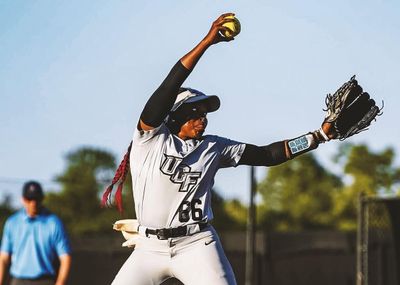
She points to athletes such as Karlyn Pickens and NiJaree Canady as examples of the personalities and talent capable of attracting broader attention.
In her conversations with potential partners, she is increasingly encountering people who already know those names.
That recognition matters.
Women's sports leagues don't grow solely because more people appreciate the quality of competition. They grow when audience interest becomes valuable enough to sustain broadcasting agreements, sponsorship commitments, merchandise sales and opportunities for the athletes themselves.
McCleney Hanson believes softball is approaching a significant turning point.
She sees the 2028 Los Angeles Olympics, where softball will return to the Olympic program, as a potential catalyst for the kind of mainstream attention that has helped elevate other women's sports.
“We're so close,” she said. “We're like one big moment away.”
That is her outlook, not a guarantee. Olympic exposure alone cannot establish a sustainable professional league. The longer-term opportunity depends on whether organizations can convert that visibility into lasting relationships with fans, sponsors and communities.
It's precisely the kind of work McCleney Hanson is now involved in.
She helped create the foundation as a player. Today, she is working to make sure the attention surrounding the next generation translates into something more permanent.
Learning to Value What the Scoreboard Couldn't Measure
McCleney Hanson's transition into business also required a significant change in how she measured success.
For much of her playing career, winning was the standard.
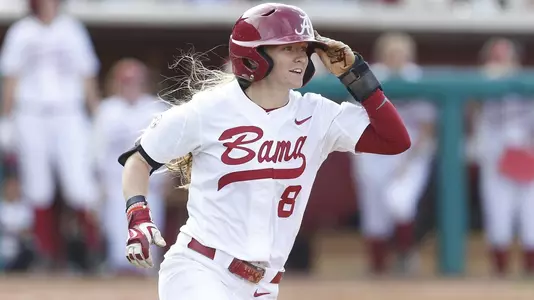
That mentality helped carry her from a small Alabama town to the University of Alabama, onto Team USA and eventually to the Olympics.
But the Tokyo Games challenged her understanding of achievement.
After roughly two decades of softball, she reached the Olympic stage and competed in six games. Team USA finished with a silver medal after losing to Japan in the gold medal game.
For an athlete who had spent years envisioning Olympic gold, the result was difficult to accept.
McCleney Hanson estimates that it took approximately a year and a half before she could fully appreciate what she had accomplished.
“I won a silver medal. I didn't lose the gold medal game,” she eventually learned to tell herself.
The shift didn't happen overnight.
She began noticing how much the medal meant to people who saw it at speaking engagements and softball events. She reflected on her Olympic experience through journaling. And as time passed, the memories that mattered most became less about individual plays and more about the people she had shared the journey with.
The bus rides. The teammates. The experiences of traveling around the world representing her country.
The medal hadn't changed. Her understanding of its value had.
That distinction now informs the way she approaches life after competition.
An athlete who once struggled to accept anything short of the highest possible result has found satisfaction in work where progress is measured over years, relationships are built gradually and the ultimate rewards may belong to people other than herself.
Leaving the Game Better Than She Found It
McCleney Hanson grew up in Morris, Alabama, in a household where competition was part of everyday life.
Her father played baseball at Samford and later coached high school baseball. She spent her childhood competing against her two younger brothers in backyard football, basketball, baseball and whatever other sport they could invent.
That environment helped develop the competitiveness that would eventually define her career.
But as she moved through high school, college and international softball, she also learned to view the people around her as sources of knowledge rather than simply competitors.
At Alabama, she paid particular attention to teammates who weren't regular starters.
“I learned so much from our role players and our players that were on the bench,” she said.
Their attitudes and contributions helped shape her understanding of team culture, humility and what it means to contribute when the spotlight isn't on you.
It's a perspective that has become increasingly relevant to her work after retirement.
McCleney Hanson no longer needs to be the person making the diving catch or delivering the decisive hit. She can find satisfaction in helping create an environment where another athlete has that opportunity.
She describes the experience as watching the sport evolve through generations.
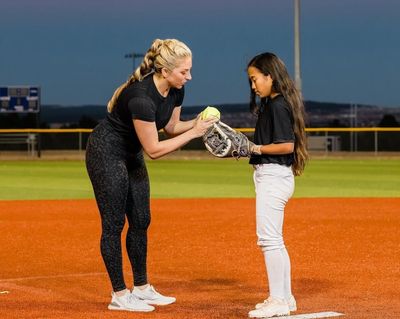
The players before her helped create opportunities she benefited from. Her generation pushed the sport forward. Now, a younger group of athletes is entering a professional landscape with resources and visibility that previous generations worked to establish.
Rather than comparing eras or insisting her generation was better, McCleney Hanson wants to celebrate what comes next.
“They're so much more prepared to enter into professionalism because of what my generation of players did,” she said.
She credits Alabama head coach Patrick Murphy with a philosophy that continues to guide her:
“Leave it better than you found it.”
For McCleney Hanson, that responsibility didn't end when she retired.
It simply changed forms.
The Best Is Still Ahead
One of the hardest parts of athletic retirement is accepting that the most recognizable version of your success may already be behind you.
McCleney Hanson had to confront that possibility.
Throughout her playing career, she lived by the belief that her best was yet to come. It was easy to embrace that philosophy when the next season, championship or opportunity was always waiting.
Retirement forced her to reconsider what the phrase actually meant.
“Are my best days behind me because I stopped playing?” she remembers asking herself.
Her answer required expanding her definition of success.
The best years of her life didn't necessarily have to include another Olympic appearance, another professional season or another championship opportunity. They could involve helping establish a stronger professional league, creating new opportunities for athletes or introducing a new audience to the sport she loves.
“I do believe my best is still in front of me,” she said. “It just may not look like what it always looked like when I was on the field and playing.”
It's an important distinction for a generation of athletes entering a sports industry that offers increasingly diverse career opportunities.
Playing professionally remains a goal worth pursuing. But the growth of women's sports is also creating demand for people who understand the game and can contribute through broadcasting, marketing, partnerships, coaching, operations and business development.
McCleney Hanson's career is an example of what that transition can look like when an athlete begins exploring those possibilities before her playing days end.
She didn't stop being valuable to softball when she stopped competing.
In many ways, her influence has become less dependent on what she can accomplish individually and more connected to what she can help build for everyone else.
For someone who spent her childhood dreaming about the biggest stages in sports, that's a different kind of ambition.
And if McCleney Hanson is right about where professional softball is headed, the next generation may get to compete on a stage bigger than anything she once imagined.