For Pro Softball Players, Building an Audience Is Becoming Financial Infrastructure

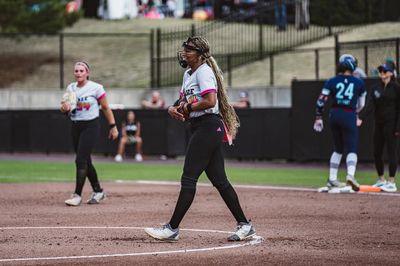
When Skylar Wallace began thinking seriously about life after college softball, she faced a practical question that generations of elite softball players have had to answer: How do you keep playing while also building a life that financially works?
Professional softball existed. The opportunities were growing. But the landscape Wallace was entering looked different than the one she competes in now.
“I gotta find a way to make money,” Wallace remembers thinking. “I don't wanna work a nine to five. I don't wanna sit in an office.”
So she started paying attention to something happening outside the lines.
NIL had arrived in college sports. Social media was exploding. Wallace watched creators build businesses from their audiences and athletes post day-in-the-life videos that gave fans access to parts of sports they rarely saw on television. Then she started noticing the brand deals.
“I was like, you know what? Like, I can do this,” Wallace said.
And she did.
What began as Wallace figuring out how to support herself has developed into something increasingly important for athletes across women's sports: an audience they own and can carry with them regardless of what team they play for, what network broadcasts their games or how long their playing career lasts.
For professional softball players in particular, that audience can be more than a personal brand.
It can become financial infrastructure.
Skylar Wallace on Confidence: "If You Have Haters, You're Doing Something Right"
The Economics Around the Athlete Are Changing
The professional softball Wallace plays today is expanding quickly.
The Athletes Unlimited Softball League entered its second season in 2026 with six permanent home markets, expanded media distribution and a growing roster of national partners. Its inaugural season produced 24 sellouts, nearly 90% average venue capacity, more than $1 million in merchandise sales and 333 million social impressions, according to the league.
That growth is happening within a much larger commercial shift in women's sports.
Deloitte projects global women's elite sports revenue will reach at least $3 billion in 2026, up 25% from $2.4 billion in 2025. Perhaps more important to athletes building individual businesses, commercial revenue—including sponsorships and partnerships—is expected to account for 45% of that total, making it the largest revenue category in women's sports.
Those dollars don't automatically flow directly to individual athletes. But they help explain why an athlete's ability to build and maintain an audience has become increasingly valuable.
Brands are spending money around women's sports. Leagues need recognizable players. Fans want more access to athletes than a broadcast can provide.
An athlete who can connect those pieces becomes valuable in more than one marketplace.
Wallace understood that before she had a business model for it.
She started posting because she saw an opportunity. Then came the cycle familiar to anyone who has tried to build an audience online: one video performs, followers arrive, the next few don't, another takes off, and gradually the audience compounds.
“Just continue to post. Continue to post,” Wallace remembers telling herself.
Her softball career helped accelerate it. Wallace points to becoming SEC Player of the Year and the visibility she received on television during her final college season as important moments in her social growth. But athletic performance created the attention; content gave that attention somewhere to go.
That's an important distinction in the emerging athlete economy.
A television audience belongs primarily to the broadcaster. A team's audience belongs primarily to the team. A league's audience belongs primarily to the league.
A player's following travels with the player.
From Endorsement to Distribution
Athlete endorsements are nothing new. What's changing is the role athletes play in the transaction.
Historically, a brand could pay an athlete for access to her name, image or credibility and then distribute the resulting campaign through its own advertising channels.
The creator economy allows an athlete to bring the distribution too.
Sports Business Journal recently described this shift as the rise of the “athlete creator”: competitors operating not simply as endorsers but as content creators, media brands and independent economic actors with direct access to their audiences. That can open revenue streams ranging from sponsorships and digital content to merchandise, media businesses and eventually equity or ownership opportunities.
Wallace's path captures an early version of that evolution.
She doesn't simply appear in content. She produces it.
“Everything like that is me and me only,” she said. “Editing, posting, scripting, everything. So that's me.”
That's a heavy lift. I know from first-hand experience.
When Wallace posts a training video, she's simultaneously the talent, producer, editor, distributor and media property. When a brand partners with her, part of what it is buying is access to an audience Wallace has built through years of athletic success and hundreds of individual decisions about what to film, say, edit and post.
That creates an asset that exists separately from any professional contract.
And in a sport where the professional ecosystem is still being built, that independence can matter.
NIL Changed the Starting Line
The athletes entering professional softball now are also arriving with a different understanding of their commercial value than previous generations.
Wallace was in college as NIL fundamentally changed what athletes were allowed to do with their own brands. She watched the opportunity develop in real time.
Today's college softball stars don't have to wait until their final NCAA game to begin learning how sponsorships, content and audience-building work. AUSL itself has leaned into that reality, signing NIL agreements with prominent college players that include marketing initiatives, social content and brand campaigns before those athletes begin their professional careers.
The result is a potentially significant change in what “turning pro” means.
A player may leave college with hundreds of thousands of followers, existing sponsor relationships, experience negotiating partnerships and years of practice communicating directly with fans.
In other words, she can arrive with economic infrastructure already attached to her name.
For softball, that matters because the value doesn't only move in one direction.
The league gives the athlete a professional stage.
The athlete brings an audience to the league.
The Audience Has to Mean Something
Wallace is also careful about what she's actually trying to build.
When a management company recently asked what she wanted from social media, her first answer wasn't more followers or more deals.
“I want community,” she said. “I want people where I can be myself.”
She wants people to see the professional athlete who trains relentlessly, but also the person who likes a sweet treat, reads, spends time with friends and sometimes needs to decompress.
That relationship is what turns raw reach into something potentially more durable.
A follower can disappear after a viral highlight. A community has a reason to remain interested when the season ends.
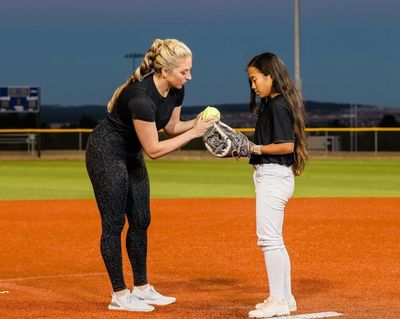
Wallace has seen the other side of that relationship through messages from parents and young players who tell her they took something from one of her videos into practice. A piece of training advice that once might have required attending a camp or meeting an elite athlete in person can now travel instantly through a phone.
“You just have way more reach,” Wallace said.
That reach has commercial value, but it also helps explain why athlete-created media can be so effective.
People aren't only following the uniform.
They're following the person inside it.
But Someone Still Has to Do the Work
There is a less glamorous side to this model.
If an athlete's audience becomes part of her financial infrastructure, maintaining that infrastructure requires labor.
And Wallace is already working another job.
“Having the full time job of content creation and a full time job of softball can be very, very hard,” she said.
She felt it this summer.
Between professional softball, international travel and the demands of her playing schedule, Wallace said content had fallen to the back burner. She was exhausted. At times, she reached the end of the day feeling like she couldn't even think.
That exposes one of the contradictions of the athlete-creator economy.
Building an independent audience can give athletes greater control over their careers. But maintaining that independence can require them to become their own production companies while simultaneously trying to perform at an elite level.
The better the content business works, the more complicated the operation can become.
Eventually, the question may not be whether athletes should build their brands. It may be whether the infrastructure around them evolves enough that they don't have to personally operate every part of those brands.
Wallace is already beginning to encounter that question. Her conversation with a management company suggests the business has reached a point where deciding who helps manage it becomes part of the next stage.
That's a very different problem from the one she started with.
Building Something That Travels With You
Professional softball is in a stronger position than it was when Wallace first wondered how she would support herself after college. AUSL has permanent markets, national broadcast distribution and major commercial partners. Women's sports broadly are attracting unprecedented investment.
The goal should be a professional sports economy strong enough that athletes aren't required to become successful creators simply to make playing professionally viable.
But that doesn't make the businesses athletes are building around themselves less important.
It may make them more powerful.
A playing contract has a season. A roster spot belongs to a particular team. Athletic careers eventually end.
An owned audience can move through all of it.
Wallace originally started posting because she needed to find a way to make professional softball and adulthood coexist. Along the way, she built something that can support opportunities far beyond the field.
That's the larger shift happening across sports.
The modern athlete isn't necessarily waiting for a league, broadcaster or sponsor to determine the full value of her career. She can build an audience herself, develop a relationship with that audience and create an economic asset that travels wherever she goes next.
For athletes in a growing sport like softball, that isn't just personal branding.
It's leverage.