When Proving You Belong Starts Getting in the Way
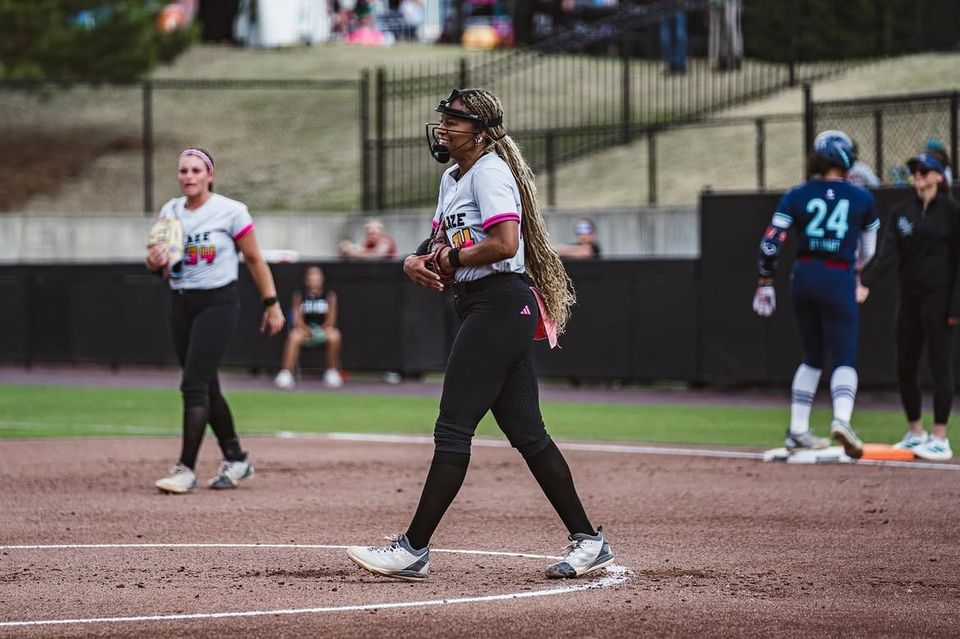
Jala Wright had almost every reason to feel comfortable pitching in Durham.
She grew up in Charlotte. She became an All-American and ACC Pitcher of the Year at Duke, helped the Blue Devils reach their first Women’s College World Series and still owns the program’s single-game strikeout record with 17. After college, she returned to Duke as an assistant coach. Then, when the Carolina Blaze made her the No. 17 overall selection in the 2025 AUSL Allocation Draft, the league announced that the team would play its 2026 home games at Duke’s Smith Family Stadium.
On paper, it looked like an ideal homecoming.
Wright experienced it differently.
“I wanted to be the hometown hero,” she said on Out of Left Field. “I felt like I really had to put Durham on my back, put Duke on my back to show, like, I’m supposed to be here, I’m meant to be here.”
Nobody had actually asked her to do that.
That distinction became one of the defining lessons of Wright’s first AUSL season. She had reached professional softball, returned to the field where she had built her college career and been given an opportunity she had worked years to earn. Instead of experiencing that as freedom, she began treating every appearance as evidence in an ongoing case for why she belonged.
“If I didn’t feel like I had ten strikeouts a game or like I no-hit someone, it just felt like the world was crumbling,” Wright said. “No one told me I had to do this or this was expected of me. It’s just my own pressures that I put on myself.” Pasted text
There is an irony in that admission that extends well beyond Wright’s season: sometimes reaching the level you spent years trying to prove you were capable of reaching only creates a new urge to prove yourself all over again.
And that can become its own performance problem.
The Pressure After You Make It
Elite athletes are accustomed to using pressure productively.
Getting to the professional level requires standards that most people will never impose on themselves. Athletes train when they are tired, compete through failure, accept constant evaluation and spend years chasing marginal improvements. The same internal drive that can make an athlete unusually successful, however, can become counterproductive when every result starts carrying too much meaning.
Wright had already proven herself at the collegiate level. Her final Duke season included a 19-3 record, NFCA Second Team All-America honors and the ACC Pitcher of the Year award. She finished her Duke career with 449 strikeouts in 420 innings.
Professional softball reset the scoreboard.
The hitters were better. The roles were different. Opportunities were more limited. Wright made four appearances for Carolina and threw 7.1 innings during the 2026 season. The league’s official statistics list a 5.73 ERA with 11 strikeouts.
Those numbers matter because professional sports are results businesses. But Wright’s reflection on them is more revealing than the stat line itself. She didn’t describe a lack of preparation or desire. She described wanting the results so badly that each outing began carrying the weight of her identity.
That is where high standards and destructive pressure can become difficult to separate.
The goal is no longer simply to execute the next pitch. The pitch starts answering bigger questions: Am I good enough for this level? Did they make the right decision by choosing me? Am I living up to what I did in college? What are people going to think if I fail here?
One pitch is suddenly responsible for proving far more than one pitch ever could.
A Professional Athlete Learning the Lesson She Now Teaches
What makes Wright’s experience particularly interesting is that she isn’t only a professional athlete.
She is already a coach.
Wright returned to Duke as an assistant coach after spending the previous season as a graduate assistant at Tennessee. When the AUSL season ended, she was back in Durham almost immediately, helping with recruiting and preparing for Duke’s fall schedule.
At 24, she occupies an unusual position. The athletes she coaches are only a few years younger than she is, which gives her access to two sides of the athlete-development relationship at once. She can explain what high-level performance requires as a coach, then spend her summer experiencing those demands herself as a player.
Her difficult professional season gave her something new to bring back.
“I think that’s my testimony now that I’ve been trying to instill into my own girls: just have fun, just play,” Wright said. “You already got here for a reason.”
It sounds simple. Coming from a coach who has just lived the opposite side of it, it carries considerably more weight.
Coaches regularly tell athletes to relax, trust their preparation and stop pressing. Wright now knows what those instructions feel like when the athlete understands them intellectually and still cannot immediately make the pressure disappear.
That experience can change how a coach communicates.
She can tell a Duke pitcher that one bad practice doesn’t redefine her because Wright has had to learn the same lesson at the professional level. She can talk about separating identity from performance because she knows what happens when the two become tangled together. She can tell a recruit that she understands the pressures of college athletics without reaching backward to a playing career from decades ago.
She was living them months earlier.

When Someone Else Still Sees the Player
Wright’s season eventually changed in a way she hadn’t planned.
The Blaze released her on July 8. Four days later, the Utah Talons reserved her for 30 days, according to the AUSL’s official transaction log. The Talons were ultimately the league’s 2026 champions.
For Wright, the opportunity mattered beyond simply remaining connected to the league.
She had spent part of the season questioning her performance. Then an organization led by general manager Lisa Fernandez was telling her there was still something worth developing.
“There’s so much more to give,” Wright recalled thinking. “The story is still unwritten.”
External validation cannot be the foundation of an athlete’s confidence. Wright herself spends much of the conversation explaining why identity has to extend beyond performance. But professional sports are also environments in which opportunities are allocated by other people. Sometimes another evaluator seeing potential at a moment when an athlete is struggling to see it herself can interrupt the conclusions she has started drawing from a small sample of failure.
For Wright, it was enough to change the question.
Instead of asking what her first few professional appearances said about whether she belonged, she could begin asking what she was going to do with the next opportunity.
The Athlete Is Bigger Than the Evaluation
Wright has spent much of her life learning where ambition should stop.
At 16, that lesson nearly cost her softball entirely.
Her father, who had played in the Seattle Mariners’ minor-league system, was also her coach. Wright remembers sitting at dinner with her parents after a tournament and finally telling him she didn’t want to play anymore.
“You’re coaching me too hard,” she remembers telling him. “It doesn’t feel like my father anymore.”
The conversation became intense enough that the family left the restaurant. But it also forced them to reconsider a relationship in which the pursuit of softball success had begun crowding out everything else.
They changed it.
Years later, when Wright became an All-American, her father was one of the first people she hugged.
That experience and her first professional season are separated by nearly a decade, but the underlying problem is remarkably similar. Achievement can expand until it begins occupying space it was never supposed to own.
For Wright, maintaining perspective now requires deliberately separating the pitcher from the person.
“As soon as you walk out of the circle, I’m more than a softball player, I’m more than a pitcher,” she said. “I’m walking on this field, Jala as a softball player, but when I leave, I’m Jala the person, and that matters way more than what I did on the field.” Pasted text
That distinction is easy to celebrate after a great outing. It becomes considerably harder—and considerably more important—after a bad one.
Doing It Differently Requires More Than Saying It
Wright already knows what she wants to change the next time she gets a professional opportunity.
“I’m just gonna do it differently,” she said.
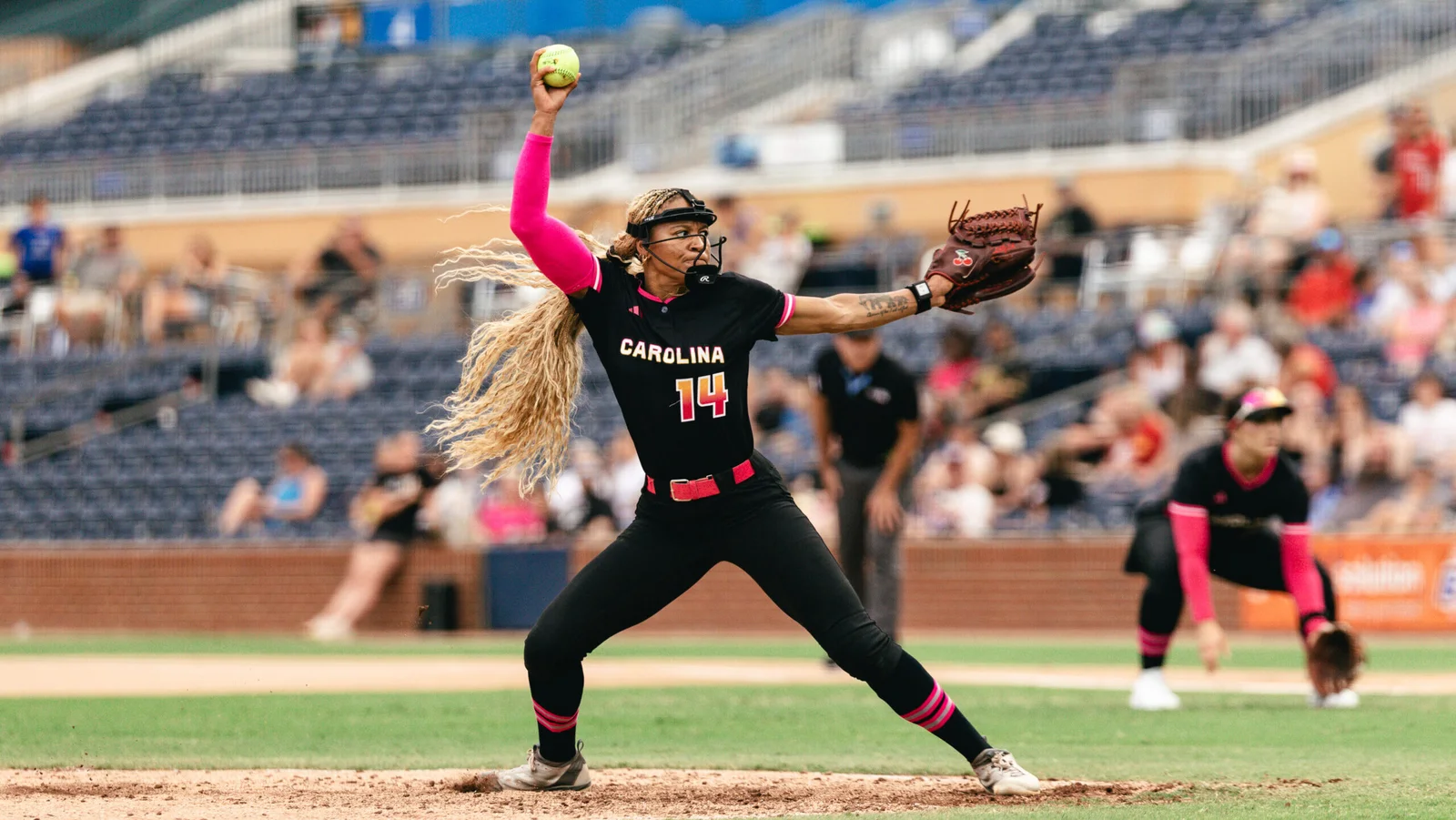
But one of the more interesting parts of her answer was what came next. She didn’t treat a healthier mindset as something she could simply decide to possess. She talked about practicing it.
Making her bed. Paying attention to how she talks to herself. Making eye contact. Carrying herself confidently. Interrupting doubt rather than letting it become the dominant internal conversation.
They are almost aggressively ordinary behaviors for someone whose job requires throwing a softball at an elite level.
That is precisely why they matter.
High-performance environments tend to make solutions feel as though they should be equally sophisticated: better mechanics, better technology, more data, another training program. Wright’s first professional season taught her that the problem wasn’t always located in her pitching.
Sometimes it was in the meaning she assigned to it.
So the work of changing her next season begins long before she steps into a professional circle again. It happens in the small behaviors through which she practices treating herself differently when nothing is at stake.
“I’m not gonna live and die by a day or a bad practice,” Wright said.
That may ultimately be the most valuable development to come from a season she readily admits did not go the way she envisioned.
Professional sports are designed to evaluate people. Every appearance produces numbers. Every roster decision communicates something. Every season eventually leaves behind a statistical record that makes performance look far cleaner and more definitive than it felt while someone was living through it.
Wright cannot remove that evaluation from professional softball, nor should she. What she can change is how much authority she gives each result over everything else she knows about herself.
She entered the AUSL believing she needed to prove she belonged.
Her first season gave her a different lesson to bring back to Duke, into her own career and eventually into whatever opportunity comes next.
Getting there was already proof of something.
Now she has to let herself play.