Inside Team USA Softball’s 15-Spot Squeeze: What Hannah Flippen’s Olympic Alternate Role Reveals
With only 15 Olympic roster spots and a seven-year wait between Tokyo and LA28, USA Softball runs on constant roster turnover, versatile backups and high-stakes career bets.
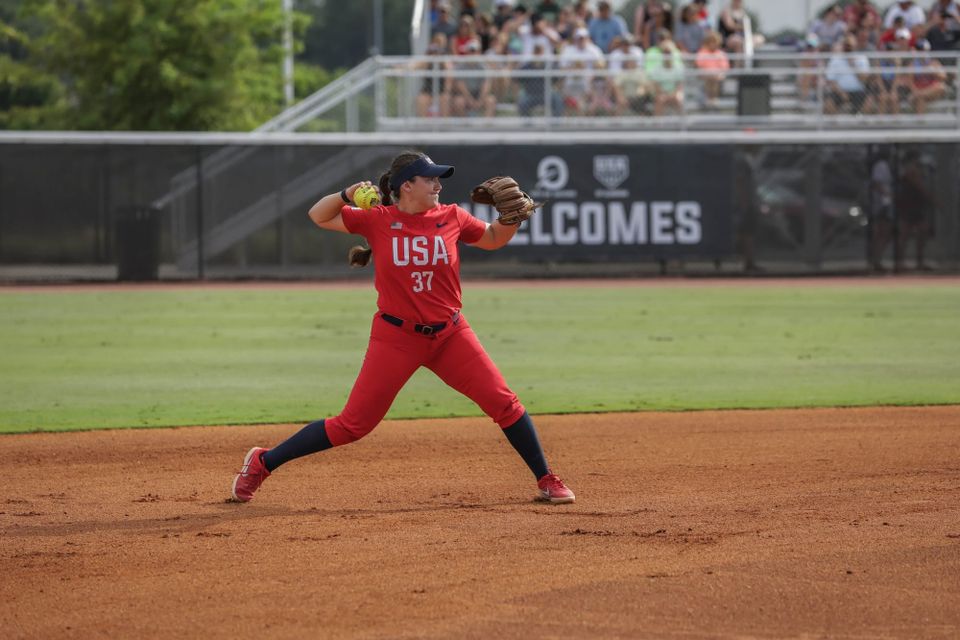
People sometimes call Hannah Flippen an Olympian. Even after multiple international gold medals with the U.S. Women’s National Team, the veteran infielder knows the title does not quite fit.
During a recent appearance on Out of Left Field, Flippen described what it meant to be named a replacement athlete for the Tokyo Games rather than part of the active lineup. “People will be like, ‘Oh, you’re an Olympian.’ And I’m like, ‘Well, not really,’” Flippen said.
That distinction goes to the heart of how Team USA softball works. Because an Olympic roster holds just 15 players, USA Softball has to condense a deep talent pool into a tiny lineup, keep backups game-ready without guaranteeing they will ever take the field, and ask athletes to build their careers around an event that does not happen on a predictable four-year schedule.
How a 15-Player Cap Shapes Team USA
For Tokyo, USA Softball named an 18-athlete group after selection trials in Oklahoma City: 15 Olympic roster spots and three replacement players, infielder Flippen, catcher Taylor Edwards and pitcher Keilani Ricketts. The Women’s National Team Selection Committee assembled that group for the Stand Beside Her tour, the exhibition and training schedule leading into the postponed Games in 2021.
A 15-player limit leaves almost no room for narrow specialists. Once a staff accounts for pitchers, catchers and nine defensive positions, every bench and reserve decision carries unusual weight. Los Angeles 2028 keeps the same six-team, 15-player Olympic format, with softball returning to Devon Park in Oklahoma City.
In Flippen’s case, the Tokyo infield logjam included Kelsey Stewart, Delaney Spaulding and Ali Aguilar. “For somebody who doesn’t understand the ins and outs of the Olympic roster, the alternates, it’s essentially like being a non-starter or almost like peripherally being cut from the team,” Flippen said.
Her job became preparation without certainty. “Because realistically I was the backup at all of those spots had one of them gone down,” she said, treating her role as staying on the starters’ heels every day so the active roster would be sharp for medal play. Under USA Softball’s Tokyo selection rules, replacement athletes remained outside the official 15-player Olympic squad unless an injury vacancy arose and a formal replacement was approved.
What Happens Between Olympic Cycles
Olympic softball has never given players a steady calendar. Dropped after Beijing 2008, restored for Tokyo, left off Paris 2024 and returning for 2028, the sport forces USA Softball to maintain a national team program across long Olympic gaps.
Between Games, USA Softball reloads through a 36-athlete national team pool reviewed quarterly by its Women’s National Team Selection Committee across international events, professional leagues, camps and college play. That pool feeds rosters for tournaments such as The World Games, the Pan American Championship, the International Cup and WBSC World Cups, where Flippen won World Games gold in 2022 and 2025, International Cup gold in 2026 and World Cup silver in 2024.
Even with the United States guaranteed an automatic host berth in 2028, USA Softball’s preliminary LA28 selection notice points to multi-year evaluation rather than a single open tryout. “Anybody can come in and take my spot now,” Flippen said. Each cycle brings another wave of college stars and pro standouts competing for the same handful of jerseys.
The Career Cost of Chasing a Spot
Because Team USA operates through training camps, tours and international tournaments—with USA Softball’s published athlete agreement classifying players as independent contractors supported through event travel, housing and stipends rather than a 12-month salaried club contract—staying in the national-team picture shapes every career choice around it.
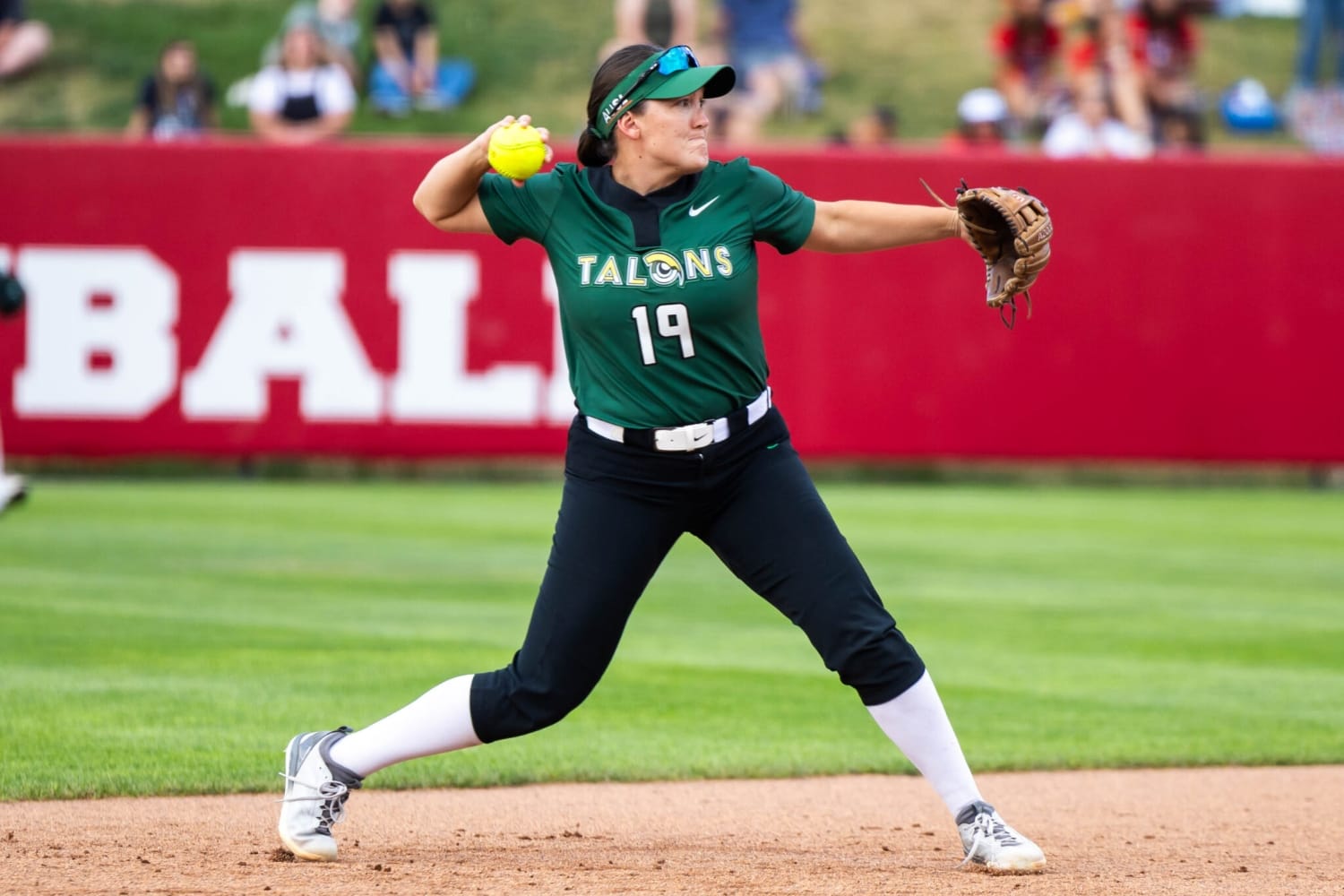
Flippen previously coached at her alma mater before stepping away from Utah’s staff in June 2020 to focus on pro softball and Tokyo preparation. When Utah head coach Amy Hogue offered her an assistant-coaching job in Salt Lake City, a role Flippen calls her dream job, she turned it down to keep playing.
“I’m not ready to be a coach yet,” Flippen said. “I want to keep playing for as long as I can. I want to win a gold medal at the Olympics, and I don’t want to have one foot in each of those doors.” Instead, she pairs Utah Talons play in the Athletes Unlimited Softball League with coaching lessons and work as a neurotechnician in Tucson, noting, “I don’t know that I could have done both at the same time and been great at both.”
As LA28 approaches, USA Softball’s competitive advantage still rests on having more elite players than roster spots. For athletes on the bubble of a 15-player Olympic lineup, chasing Team USA means putting steadier careers on hold for a roster with almost no margin for error.