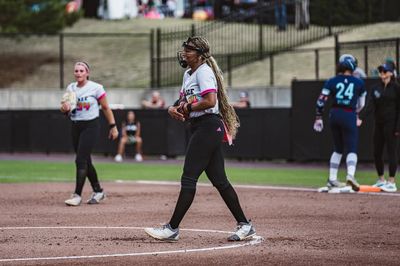
The Youth Sports Development Gap: Are Parents Paying for Exposure Instead of Progress?
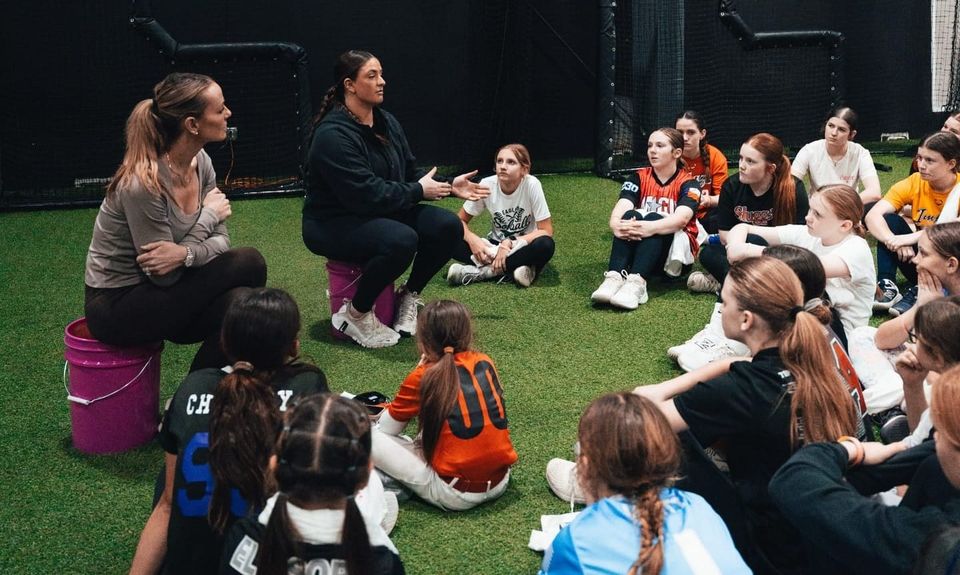
Former UCLA softball player and Jen Schro Catching founder Jen Schroeder challenges the growing emphasis on travel teams, showcases and recruiting exposure—and asks whether youth sports are delivering meaningful development.
Youth sports have become a significant investment for families. Between travel teams, private instruction, tournaments and showcases, parents are spending time and money pursuing opportunities for their children.
But Jen Schroeder believes the industry is overlooking a fundamental question: Are young athletes actually getting better?
The former UCLA softball player and founder of Jen Schro Catching has spent nearly two decades developing athletes across the country. Now, as the mother of a six-year-old daughter participating in multiple sports, she's seeing the youth sports system from a different perspective.
During a recent appearance on Out of Left Field, Schroeder questioned the lack of consistent developmental standards in youth sports and the pressure families face to move their children into more competitive environments.
“Where is a parent's roadmap?” Schroeder asked. “How can a parent or coach be expected to teach something when there are no standard markers across the board for anybody?”
When Exposure Replaces Development
Schroeder believes one of the biggest problems begins when families mistake more competition for better development.
When recreational leagues fail to provide adequate instruction, parents often turn to travel sports, expecting stronger coaching, better competition and greater opportunities.
But a more expensive program doesn't necessarily mean a better developmental experience.
“People are taking a lot of money from families promising something they cannot deliver,” Schroeder said.
Her concern is that some organizations promote tournaments, showcases and recruiting opportunities without establishing a clear plan for improving athletes' fundamental skills.
For families, the distinction matters. Exposure can create opportunities to be seen, but it doesn't guarantee an athlete is prepared to take advantage of them.
And for youth sports businesses, it raises an important question: What are families actually purchasing—player development or the promise of future opportunity?
A tournament schedule is easy to advertise. Demonstrating measurable progress requires more intentional coaching, consistent feedback and accountability.
Building a Business Around Development
Schroeder has built her own business around a different philosophy.
After finishing her UCLA career in 2008, she began teaching catching in a small corner of a basketball warehouse. What started in 2009 eventually grew into a business offering specialized instruction and catching events across the country.
But Schroeder believes the value of those experiences extends beyond technical improvement.
“The words that they hear at those clinics, the lessons that they learn, the way they feel, that's what they're gonna carry with them for the rest of their lives,” she explained.
Her approach emphasizes high expectations paired with strong support.
She wants athletes to experience challenges that push them beyond their perceived limitations while developing confidence, resilience and independence.
“You can support without being a safety net for your child,” she said.
For Schroeder, those lessons are particularly important because only a small percentage of young athletes will eventually compete at the highest levels.
The greater opportunity is to develop qualities that remain valuable long after their playing careers end.

Parents Have a Responsibility, Too
Schroeder doesn't place the responsibility entirely on coaches or organizations.
She believes parents must recognize when competitive expectations and outside pressure begin influencing decisions more than their children's individual needs.
“Nobody knows your daughter better than you,” she said. “Stop seeking the answers from everybody else.”
Rather than automatically pursuing the next travel team, showcase or competitive level, Schroeder encourages families to consider whether an opportunity supports their child's development.
Her perspective is shaped by her own playing experience.
Despite arriving at UCLA as a highly recruited athlete, Schroeder struggled early in her college career. Those challenges forced her to reconsider how she measured success and ultimately influenced the philosophy behind her coaching business.
Today, she views failure, perseverance and personal growth as essential parts of athletic development.
Rethinking the Return on Investment
The youth sports industry offers families countless opportunities to compete, travel and pursue the next level. But Schroeder believes those opportunities should be evaluated by more than the number of games played or showcases attended.
For organizations, that means being able to demonstrate how their programs help athletes improve. For parents, it means understanding that advancement and development aren't always the same thing.
And for young athletes, it means recognizing that success isn't defined exclusively by recruiting attention or athletic achievements.
Schroeder's message is ultimately about accountability across the youth sports system.
If families are investing in development, programs should be prepared to deliver it.
Because the most valuable return on that investment may not be a scholarship, a roster spot or a championship.
It may be the person an athlete becomes along the way.