From Japan to HYROX: Why AUSL Players Keep Competing After a 25-Game Season
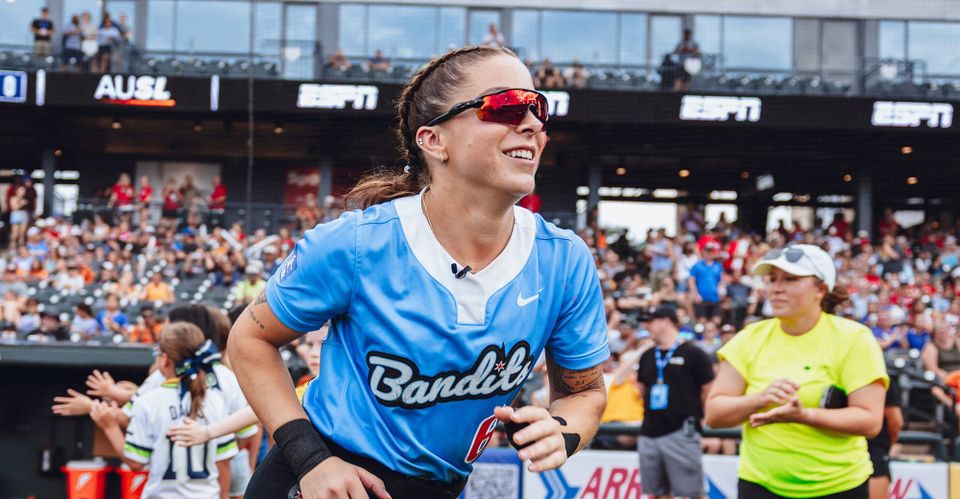
Bella Dayton finished her second professional softball season with the Chicago Bandits in late August. This fall she was racing again, at a HYROX fitness race in Boston, with another in Dallas on her November calendar.
“Hyrox is a big thing for me now, just because it’s like a hobby now,” Dayton said during a recent appearance on Out of Left Field. She called it “something to keep competitive in the off season.”
Dayton is far from the only AUSL player who keeps competing once the league’s season ends. Some stay in softball overseas, some play for national teams and some cross into other sports entirely. That second calendar now sits beside a labor question: on Nov. 12, the AUSL formally recognized its players’ union, opening the way to a first collective bargaining agreement before the 2027 season.
A Short Paid Season Leaves a Long Gap
The AUSL’s own reporting calls its regular season “more like a sprint than a marathon”: 25 games per team in just under two months. The league says players earn an average of $35,000, with opportunities to earn up to $80,000 for the season. In 2026, the All-Star Cup extended the calendar to Aug. 30 for 45 selected players, Dayton among them.
That leaves most of the year open. How players fill it depends on what they need: more income, more visibility, a training target or simply somewhere to put a competitive drive.
Staying in Softball, Abroad and in National Colors
For many top players, the offseason is another softball season. Texas Volts pitcher Ally Carda spends the AUSL offseason in Japan with Honda Reverta of the Japan Diamond League. Dallas Escobedo Magee pitched seven seasons for Toyota Industries Shining Vega before joining the Utah Talons this year.
The two calendars do not fit neatly together. Before Opening Day in June, the AUSL noted that Carda and Dejah Mulipola would miss the first few weeks of the season while they finished their commitments in Japan, and that Oklahoma City pitchers Maddie Penta and Jailyn Ford would report after their own Japan obligations. Business of Ball could not find public salary figures for the Japan Diamond League, so the trade-off in dollars is not known.
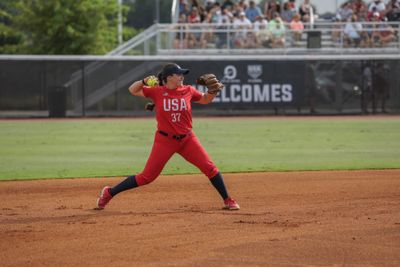
National teams add another layer. Dayton plays for Italy, which her AUSL biography lists as her proudest accomplishment. “The whole process is just so long to even get to be a part of it. So that was stressful in itself,” she said. In 2026, Italy’s federation named her to its World Cup group-stage roster for June 16-20 in Prague, and AUSL transaction records show the Bandits had her on the temporary inactive list from June 13 to June 23.
Crossing Into Other Sports
Others compete outside softball. Carolina Blaze infielder Baylee Klingler ran a half marathon during the offseason, according to her league biography, and veteran infielder Jessi Warren’s AUSL biography says she ran her first half marathon in the offseason as well.
Some of those crossovers are also media opportunities. In February, Talons pitcher Montana Fouts and catcher Sharlize Palacios appeared in Jomboy Media’s Warehouse Challenge. In May, Dayton made her debut in Jomboy’s Warehouse Games cricket series, weeks before the season began. For a league trying to grow its audience, appearances like these put its players in front of fans who may not watch softball.
HYROX is the most demanding of Dayton’s side competitions. As Dayton describes it, the race strings together eight workout stations with a 1-kilometer run before each one, and she trains for it as a separate discipline. “I’m training full blown for a whole other sport because I want to be better than I was the last time,” she said. She was also realistic about her place in the field: “I’m competing with people who this is their sport. This is not my sport.” At HYROX Boston, published race results list Isabella Dayton at 1:34:41 in the Open women’s division, 645th of 1,644 finishers.
Who Gets Paid to Compete
For a softball player, the economics of HYROX run the other way. HYROX pays prize money to its Elite 15 fields, the top 15 finishers at Elite Series races and the World Championships, with $23,250 for a win at an Elite Series race and $58,250 at the World Championships. Everyone else buys a ticket, and for popular races that is its own competition. “I’ll go on like my computer and my two phones and hopefully get picked to buy a ticket for one of the days that I want,” Dayton said.
For Dayton, the return is not financial. It is fitness, structure and a goal to train for in months without games. Dayton said fueling for HYROX has improved her nutrition, and she plans to race HYROX Dallas, held Nov. 18-22, with her mother.
What a First CBA Could Address
For the league and its players, offseason competition carries risk as well as value. Overseas contracts can push players’ AUSL arrivals back, national-team windows can pull players out in the middle of the season, and any outside event can produce an injury that carries into the next season.
A first collective bargaining agreement could set the rules: release windows for national teams, reporting dates for players coming from Japan, and what an AUSL contract allows or restricts in the offseason. Those terms would decide whether competing year-round stays a personal choice for each player or becomes part of the job.