Someone Has to Bet on the Player Before the Numbers Make Sense
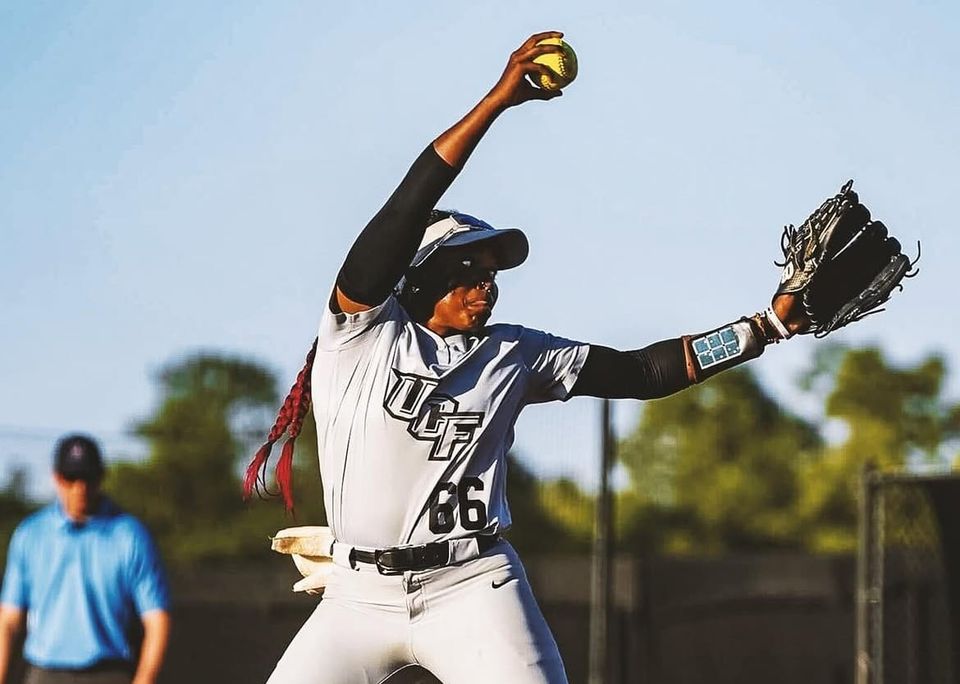
Sarah Willis didn't transfer because she wanted more attention.
She wanted the ball.
After two seasons at Washington, Willis had found ways onto the field as a two-way player. She hit. She played defense. She pitched. But when she thought about the player she wanted to become, none of that changed what she knew about herself.
“At the end of the day, like I'm a pitcher and like I really want to be a good pitcher,” Willis said. “I don't want people to know me just as a utility who like can pitch and do these other things.”
She wanted something more specific than playing time.
“I wanted somebody to want to count on me,” she said. “At the bottom of the seventh, like I'm going back out there to pitch those last three outs. I want a coach to believe in me like that.”
There wasn't much on her collegiate pitching résumé at the time to guarantee someone should.
Willis left Washington after throwing 48 innings across 26 appearances in two seasons. She had a 4.23 ERA, 42 strikeouts and a 3-3 record.
Then UCF head coach Cindy Ball-Malone made a bet.
Willis remembers people questioning why Ball-Malone was bringing in a pitcher with roughly 50 collegiate innings and talking about her as someone who could become UCF's No. 1.
Two years later, Willis left UCF with a 1.98 ERA across 289.2 innings, 239 strikeouts, an AAC Pitcher of the Year award, two NFCA All-Region selections and a professional softball career ahead of her.
In between those two résumés is one of the hardest things to quantify in player development.
Someone had to believe the second one was possible before it existed.
The Problem With Evaluating Potential
Sports are very good at measuring what an athlete has already done.
Statistics tell us who produced. Recruiting rankings tell us who evaluators liked. Playing time tells us who a coaching staff trusted. Increasingly sophisticated technology can measure velocity, spin, movement, exit speed and nearly every other piece of performance.
All of it is useful.
It can also create an obvious problem: development is inherently about something the data can't completely show yet.
The player someone could become.
When Willis entered the transfer portal, her Washington statistics reflected a real sample of her college career. They didn't lie. She had thrown 48 innings.
They also couldn't tell UCF what would happen if it gave her 100 more.
That's where player evaluation becomes more complicated than simply identifying the athletes with the best existing numbers.
Coaches aren't only selecting performance. They're deciding which performances they believe can change.
And once they make that decision, they help determine whether the change ever gets the opportunity to happen.
Belief Has Consequences
“Believing in your players” can sound like one of those sports clichés that means everything and nothing.
Research suggests the actual mechanism is more tangible.
The Pygmalion effect describes the relationship between expectations and subsequent performance. In sports settings, researchers have found that coaches can interact differently with athletes based on what they expect from them. Higher-expectancy athletes may receive more reinforcement, feedback and effective instruction than athletes coaches perceive differently.
That doesn't mean a coach can simply believe an athlete into becoming elite.
It means expectations can influence the environment in which development either happens or doesn't.
A recent systematic review of elite athlete development similarly identified the coach-athlete relationship and effective communication as important components of training performance and long-term development.
In other words, belief matters most when it changes behavior.
Who gets another inning?
Who gets individualized feedback?
Who is allowed to work through an adjustment before the experiment is abandoned?
Who hears, “We're going to figure this out,” instead of quietly moving down the depth chart?
That's what makes Willis' story more interesting than simply saying Ball-Malone believed in her.
UCF gave that belief somewhere to go.
Development Isn't Always Pretty
Willis didn't arrive in Orlando and immediately prove everybody right.
She remembers spending the fall trying to rebuild part of her game, particularly her ability to throw inside to right-handed hitters.
“I just had a mental block of not being able to throw inside to right-handed batters for some reason,” Willis said. “I almost like got the yips of throwing inside to people.”
Fixing it meant doing something athletes are often desperate to avoid when competing for roles: failing where the coaches could see it.
Willis hit batters in practice. She struggled. She kept trying to locate the pitch.
She had entered a new program hoping to prove she could become the pitcher another coaching staff could trust with the final three outs, and part of becoming that pitcher required repeatedly exposing the part of her game that wasn't working.
That's an uncomfortable part of development that statistics rarely capture.
Improvement can temporarily look worse than staying the same.
A mechanical adjustment can produce bad reps before good ones. Expanding a pitcher's arsenal can create misses she wouldn't make if she stayed exclusively with what was comfortable. A coach trying to develop an athlete rather than simply maximize today's performance sometimes has to tolerate results that make the decision look wrong in the short term.
For Willis, UCF stayed with the process.
By February 2023, she was starting the Knights' season opener. By conference play, she had become their most consistent starter.
Then came Houston.
Eventually, the Numbers Caught Up
On April 28, 2023, Willis retired 21 straight Houston hitters.
No hits. No walks. No baserunners.
It was the first seven-inning perfect game in UCF program history.
For Willis, the moment carried meaning beyond the achievement itself.
“When I got that third out in the seventh inning, I had achieved everything,” she said. “I was like, this is the holy grail.”
But when she tells the story now, she quickly returns to the person who gave her the chance to reach it.
“I was just also so grateful of Coach Bear for believing in me and just let—like seeing me out no matter what the situations were that we were going through while I was playing.”
The perfect game makes for the cleaner story.
The development before it is the more instructive one.
Willis didn't go from 48 innings at Washington to a perfect game because someone offered encouragement.
She entered an environment where a coaching staff saw something worth developing, gave her meaningful opportunity and continued allowing her to work through the parts that weren't finished.
By the end of that season, the statistical evidence looked very different.
Willis finished 2023 with a 1.65 ERA and 124 strikeouts. She was named AAC Pitcher of the Year, earned NFCA First Team All-Region honors and was the AAC Tournament's Most Outstanding Player.
Suddenly, believing in Sarah Willis didn't look risky anymore.
That's the trick.
Once potential becomes production, everybody can see it.
Someone Has to Go First
Player development is usually discussed from the athlete's perspective.
Work harder. Stay patient. Respond to failure. Trust the process.
Willis talks about all of those things.
But “trust the process” assumes somebody gives you access to one.
Athletes cannot give themselves innings. They cannot write themselves into a lineup. They cannot decide how much individualized instruction they receive or how long a coaching staff will tolerate the messy stage of an adjustment.
Someone on the other side of the relationship controls those resources.
That makes player development a shared risk.
The athlete has to keep working without knowing whether the work will produce the outcome she wants.
The coach sometimes has to invest meaningful time and opportunity before the athlete has produced enough evidence to make that investment feel safe.
Not every bet works. That's what makes it a bet.
And development would be much easier if coaches could identify future stars simply by sorting a spreadsheet from best to worst. But the athletes with the best current résumés aren't necessarily the only athletes capable of producing better ones.
Sometimes the job is identifying what isn't visible yet.
Willis understands that differently now because she knows what it feels like to be on the receiving end of it.
“Having somebody believe in me,” she said, “even though I failed so much before.”
There eventually came a point when nobody needed to take Cindy Ball-Malone's word for it anymore.
Sarah Willis became UCF's No. 1. She became a conference Pitcher of the Year. She threw a perfect game. She went on to play professionally.
The numbers eventually made the bet look obvious.
Player development happens in the period when it isn't.