Leaving the Game Better Than You Found It
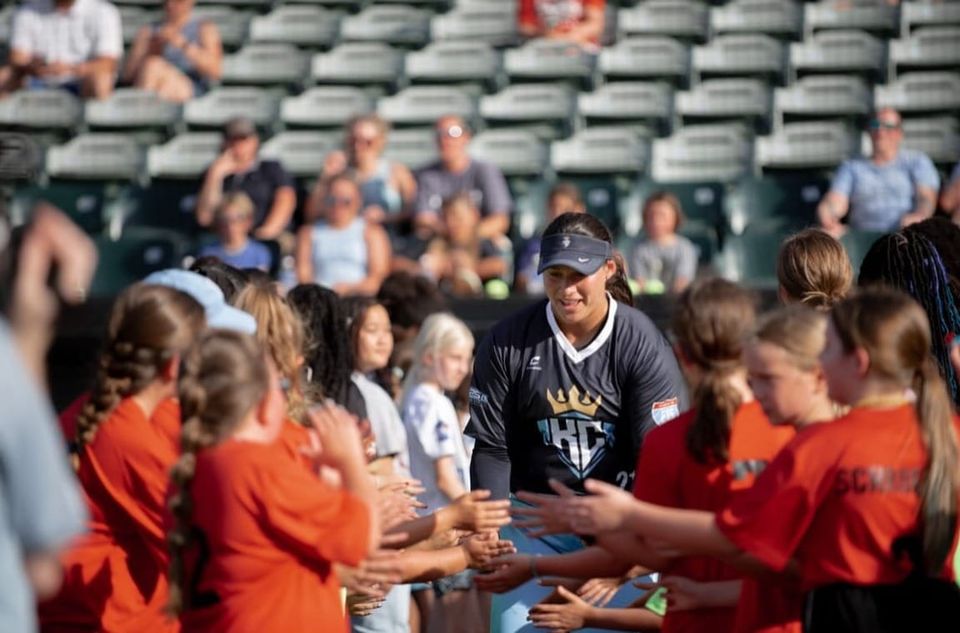
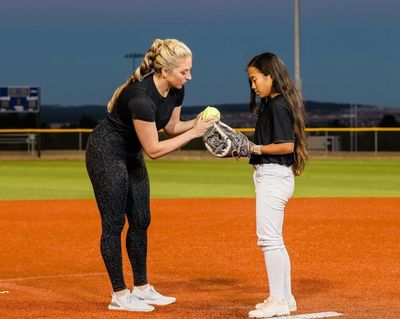
There is an expectation attached to being a professional athlete that has little to do with performance. You are asked to sign the autograph, take the photo, visit the youth team and make the kid standing at the railing feel like she belongs there.
In established professional sports, those interactions are part of an enormous ecosystem. In a growing sport like professional softball, they can carry considerably more weight. The players on the field aren't simply representing a team. In many cases, they're introducing young fans to the idea that this career exists at all.
Hope Trautwein-Valdespino doesn't seem to resent that responsibility. She considers it part of the job.
"I feel like I have a duty to the sport and to everything it's given me that I take very seriously," Trautwein-Valdespino said during an episode of Out of Left Field.
It's an interesting way for a professional athlete to describe her relationship with her sport. Not an obligation to win, build a following or capitalize on a platform, but a responsibility to leave something behind for the people coming next.
For Trautwein-Valdespino, that responsibility is personal because she remembers exactly what it felt like to be one of those kids.
Hope Trautwein-Valdespino on the 21-Strikeout Perfect Game & Bringing Pro Softball to KC
Before You Can Grow a Game, Someone Has to Show You One
Trautwein-Valdespino grew up in Pflugerville, Texas, not far from Dell Diamond. Her family went to Round Rock Express games, her brother had opportunities there through Little League, and her own Little League team got to experience Texas softball up close.
She remembers looking up to players like Cat Osterman and Nadia Taylor. Long before Trautwein-Valdespino became a college softball star herself, other athletes had already made the highest levels of the game feel tangible.
Now, playing professionally for the Kansas City Diamonds, she's experiencing those interactions from the opposite side.
Young girls come to games looking for autographs. Parents tell players they're bringing their daughters repeatedly. Former softball players have approached them around Kansas City to explain what it means to finally have professional softball in their community.
"We've been in the grocery store before and, like, people have come up to us and been like, 'Thank you so much for being here. I'm taking my daughter to all the games,'" she said. Others have told her, "'I played softball. I never thought that, you know, Kansas City would have a pro team.'"
Trautwein-Valdespino understands why those interactions matter because someone once created them for her.
"I have a duty to make sure these kids, like, they have a meaningful experience and they enjoy something that they can be like, 'You know what? I want to do that one day,' because somebody had given that to me once," she said.
There is a simple cycle buried in that answer that explains a lot about how sports grow. Fans aren't created only through television deals or marketing campaigns. Sometimes they're created because a child gets close enough to an athlete to imagine becoming one.
The athlete she meets today becomes the possibility she carries home with her.
What Do Athletes Actually Owe the Game?
There is an important distinction worth making here.
Female athletes shouldn't be required to carry the growth of women's sports on their backs.
For years, athletes in emerging women's leagues have been asked to do more than compete. They're expected to market themselves, promote the league, create content, interact with fans and advocate for investment while still training and performing at an elite level. Growth requires infrastructure around athletes, not an assumption that they should personally compensate for what the business hasn't built yet.
Trautwein-Valdespino's perspective is interesting precisely because she isn't describing a league requirement.
She's describing a personal philosophy.
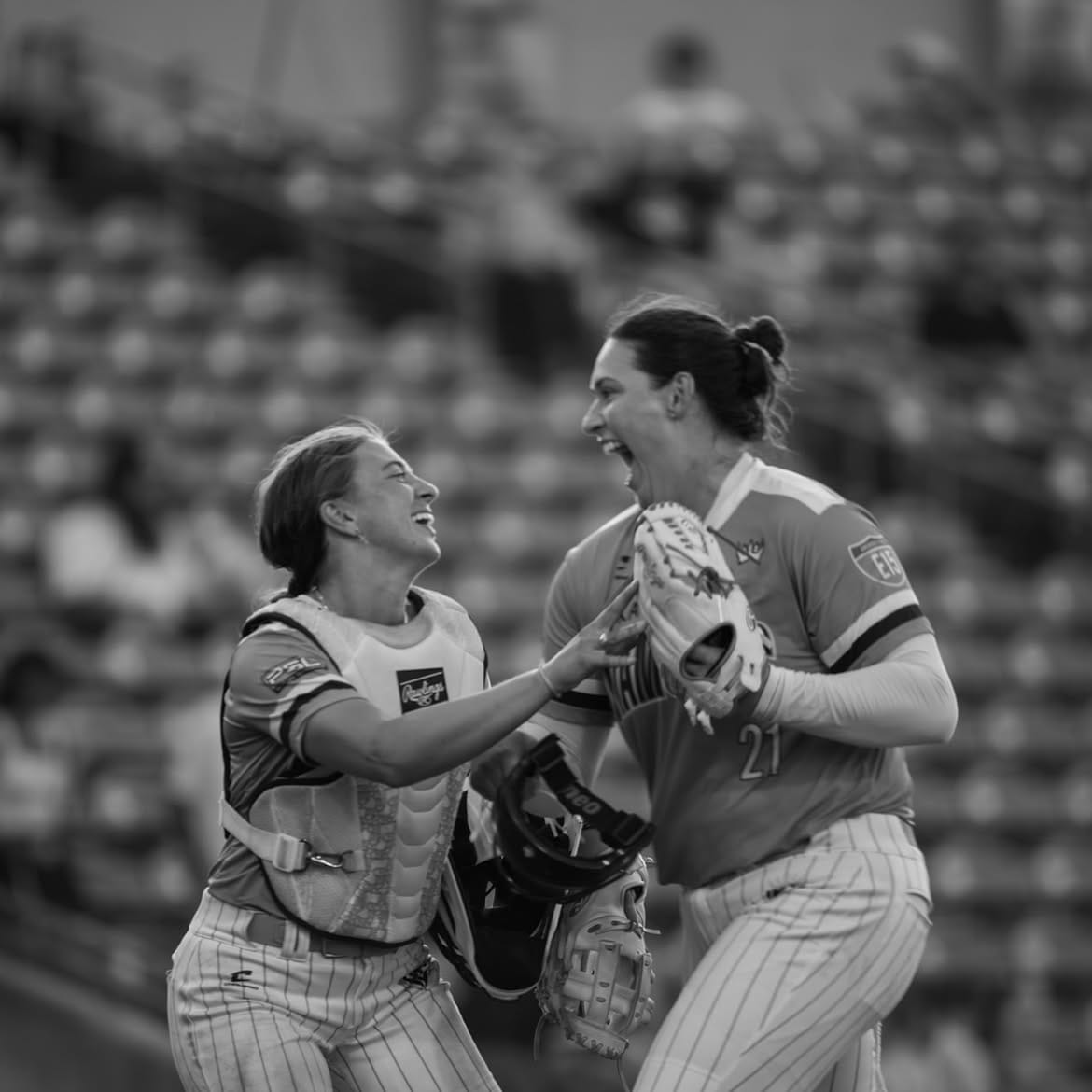
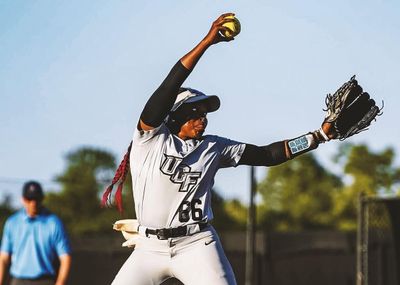
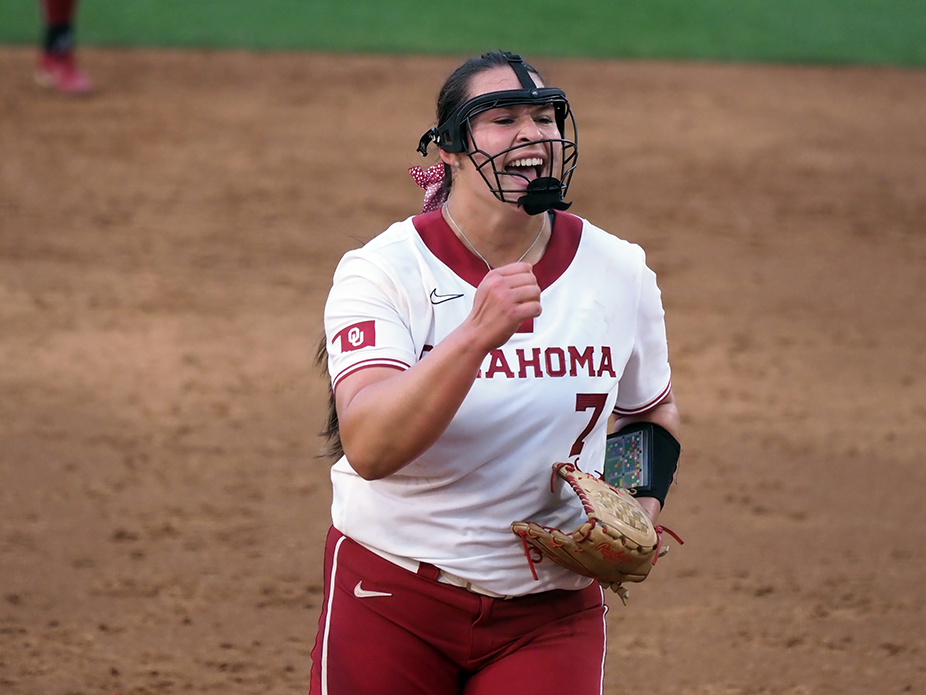
Her career has given her plenty of reasons to think about legacy through accomplishment. In 2021, she became the first NCAA Division I pitcher to throw a seven-inning perfect game consisting of 21 strikeouts. A year later, after transferring to Oklahoma, she went 22-1 with a 0.77 ERA and helped the Sooners win the 2022 national championship. She earned Women's College World Series All-Tournament honors along the way.
Those accomplishments established what Trautwein-Valdespino did in softball.
Her conversation on Out of Left Field was much more focused on what she could do with softball.
"I wasn't given this talent for nothing," she said. "At the end of the day, like, we were given this talent for a reason. And, you know, it's a God-given gift. And when it's a gift, you have to do something with it."
Her faith is central to that perspective, but the broader idea doesn't require sharing it to understand it. Achievement can be treated as an endpoint, or it can create access, credibility and influence that gets passed forward.
Trautwein-Valdespino has chosen the latter.
Oklahoma Changed Her Definition of Winning
That philosophy became particularly clear when Trautwein-Valdespino talked about her season at Oklahoma.
She arrived in Norman already established as an elite pitcher. What she says she gained there had relatively little to do with pitching.
"That program changed my life," she said. "The softball was softball. Yes, you trained to win championships, but also, like, you trained to win hearts. You dive into faith, you dive into teammates, you dive into like who you are as people, giving back to the community."
Oklahoma did, of course, win. The Sooners finished 59-3 and captured the 2022 national championship during Trautwein-Valdespino's season there. But when she describes what made the experience meaningful, the championship becomes part of a larger culture rather than its sole purpose.
"It's really not about the game," she said. "The faster you can realize it, the more grateful you can be for your experiences."
She continued: "The game is about more. It's about life and it's about faith and it's about the people and making a difference and leaving something better than you found it."
That last phrase is a useful definition of stewardship in sports.
Athletes inherit something they didn't build alone. Someone coached them. Someone paid tournament fees. Someone caught their bullpens. Someone maintained the field. Someone gave them their first autograph. Generations before them fought for opportunities that eventually became normal enough for the next generation to expect.
The athlete's career exists within that continuum.
Trautwein-Valdespino is particularly quick to recognize it. Even when discussing one of the most individual accomplishments imaginable — a perfect game where she personally recorded every out by strikeout — she redirected the credit toward the people around her.
"My catcher was there every step of the way. Defense was there. They weren't utilized, but... I'm a pitcher who likes to be fed energy," she said. "Everybody talks about it like, you know, you're the one, Hope, but like, it really wasn't. It wasn't me."
Whether or not anyone else could have thrown those 21 strikeouts, the way she remembers the accomplishment says something about how she understands her career. Very little of it belongs solely to her.
Professional Softball Is Building Its First Generation of Tradition
That mindset matters at this particular moment in softball.
The young fans attending professional games today are experiencing something previous generations couldn't take for granted. Some of the women approaching Trautwein-Valdespino in Kansas City played the same sport but never had a hometown professional team to follow.
Their daughters do.
Trautwein-Valdespino wants that gap to continue closing. When asked what she hopes softball looks like in five years, she described something resembling the infrastructure Americans already associate with men's professional sports.
"I want this to almost be like the baseball model," she said. "I want there a team in every city. I want people to come and bring their kids. I want it to be longer than summer."
Building that future will require investment, ownership, media distribution, sponsorship, stable franchises and all of the other machinery of a sustainable professional sport.
It will also require people to care.
That's the part athletes can uniquely influence.
A little girl doesn't understand a league's revenue model when she asks for an autograph. She knows the woman standing in front of her does something she wants to do someday.
Years ago, Trautwein-Valdespino was that girl. Today, she is the professional athlete on the other side of the interaction. One day, one of the girls currently watching her could occupy the same position.
That is how a sport builds tradition before it has decades of history to lean on.
The responsibility Trautwein-Valdespino feels isn't to personally build professional softball. No athlete should have to do that.
It's much simpler than that.
Take what the game gave you, make the most of it, and when someone else reaches for it, make sure there's something there for them to grab.
For Trautwein-Valdespino, leaving the game better than she found it isn't separate from her career.
It's part of what the career was for.