Constance Quinn on the Lost Art of Knowing Your Role

There’s a part of athlete development that nobody really prepares you for.
Not the training. Not the competition. Not even the jump in speed of the game.
It’s what happens when you’re not the one at the center of attention anymore.
When you’ve always been the starter, the leader, the player everything runs through—and then suddenly, you’re not.
That’s where things get real.
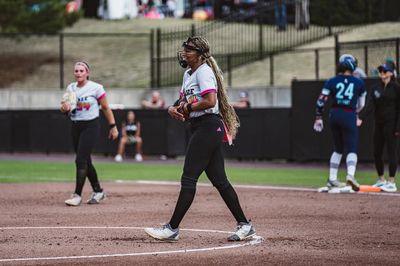
In a recent conversation on Out of Left Field, former LSU standout Constance Quinn described that moment. And based on her background, it wasn’t supposed to happen to her.
She was a seventh-grade varsity starter.
Committed to LSU in eighth grade.
Built to walk into college and make an impact.
Instead?
“I came in… and I sat my behind on the bench… you talk about humbling? Yo, crazy.”
That’s the moment a lot of athletes don’t know how to handle. Not because they’re not talented but because they’ve never had to operate without being the focal point.
And when that identity gets challenged, everything else follows.
Constance Quinn on LSU Softball's Culture, Playing For Beth Torina & Jayden Heavener's Wave
The Question Most Athletes Don’t Ask
What separates Quinn’s experience isn’t that she sat.
It’s what she did next.
“If I’m gonna sit the bench… how do I make the most of it?”
That question flips everything.
Most athletes in that position are thinking about what they’re not getting—playing time, opportunities, recognition. Quinn shifted the focus to what she could still bring.
And that answer didn’t live in the box score.
“If I can’t bring it on the field, I can bring it in the dugout.”
That’s not a cliché. That’s how teams actually function.
Because inside a program, everyone knows who raises the energy, who keeps people locked in, who shows up the same way every day. Coaches see it. Teammates feel it.
What “Heart and Soul” Really Means
Quinn was eventually described by LSU head coach Beth Torina as the “heart and soul” of the program.
That’s not about stats.
That’s about impact.
Every college roster has more players than spots on the field. In Division I softball, you’re typically looking at around 20 athletes and nine starting positions. That gap never goes away. It just gets more competitive.
So the question becomes: what separates the players who still influence winning from the ones who fade into the background?
It’s not always talent.
It’s engagement.
It’s presence.
It’s whether you stay locked in when the spotlight isn’t on you.

Why This Actually Decides Games
LSU didn’t just have a good year while Quinn was there.
They went to the Women’s College World Series three straight times.
“Getting there one time is hard… but having to repeat, that becomes an expectation.”
You don’t sustain that with just stars.
You sustain it with alignment across the entire roster. Players understanding what’s needed from them—and actually doing it.
Because over the course of a season, things shift.
Lineups change. People struggle. Roles evolve.
And when that happens, the teams that stay steady are the ones where players don’t check out just because their role isn’t what they want it to be.
The Part Nobody Talks About
There’s this assumption that development is all about getting better physically.
Stronger. Faster. More skilled.
That’s part of it.
But there’s another layer that’s harder to coach and harder to measure—how you respond when your situation isn’t ideal.
Quinn didn’t pretend sitting was easy. She called it humbling.
But she stayed engaged anyway. She found a way to contribute anyway.
And eventually, that’s what defined her.
What's The Lesson?
Not every player is going to be the star right away.
Some won’t be the star at all.
That doesn’t make them less valuable—it just means their value shows up differently.
What Quinn understood—and what a lot of athletes are still learning—is that being part of a team isn’t just about when your number is called.
It’s about how you show up when it’s not.
Because in the end, the players who last aren’t just the most talented.
They’re the ones who stay invested… no matter what their role looks like.