Leah Boggs and the Rise of the PSL: Inside Softball’s Next Big Bet
There’s a version of professional softball that has existed for years—fragmented, underfunded, and often invisible to the mainstream sports ecosystem. And then there’s what’s happening right now.
The emergence of the Professional Softball League isn’t just another attempt at organizing teams. It’s a shift in how the sport thinks about scale, sustainability, and opportunity. And if you want to understand what that actually looks like on the ground, you start with players like Leah Boggs.
From UVA Catcher to Pro Pioneer | Leah Boggs on PSL, Building KC Diamonds & the Future of Softball
A League Born Out of Fragmentation
For years, professional softball in the U.S. wasn’t really a “league” at all—it was a collection of independently operated teams, each running their own schedules, budgets, and operations. Talented athletes existed. Competitive games existed. But infrastructure didn’t.
The PSL is working to change that.
“This is actually the first year that the PSL is a thing,” Boggs explains.
Teams that once operated independently are now unified under league rules, schedules, and—most importantly—a championship structure.
That might sound basic. It’s not.
In sports business terms, this is the difference between a collection of assets and a product. A league creates consistency. Consistency creates media value. And media value is what ultimately drives revenue, sponsorship, and long-term viability.
Opportunity Is the Entire Point
Right now, the professional softball ecosystem in the U.S. is brutally limited.
Between the Athletes Unlimited Softball League (AUSL) and the PSL, there are roughly a dozen total teams offering roster spots. That’s it.
Meanwhile, every year, hundreds of elite college players—many hitting .400+ with legitimate power—graduate with nowhere to go.
That gap is the market.
The PSL isn’t trying to replace existing leagues. It’s trying to expand the pie.
“We can’t take everybody. AUSL can’t take everybody,” Boggs says. “There’s a lot of really talented college girls… and there’s just so few opportunities.”
That’s the core business thesis: more teams, more roster spots, more reasons for athletes to stay domestic, more content, more fans, more revenue. More everything.
Kansas City as a Case Study
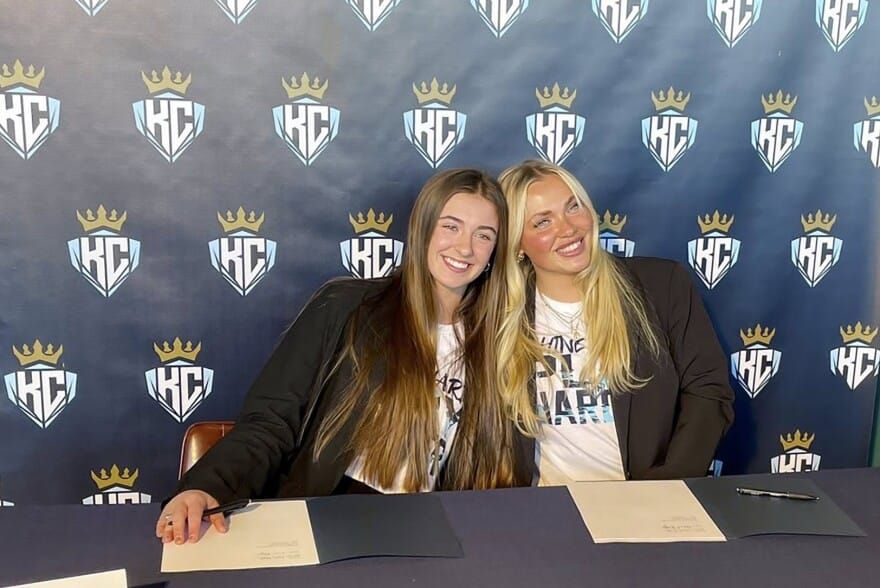
If you want proof of concept, look at the Kansas City Diamonds.
A brand-new franchise. No established roster identity. No historical fan base tied to performance.
And yet, 2,000+ tickets were sold in the first 24 hours, exemplifying a strong early community buy-in without players being in-market yet.
In sports business, early traction without on-field results is one of the clearest signals of market demand. It means fans aren’t just buying wins—they’re buying access, identity, and participation in something new.

The Athlete as Operator
What makes Boggs’ story particularly relevant to the business side is that she’s not just a player.
She’s also working in player relations and communications for the Diamonds.
That dual role reflects a broader reality in emerging leagues: players aren’t just labor—they’re builders.
“I wanted to be a part of making sure we were doing this right,” she says, referencing her experience across multiple teams and organizations.
This is common in early-stage sports ecosystems. Players help shape operations. Feedback loops are immediate. Culture is built in real time.
It’s messy. But it’s also where long-term competitive advantages are formed.
The Bigger Vision: A Livable Career
Right now, professional softball isn’t a full-time job for most players; it’s a seasonal opportunity.
The long-term goal of the PSL is to change that.
“The goal is to make this a sustainable thing… to make it eventually a livable wage,” Boggs explains.
That requires longer seasons, stronger media deals, expanded team count, and increased sponsorship investment.
In other words, it requires the same economic engine that drives every successful professional league.
The difference is that softball is building it from scratch—during a moment when women’s sports are experiencing unprecedented growth.
Timing Might Be the Biggest Advantage
Softball isn’t just growing. It’s accelerating.
Between NIL, media rights expansion, and increased visibility across women’s sports, the environment has shifted.
Boggs is fully aware—even if she doesn’t always stop to process it.
“It’s not like a crazy thing that we’re doing this,” she says. “When in reality, this is a really, really cool thing to be a part of.”
That mindset—head down, build anyway—is exactly what early-stage leagues need.
Why This Matters
The PSL isn’t guaranteed to succeed. No emerging league is.
But the strategy is sound.
Consolidate fragmented talent. Create a unified product. Expand opportunity. Build local markets. Grow into sustainability.
And most importantly, it’s being built by people who understand the game from the inside out.
Players like Leah Boggs—who have already navigated the instability of professional softball—aren’t just participating in the next version of the sport.
They’re designing it.
The PSL isn’t competing with softball’s existing ecosystem—it’s bolstering it. And if it works, the biggest shift won’t be who wins championships.
It’ll be the fact that more athletes finally get the chance to play long enough to matter.