Why Great Athletes Never Stop Being Students
Professional athletes spend years trying to reach the highest level of their sport.
Jessica Clements is still trying to become a better student.
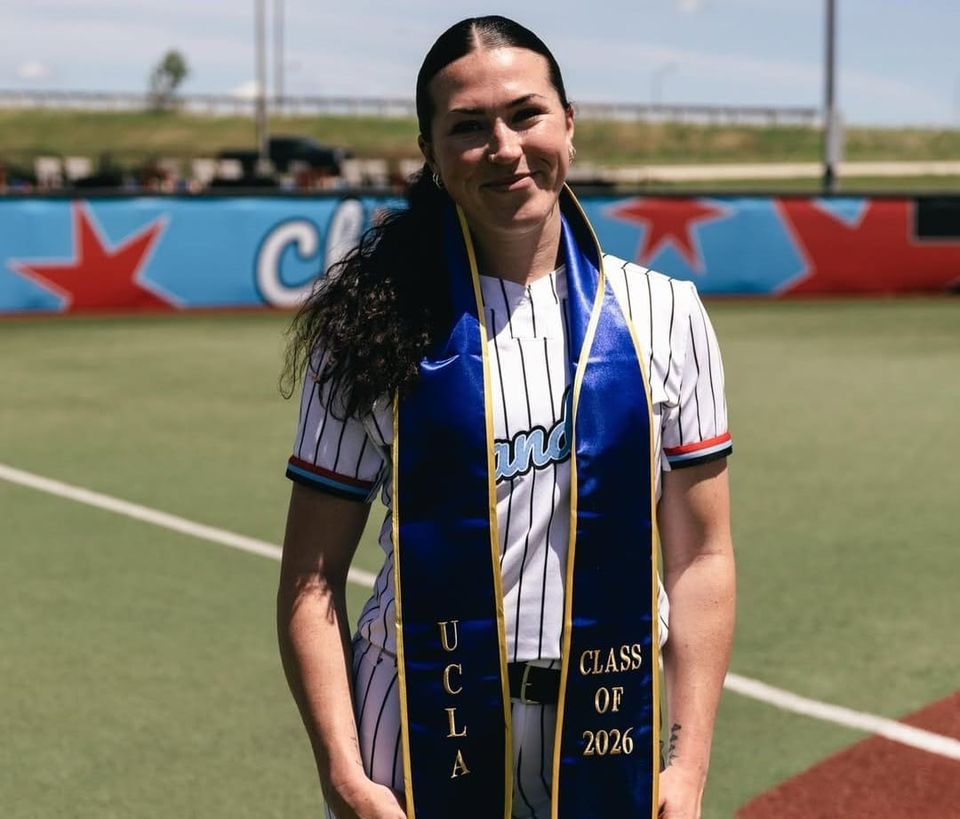
Not because she's back in a classroom (although she recently completed her master's degree in coaching and leadership at UCLA) but because learning has become the foundation of her career.
"I call myself a learner," Clements said. "I love to learn... I always want to master whatever I can pick up. I want to become good at it."
It's an answer that feels almost out of place in professional sports, where conversations often revolve around athleticism, work ethic and talent.
Yet Clements' career suggests that curiosity may be just as valuable.
Jess Clements: UCLA & Cal Poly Star on Identity, Pressure & Her Dad's Letters | Out of Left Field
Before becoming an outfielder for the AUSL's Bandits, Clements built an impressive collegiate career at Cal Poly before transferring to UCLA for her fifth season. While many athletes entering the transfer portal prioritize exposure, conference affiliation or NIL opportunities, Clements approached the decision differently.
"I really wanted to be challenged academically," she said. "Wherever I was gonna go, I wanted to be challenged."
That decision led her to UCLA, where she earned her master's degree while serving as a graduate assistant and gaining firsthand experience in coaching.
The move wasn't simply about extending a softball career; it was about continuing to grow.
That philosophy mirrors what researchers have found about expertise across industries. Studies on deliberate practice have consistently shown that elite performers don't improve simply because they accumulate experience. Improvement comes from purposeful practice, continuous feedback and a willingness to attack weaknesses rather than rely on existing strengths.
In other words, years alone don't create mastery—intentional learning does. And Clements' approach reflects that mindset.
Even after more than a decade and a half of playing softball, she doesn't view herself as someone who has figured the game out.
"Even though, knowing that I know myself and I know my game, there's still always something that I can get better at," she said. "You're never perfect, and there's always gonna be failure that you're gonna experience."
That perspective is especially important in professional softball, where the margin between success and failure is razor thin. A few inches can separate a line drive from a routine out. One swing decision can determine an at-bat.
The athletes who continue to improve are often the ones willing to acknowledge there's still room to learn.
But that doesn't make the process easy.
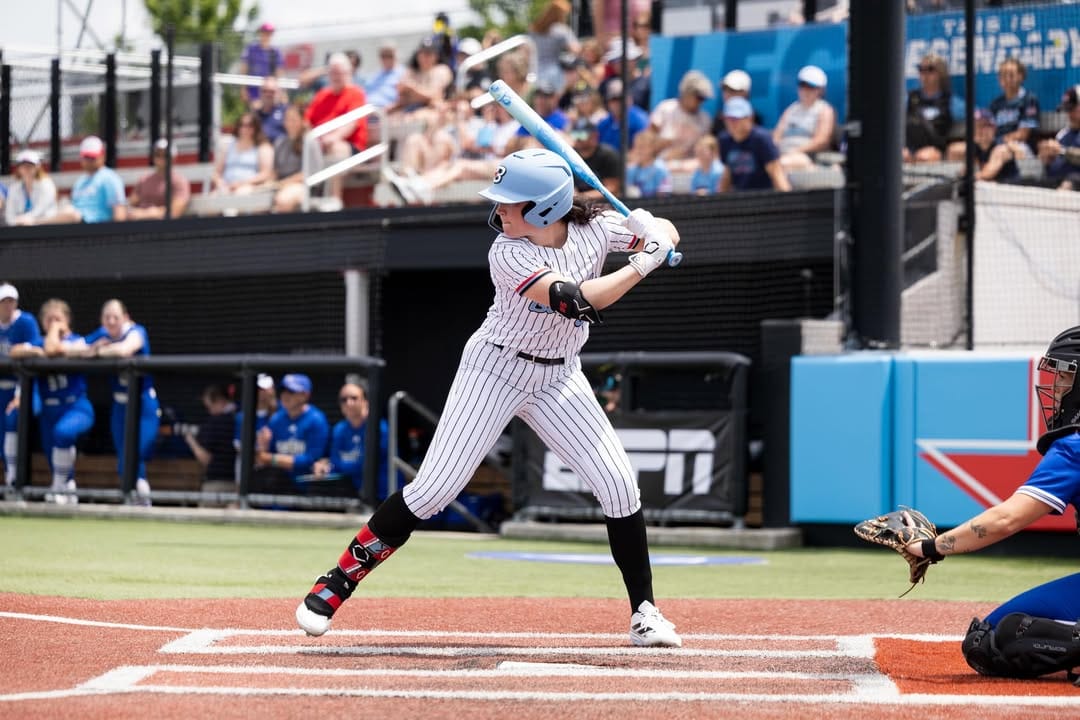
During the AUSL season, Clements admitted she was pressing at the plate despite making solid contact. The results weren't matching the work, and the pressure began to build.
"I've been putting pressure on myself to be who I am and be the athlete that I am to execute," she said. "A part of me with not executing, I feel like I'm disappointing my family and the people from my hometown... and all the people that have been supporting me all this way."
Many athletes respond to those moments by trying harder.
Clements listened.
A veteran teammate noticed her frustration during warmups and offered a simple reminder.
"Don't forget who you are," Clements recalled. "It's all up here... You're here for a reason. You got drafted for a reason."
The interaction lasted only a few moments, but it illustrates something often overlooked about elite athletes: they don't stop being coachable once they become professionals.
If anything, they become even more dependent on feedback.
That willingness to receive coaching has been present throughout Clements' career. Growing up in Salinas, California, she credits her father for encouraging her development long before college. She also remembers coaches who challenged her by having her compete against older players, forcing her to adapt at an early age.
Those experiences taught her that improvement rarely comes from comfort.
It comes from being stretched.
And that lesson extends beyond softball.
Throughout the conversation, Clements repeatedly returned to the importance of building an identity outside the game. She spoke openly about separating self-worth from performance, surrounding herself with people who care about more than statistics, and finding fulfillment in making an impact on others.
"I have more to offer than a game that we play," she said. "At the end of the day, it is a game that we play... I'm trying to make an impact and keep people inspired as a person."
Perhaps that's what makes her approach to learning so sustainable.
She isn't chasing perfection. She's pursuing growth.
And in an era where athletes are evaluated by exit velocities, defensive metrics and social media highlights, that mindset may be one of the most valuable skills of all.
The players who last the longest aren't always the ones with the most natural talent.
More often, they're the ones who never convince themselves they've learned everything.