Softball's Greatest Strength Isn't Competition—It's Collective Ambition
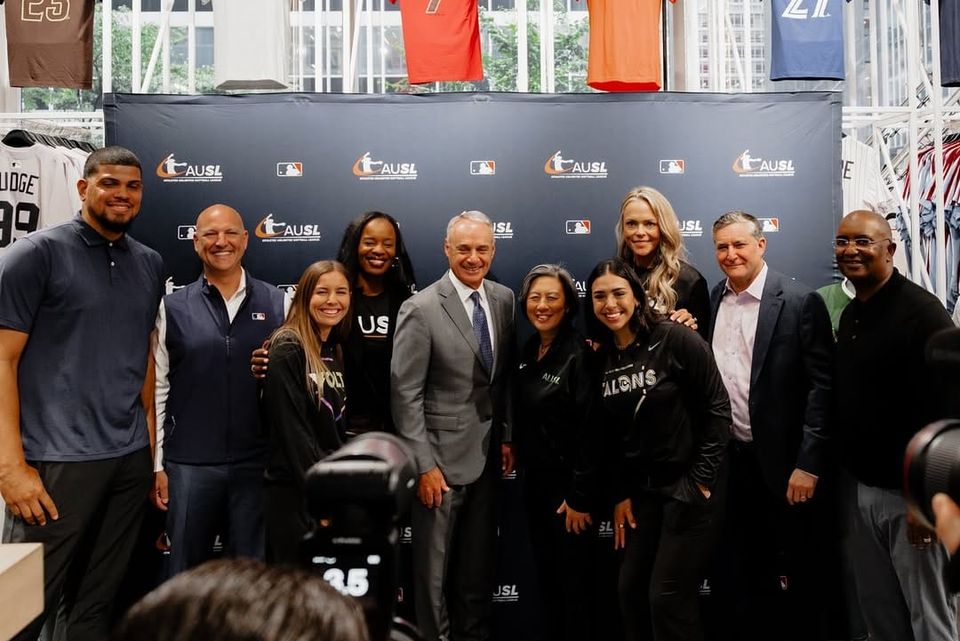
Before AUSL players ever step onto the field, they're already working.
They're posting ticket links on Instagram. They're filming sponsor content. They're resharing team announcements. They're answering questions from young fans in the stands. They're introducing themselves to new markets, appearing on local news stations and convincing people—sometimes one conversation at a time—that professional softball is worth their attention.
Most professional athletes inherit established leagues, but these athletes are helping build one.
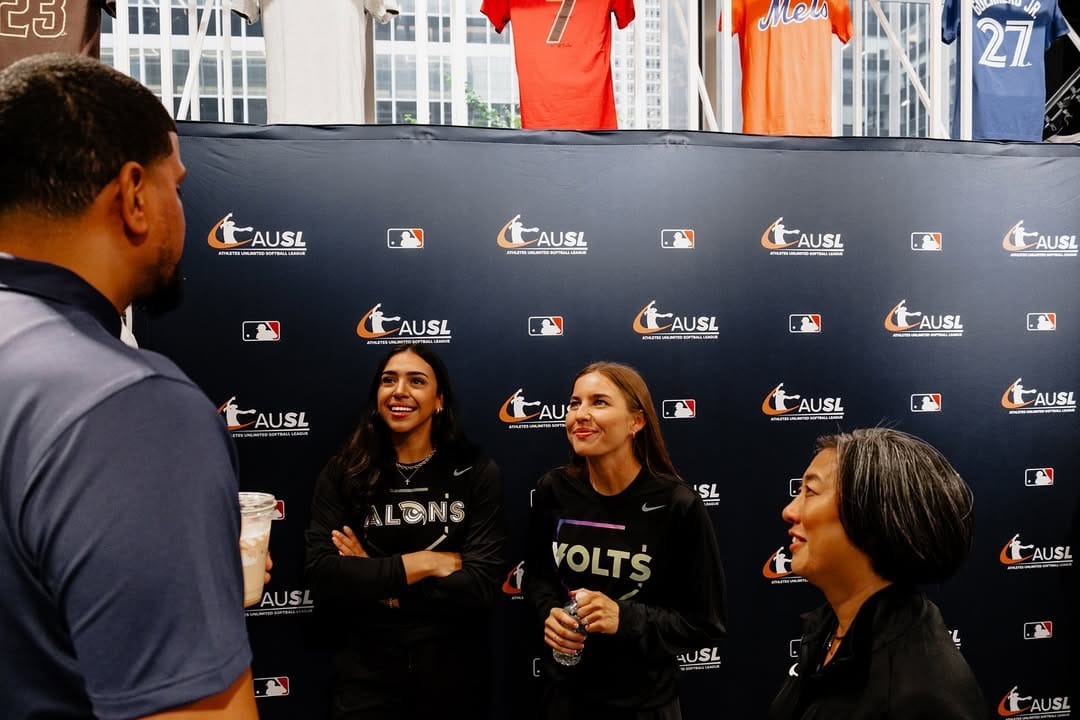
That reality became clear during a recent conversation with Talons catcher Sharlize Palacios ahead of opening day in Salt Lake City. With Utah nearly sold out and excitement surrounding the league continuing to grow, Palacios described something unique happening within professional softball: an entire group of elite competitors united by a shared mission.
"I feel like right now, in such the infancy of our league, all of us want to put out a good product," Palacios said. "We're always wanting to post about ticket sales, about our sponsors, our partnerships, just so they know that we are in it with them."
Professional sports are built on competition. Players compete for roster spots, playing time, championships and contracts. At the highest levels, that competitive edge is often what separates good athletes from great ones.
But softball's current professional landscape demands something more.
It requires collective ambition.
Utah Talons Catcher Sharlize Palacios on Family, Transferring to UCLA & the Future of Pro Softball
Competing Against Each Other While Building Together
Palacios laughed when discussing the personalities that exist inside the AUSL.
"You have to be a little cuckoo," she said. "If we're walking on the sidewalk, I still want to beat Jalen."
The comment was lighthearted, but it highlighted a fascinating dynamic.
These players are fiercely competitive. They're the best in the world because they've spent their entire lives trying to outperform the person standing next to them. As Palacios noted, these athletes represent "the one percent of the one percent." They didn't arrive here by accident.
And yet, when it comes to the league itself, individual success isn't enough.
If attendance grows, everyone benefits.
If sponsors see value, everyone benefits.
If television ratings improve, everyone benefits.
If a young girl attends her first professional softball game and becomes a lifelong fan, everyone benefits.
Unlike athletes entering the NFL, MLB or NBA, AUSL players aren't stepping into institutions that have existed for generations. They're shaping what professional softball looks like in real time.
The WNBA Blueprint
Palacios repeatedly pointed to the WNBA as an example.
"It's taken a really long time," she said. "They've put out a product that people are really invested in now. Those women are making really good money."
The WNBA didn't become culturally relevant overnight. Players spent decades advocating for visibility, promoting the league and helping establish its identity. Today's surge in popularity is built on years of investment by athletes who often fought for recognition while simultaneously performing at the highest level.
Professional softball is earlier in that journey.
Athletes Unlimited launched its softball competition in 2020 before evolving into the city-based Athletes Unlimited Softball League. Expansion has already begun. The Oklahoma City Spark joined the league ahead of the 2026 season, increasing the number of teams and opportunities available to athletes.
Growth is happening.
The question is how quickly it can continue.
Athletes as Stakeholders
In many professional sports, players can afford to focus solely on performance.
In softball, the job description is broader.
Athletes have become marketers, storytellers and advocates.
That's not necessarily a burden, but for many, it's a responsibility.
Palacios spoke about wanting fans and sponsors to understand that players are invested alongside them. The social media posts aren't performative. The autograph lines aren't obligations. The community appearances aren't boxes to check.
They're part of building something sustainable.
It reflects a level of ownership rarely discussed in conversations about professional athletes.
These players aren't simply employees of a league.
They're stakeholders in its future.
Dreaming Bigger
When asked what she hopes professional softball looks like five years from now, Palacios didn't hesitate.
Ten teams. Six-month seasons. MLB investment. Six-figure salaries. More championships.
"I don't think that's crazy," she said.
Neither should anyone else.
Women's sports have demonstrated repeatedly that demand exists when investment follows. The NCAA Women's College World Series continues to draw impressive television audiences and attendance figures. The WNBA is experiencing unprecedented growth. Women's soccer has expanded commercially across the globe.
Professional softball's ceiling remains largely unexplored.
But reaching it will require the same thing that has fueled the sport's progress thus far.
Not the absence of competition but the presence of shared purpose.
More Than a League
Competition will always define athletes, but perhaps softball's greatest advantage isn't found in its competitiveness.
It's found in what happens beyond it.
An entire generation of players has decided that individual accomplishments and collective success don't have to exist in opposition. They can chase championships while promoting ticket sales. They can compete relentlessly while advocating for the athletes beside them. They can fight for roster spots while fighting for a league.
Professional softball is still being built.
And the people laying its foundation happen to be the same women stepping between the lines every night.
That's not a weakness.
It may be the sport's greatest strength.