From Player of the Year to Pro Rookie in Two Weeks
Jordan Woolery drove in 117 runs at UCLA and 11 in her first AUSL regular season. The Utah Talons rookie went from college to a 25-game schedule in under two weeks, and her own words on pitching, patience and the league's calendar show what that asks of a draft class.
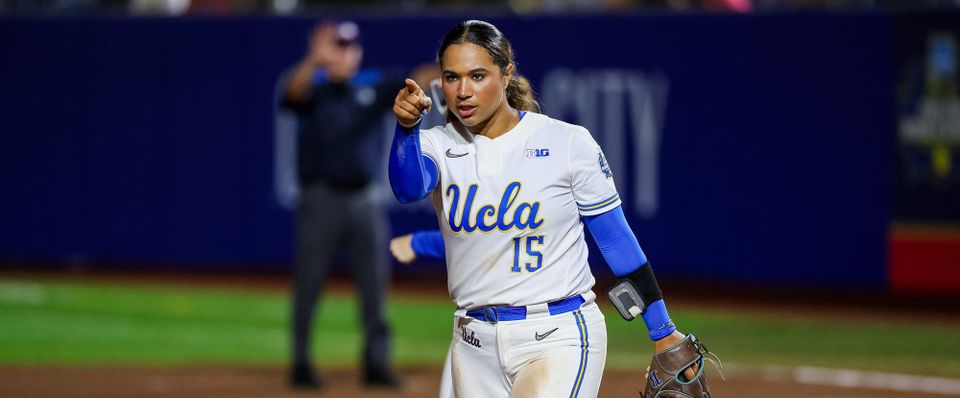
Jordan Woolery drove in 117 runs for UCLA this spring, the second-most in NCAA Division I single-season history. In her first AUSL regular season, she drove in 11.
The gap says less about Woolery than about what the six-team league asks of its rookies: adjust to the best pitching of your life, and do it in 25 games.
Woolery hit .497 with 36 home runs and was named Softball America National Player of the Year. The Utah Talons took her sixth overall in May’s AUSL College Draft. UCLA’s season ended May 31 against Texas Tech, and she made her pro debut June 13.
Her AUSL regular-season line: .270, one home run and 11 RBIs in 21 starts, on 63 at-bats.
A Two-Week Turnaround
During a recent appearance on Out of Left Field, Woolery described how fast the move happened. “We graduated on Thursday and then we flew out to Utah Friday and then we played the next day on Saturday,” she said.
The AUSL drafts players while their college seasons are still underway, which leaves development to the colleges. That is efficient for the league. It also means a first-round pick can arrive days into the season with no gradual ramp, in a schedule too short to build one.
The Talons’ version came with some built-in familiarity. General manager Lisa Fernandez is also UCLA’s associate head coach, and Utah used both of its picks on Woolery and fellow Bruin Taylor Tinsley. Woolery said “Coach Lisa of course drafted a great team,” and credited the veterans around her with making the transition easier.
The Pitching Gap Is the Adjustment
Woolery pointed to one difference above the rest. “All the pitchers have, I would say, two or three A-plus pitches, where in college you have A-plus and then it kinda goes B, C pitches,” she said. In college, a hitter can hunt a weaker pitch. In the AUSL, she said, “at any count, any time” a pitcher can throw three different pitches “with a lot of confidence, a lot of command.”
Her answer to the slower start was patience. “I would say the biggest thing I learned is just giving myself grace,” Woolery said. She said she was learning to accept “that it’s just another level and that’s okay that I’m not adjusted right away, but with time I will be.”
She also described real doubt. “It does get hard to remember how good you are and like what level you are playing at sometimes,” Woolery said, which she called “crazy to say after the college season that I had.”
Other rookies adjusted faster. Carolina catcher Reese Atwood, the No. 7 pick, hit .309 with eight home runs and was named Rookie of the Year. That shows the jump can be made inside a 25-game season. It also shows how little room the calendar leaves for anyone who starts slowly.
What More Games Would Change
The schedule is a business decision as much as a baseball one. The AUSL played 25 regular-season games in 2026, and commissioner Kim Ng said adding games is “on the table.” Ng also said the league will stay at six teams in 2027, with further expansion “on the horizon.”
For rookies, more games would mean more at-bats to close the college-to-pro gap. For the league, a longer season would give it more games to sell. Ng framed stability as the priority, saying she wants the league’s foundation to be “extraordinarily solid, stable.”
Woolery’s own wish for the league points the same direction. Asked about the next five years, she said she wants “more growth in the league for sure” and added, “Maybe a few more teams that would be awesome, honestly.” For herself, she named a target: “winning hitter of the year would be super awesome within the next five years.”
That bar is high. Chicago’s Sami Williams won the 2026 award by setting AUSL single-season records with 12 doubles and 34 RBIs. Woolery’s UCLA numbers show her ceiling, but how fast she reaches it in the AUSL depends on how many at-bats the league gives her.