

Why MLB Teams Hire Software Engineers Like Sami Williams

When people talk about careers in baseball, the conversation usually starts with players, coaches, or scouts.
Increasingly, it should also include software engineers.
Over the past decade, Major League Baseball organizations have quietly expanded their technical staff as the sport has become more dependent on internal data systems, performance technology, and proprietary development tools. Today, engineering roles sit inside Baseball Operations departments alongside analysts, player development staff, and performance science teams.
The goal is simple: turn growing volumes of baseball data into usable information.
From Data Collection to Baseball Infrastructure
The expansion of roles like software engineers is largely a downstream effect of baseball’s data explosion.
With the adoption of Statcast tracking systems beginning in 2015 and the transition to Hawk-Eye optical tracking technology in 2020, MLB organizations now process millions of data points tied to player movement, pitch characteristics, and game outcomes each season.
Collecting data, however, is only step one.
Teams still need systems that:
- Aggregate information from multiple sources
- Allow staff to search and filter data quickly
- Connect video, scouting reports, and analytics
- Support player development workflows
- Deliver information in usable formats to coaches
This is where engineering roles inside Baseball Systems or Baseball Technology departments have grown.
The job is less about “writing code for baseball” and more about building the internal tools that allow baseball departments to function efficiently.
What Baseball Software Engineers Actually Work On
Public MLB front office directories and job descriptions show that software engineers within baseball organizations typically work on:
Internal Applications
Tools used by scouting, player development, and research departments.
Data Integration
Systems that connect third-party technology platforms such as TrackMan, Hawk-Eye, Rapsodo, and biomechanics vendors.
Workflow Platforms
Internal web tools that allow staff to track player progress and evaluation history.
Data Pipelines
Automated processes that move data between systems and maintain reliability.
These roles often sit within groups called:
- Baseball Systems
- Baseball Technology
- R&D Engineering
- Data Engineering
- Performance Technology
While public discussion often focuses on analytics models, the practical reality is that analytics cannot function without engineering infrastructure to support them.
A Case Study: Sami Williams’ Dual Path in Baseball Technology and Professional Softball
One example of how these technical roles are emerging comes from Chicago Cubs software engineer and professional softball player Sami Williams.
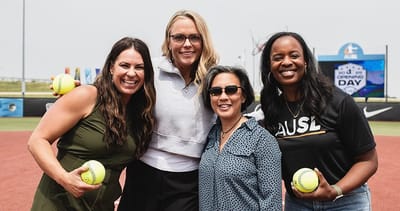
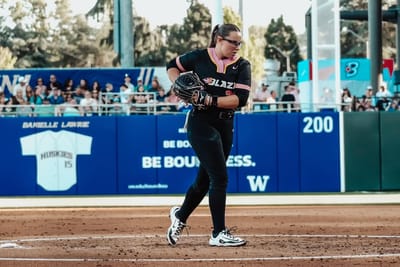
Williams, who studied software engineering and information systems at Iowa State, now works on internal applications supporting baseball operations workflows while continuing her professional softball career with the AUSL’s Chicago Bandits.
Her role focuses on application development — building features and tools used by baseball operations staff — which reflects the growing importance of internal product development inside MLB organizations.
Her path also highlights an emerging trend: athletes entering technical roles rather than traditional coaching or scouting tracks.
This reflects a broader shift. As baseball organizations increasingly operate like data-driven businesses, they need professionals who understand both the sport and the technology supporting it.
Athletes with technical backgrounds can be uniquely positioned to bridge that gap.
From Software Engineer To Pro Softball: Sami Williams’ Journey To The Chicago Bandits
Why Teams Value Technical Talent With Baseball Backgrounds
There is a practical advantage when engineers also understand the sport itself.
Technical staff with playing experience may better understand how coaches actually use information, what makes tools usable in real workflows, how player development processes function, and where communication breaks down between departments.
This does not mean teams only hire former athletes for technical roles; it does explain why hybrid profiles like Williams’ can be valuable.
The trend is not that athletes are becoming engineers.
It is that baseball is becoming a technical industry where multiple skill sets can intersect.
The Quiet Expansion of Baseball’s Technical Workforce
MLB organizations now routinely list engineering and systems roles within baseball operations departments, reflecting how central these functions have become.
The growth of technology – across performance tracking, injury prevention, video analysis, player development modeling, and biomechanics integration – means engineering is no longer a support function. It is operational infrastructure.
Teams are no longer simply evaluating talent. They are building internal platforms to manage the complexity of doing so.
The New Definition of a Baseball Career
Williams’ story illustrates something bigger than one career path.
Baseball careers are absolutely not limited to playing, coaching, or scouting. The sport includes a plethora of opportunities across technology, data, operations, and product development.
At the same time, athletes — particularly in growing leagues like professional softball — are increasingly building parallel careers that allow them to remain in sport while developing long-term professional stability.
As the technical side of baseball continues expanding, the next generation of sports professionals may look less like traditional baseball lifers and more like multidisciplinary operators — part sport, part technology, part business.
Baseball may still be played on grass.
But the organizations behind it increasingly run on software.