
There’s More Than One Way to Stay in the Game: Michael Braswell’s Path to Professional Baseball
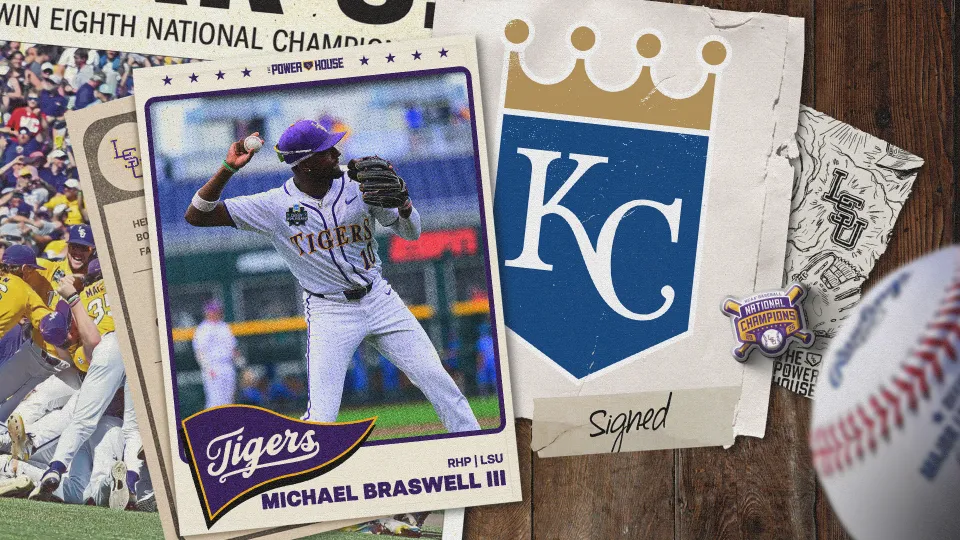
If you were building LSU Baseball’s 2025 lineup strictly on offensive projection, Michael Braswell may not have been an obvious everyday answer.
Championship teams, however, are rarely built strictly on projection alone.
Braswell stayed in the lineup because of defense, leadership, trust, and an ability to show up in moments that don’t always register cleanly in box scores. Timely hits. Smart baseball. Presence. He contributed in ways that don’t always translate to neat columns on a stat sheet but consistently show up in winning environments.
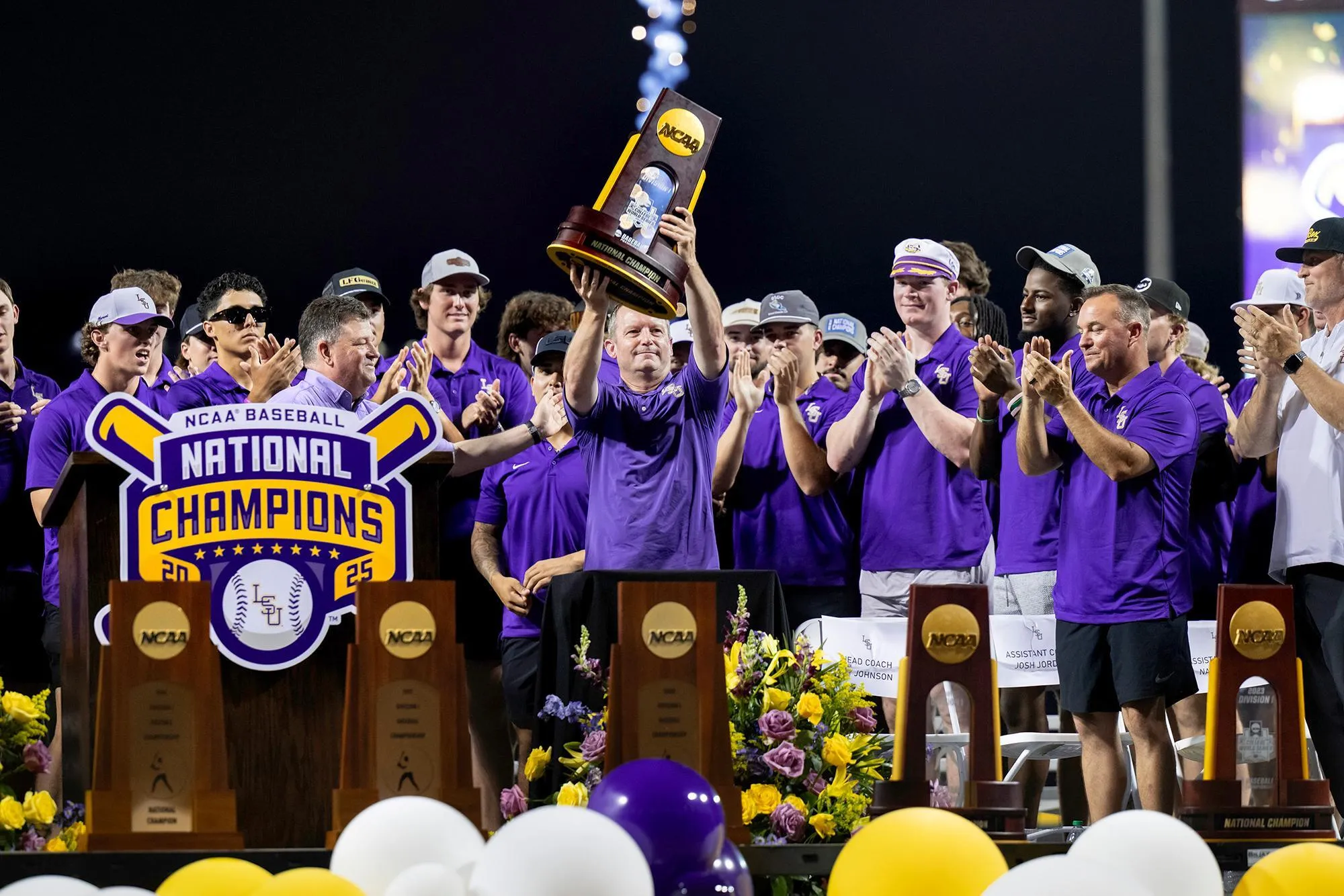
Those traits kept him on the field during LSU’s national championship run.
They may also be the reason he’s still in the game now.
I know this story well because I was part of the conversation around it—sometimes critically so. I covered LSU baseball closely, and I wasn’t shy about pointing out Braswell’s struggles at the plate the past two seasons. From a pure evaluative standpoint, I didn’t see him as a next-level hitter. In fact, I said as much publicly, and thought LSU may have had better options, hitting-wise.
I wasn’t wrong about the hitting limitations.
But I was incomplete about the player.

What became clear over the course of that championship run was that Braswell’s value wasn’t tied exclusively to offensive production. He stabilized the infield. He elevated the clubhouse. He brought consistency and competitiveness to a group chasing something bigger than individual numbers.
LSU head coach Jay Johnson understood that balance better than anyone. While outside evaluation—including my own—focused on production, Johnson leaned into makeup, trust, and leadership. In interviews throughout the season, he repeatedly emphasized Braswell’s importance to the team’s identity, pointing to the way teammates responded to him and the standard he helped maintain daily.
In other words, Braswell remained in the lineup because LSU was trying to win a national championship—not a projection contest.
That distinction is much more important than we often admit.
When Braswell went undrafted as a position player, it would have been easy for the story to end there. Many players reach that point and walk away, defined by what the market says they are not.
Braswell didn’t.
Instead, he reassessed where his strengths might translate next. He leaned into pitching, trained at Tread Athletics, and recently signed a professional contract as a pitcher—an outcome that might have sounded improbable in a more rigid era of player development.
But this isn’t that era anymore.
Modern baseball development has evolved beyond narrow positional labels. Organizations are increasingly focused on transferable traits: athleticism, arm action, adaptability, coachability, and competitive makeup. Development staffs are no longer just buying résumés; they’re investing in profiles.
From that perspective, Braswell’s path makes sense.
A former SEC infielder with championship experience, leadership credibility, and a willingness to start over represents a low-cost, high-curiosity opportunity for a professional organization. It’s not a bet on who he was—it’s an investment in what he might still become.
That openness—on both sides of the equation—is how the game continues to grow.
As a former MLB pitcher, I’ve lived on the other side of this equation. I know how unforgiving timelines can be. I know how quickly the game moves on if you stop adapting. What I respect most about Braswell’s path is that it required humility, curiosity, and belief—all traits that don’t get enough credit in our evaluation models.

Baseball isn’t as binary as it once pretended to be.
Players aren’t just hitters or pitchers.
Careers aren’t defined by draft status.
Value isn’t confined to a single column of a stat sheet.
Sometimes, staying in the game requires redefining how you belong in it.
Michael Braswell did exactly that.
And in doing so, he offered a quiet reminder that the future of baseball—developmentally and economically—belongs to those willing to see the game from more than one angle.