The Freshman Redshirt Advantage: Why “Losing” a Season Can Create a Breakout Career
In college softball, “redshirt” is often treated like a setback – an asterisk on a season, a delay in a player’s timeline, an injury footnote.
In reality, it’s closer to a roster tool.
A freshman redshirt year can function like a developmental accelerator: extra time for strength and movement work, film study, scouting literacy, nutrition and recovery habits, and the mental reframe athletes need to survive a “failure sport.” It’s also a strategic asset for programs managing scholarships, lineup depth, postseason windows, and long-term roster construction.
And crucially, the eligibility clock doesn’t stop just because an athlete doesn’t compete.
The rule framework: the clock keeps moving
The NCAA’s Division I model is straightforward – five calendar years to play four seasons. That five-year clock starts when a student-athlete first enrolls full-time and continues even if they redshirt (or don’t attend for a term or go part-time later).
That’s the baseline reality behind every “redshirt decision." It doesn’t create time; it reallocates the athlete’s four seasons of competition inside the same five-year window.
The medical hardship layer: where “redshirt” becomes a formal eligibility decision
When a season ends due to injury or illness after competition has already begun, the conversation often shifts toward hardship waivers (commonly called medical redshirts).
For injuries/illnesses occurring on or after Aug. 1, 2022, the NCAA’s Division I hardship waiver process is built around two key thresholds:
- A participation cap (the form references “three or 30%”)
- And timing (the injury must occur in the first half of the playing season for the sport’s denominator)
That structure is an eligibility and asset-management story. A season can be “lost” competitively without being “lost” on the eligibility ledger but only under defined criteria.
Why the redshirt year can create an edge (developmentally)
The part most fans miss is that a redshirt year can produce a different type of player – not because they took a year off but because they got a year on the inside without the weekly performance tax.
In a conversation with Tori Edwards on Out of Left Field, Edwards described her freshman redshirt as a kind of “outside-looking-in” education:
“I kind of joke like it was a free trial… I was able to learn and see what it takes to go in and out of seasons… from an outside perspective.”
That framing is more than a good quote; it’s the developmental thesis.
Out of Left Field Episode 14 with Tori Edwards hosted by Abby Alonzo
Athletes who redshirt often talk about:
- learning how teams scout and adjust across a series
- seeing how veterans handle slumps, pressure, and role changes
- understanding the difference between “preparing” and “performing”
- building routines that don’t depend on superstition (Tori explicitly distinguishes routine from superstition)
Even outside softball, recent research on redshirting emphasizes that the redshirt year is a real developmental transition—socially, psychologically, and identity-wise—because the athlete is still fully embedded in the program while their competitive role changes.
Why it matters for programs: it’s roster economics
For coaching staffs, a freshman redshirt isn’t just a recovery plan; it can be a roster lever:
1) It can shift a player into a different competitive window
A program may effectively move a high-upside bat/arm into a later championship push, aligning them with a stronger upperclass core.
2) It can change how you distribute reps and risk
A redshirted freshman can be developed without forcing “live” outcomes too early—especially in the SEC, where scouting and adjustment cycles are brutal.
3) It can protect long-term value—if the hardship criteria are met
The waiver thresholds create a compliance boundary that staffs have to manage carefully.
The performance proof point (without making this a feature story)
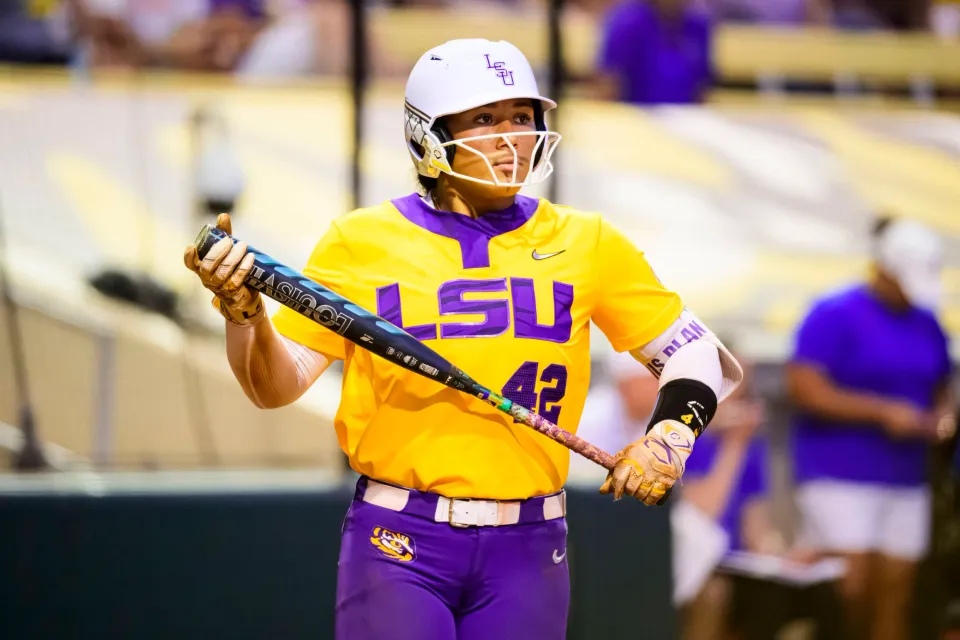
Tori Edwards is a useful reference case – not as the subject of the story, but as an example of what the redshirt year can unlock.
LSU’s own athletics bio and releases document that Edwards returned and produced a historic-level season, earning 2025 SEC Freshman of the Year and major national recognition.
But the more interesting part for the redshirt conversation is what she said about the trap athletes fall into after a breakout year:
"If I chase accolades, I’m just either going to end up being disappointed or trying so hard to force outcomes.” After I swing the bat… the ball’s out of my hands.”
That is exactly the mindset shift coaches want a redshirt year to help create: process over outcome, routine over emotion, team needs over personal narrative.
Why this is becoming a bigger story in modern softball
Softball’s ecosystem is changing fast – more visibility, more NIL upside, more transfer movement, and more pressure earlier in careers. That makes the redshirt year even more relevant because it can protect an athlete from being defined by their first adversity, give coaches a longer runway to develop “college-ready” bodies and routines, and prevent rushed returns that create chronic issues later.
And it reframes what “legacy” means. In the OLF interview, Edwards referenced a message from Coach Torina that lands like a leadership principle: even if accolades never repeat, the career can still be historic.
That’s the redshirt year, at its best, is a pause that sharpens the mission.
Bottom line
The freshman redshirt year isn’t just “missing a season.”
It’s a structured form of development inside an eligibility system that keeps moving either way. For athletes, it can become the year they learn how to handle pressure, failure, and routine. For programs, it’s roster strategy – one that intersects health, compliance, competitive windows, and long-term return on investment.
Or as Edwards put it: sometimes the year you don’t play is the year you learn how to win.