The Battle for the In-Between Shoe
Nike Mind, Crocs Culture, and a New Kind of “Performance” Footwear That Lives Between the Cleats
On a baseball weekend—travel ball, college, pro—it’s rarely the cleats that shape an athlete’s feet.
Cleats are a few hours. The in-between is the rest of the day: the walk from the car, the pregame stretch line, the bullpen-to-dugout shuffle, the hours between games, the postgame cooldown, the hotel hallway, the kitchen, the backyard. That’s where Crocs and foam slides quietly became the default uniform. Comfortable. Easy. Socially acceptable in athlete spaces. And—importantly—habit-forming.
Nike just showed it understands that battlefield.
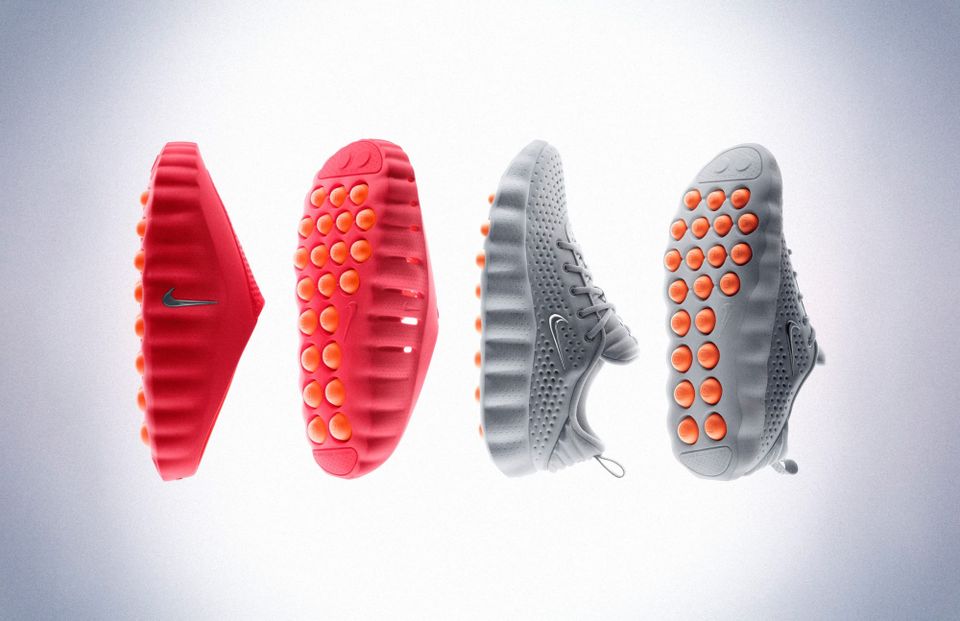
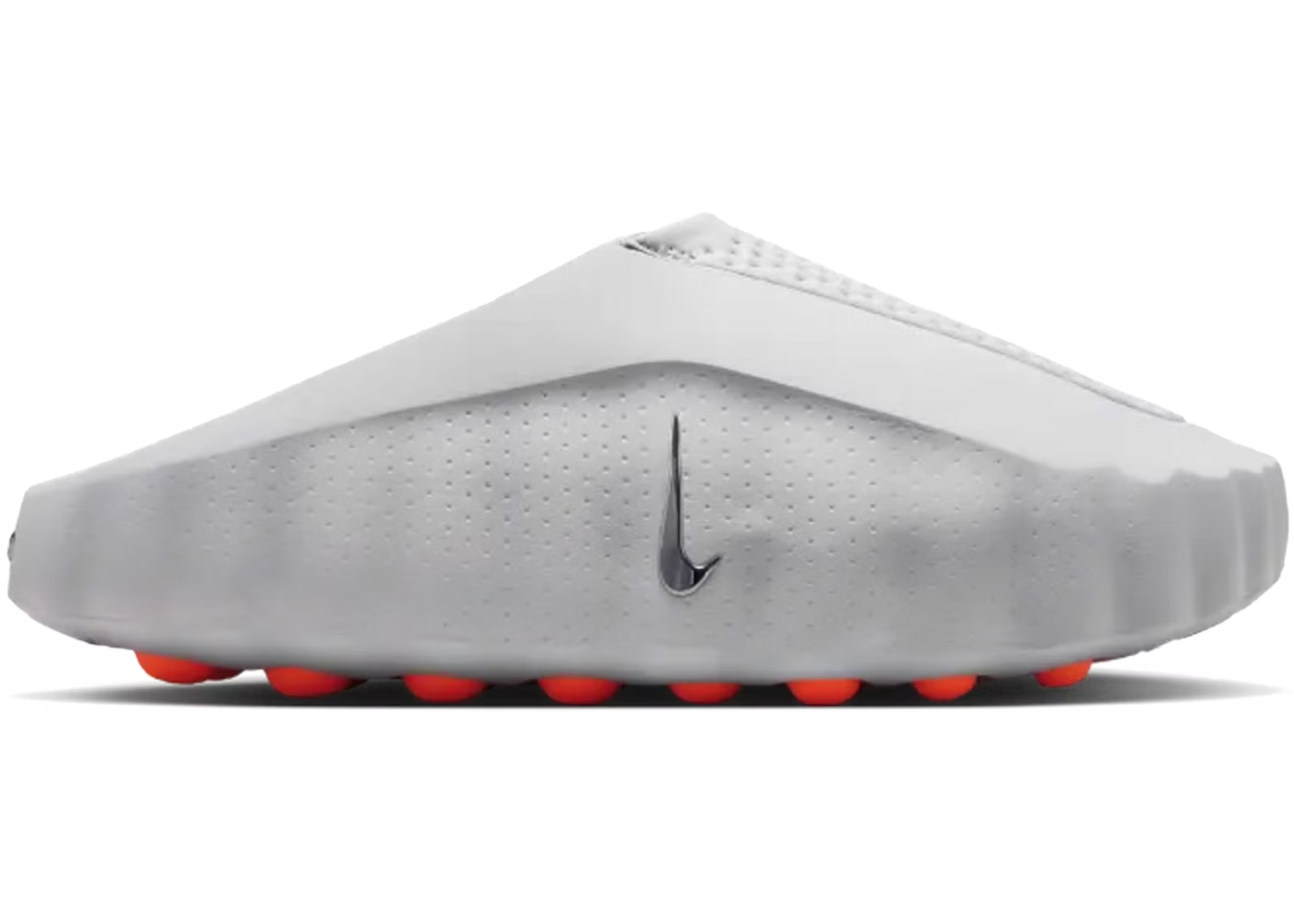
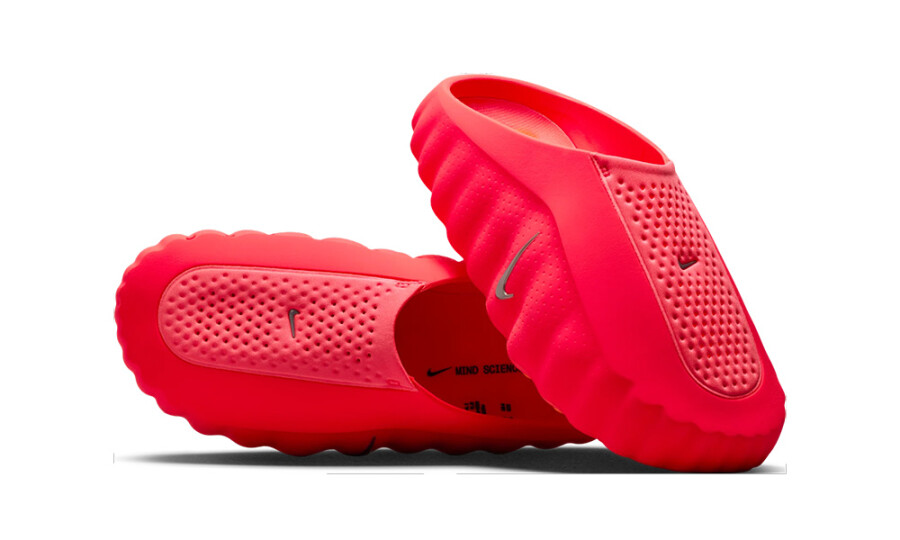
Nike is releasing its first “neuroscience-based” footwear platform—Nike Mind—with two models: Mind 001 (a mule designed as “pregame” footwear) and Mind 002 (a sneaker-like shoe, also positioned for pre- and post-competition). Pricing is straightforward and telling: $95 for the Mind 001 (men’s), $85 for the Mind 001 (women’s), and $145 for the Mind 002 (men’s and women’s).
This isn’t Nike chasing “ugly shoe” aesthetics. It’s Nike doing what Nike does best when it’s on its game: turning an everyday athlete behavior into a performance story—and trying to reclaim cultural territory with a category redefinition.
The deeper question is whether Nike is onto something that matters for athlete development, or whether it’s a premium recovery slip-on wrapped in science language. The answer is likely somewhere in between. But the economics of why Nike made this bet, and why now, are already visible.
1) What Nike Mind actually is (and what Nike is claiming)
Nike’s official framing is specific: this is the debut of the Nike Mind platform, built to “tap into the mind-body connection” by activating sensory receptors in the feet—a product intended to help athletes get into the right mindset pre- and post-competition. Nike describes it as “a complex scientific, engineering and manufacturing technology more than a decade in the making.”
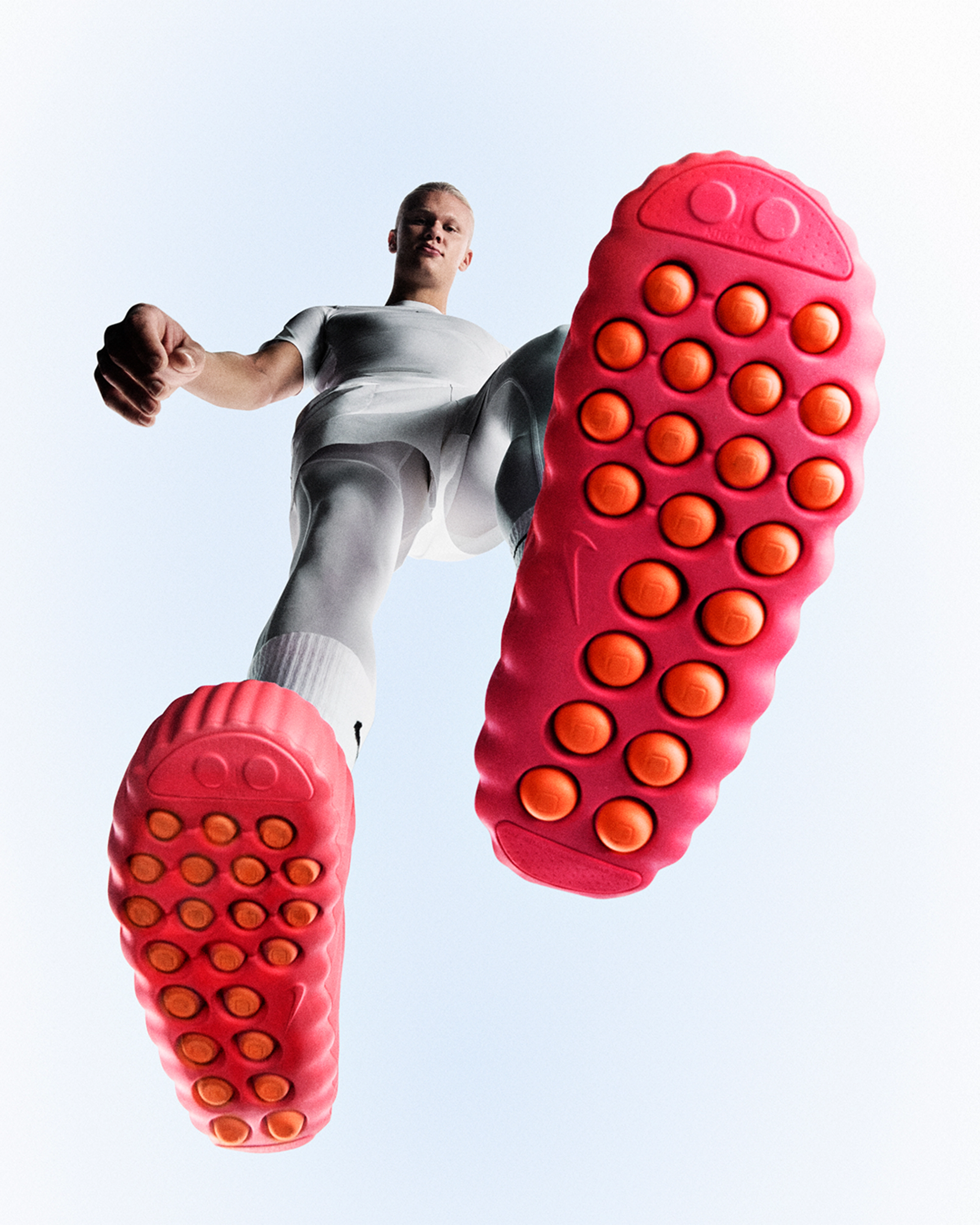
The core hardware concept: 22 anatomically mapped foam nodes embedded in the sole, designed to move independently—described as working like “pistons and gimbals.”
Nike’s story is that these nodes create a distinct sensory experience underfoot—essentially a designed “conversation” between the foot’s sensory system and the brain.
Nike’s product pages and launch copy emphasize that Mind 001 and Mind 002 are meant for pre-game and post-game wear, which is a subtle but important admission: Nike is explicitly targeting the in-between footwear moment, not the workout shoe moment.
Nike’s VP of Innovation, Eric Avar, is quoted in coverage describing the goal as to “reawaken the foot, the body, and the mind.”
The credibility tension
Nike is also making scientific-sounding claims. But there’s a gap right now between “Nike says” and “the public can verify.”
The Verge reported that Nike has not published the data yet, and that a Nike spokesperson said a white paper was coming.
That’s not an indictment—companies often publish later, if at all—but it is the line a serious editorial outlet should draw clearly:
Nike Mind is a product claim in public; the underlying evidence is not yet public.
So we evaluate (a) plausibility, (b) market intent, (c) whether independent research in the broader field supports the mechanism, and (d) what proof would look like.
2) Why Nike is doing this now: the economics and incentives are obvious
Nike is not a brand that launches a new platform because it’s “cool.” It launches platforms when it needs momentum, margin, or a narrative advantage—usually all three.
Nike’s near-term financial backdrop: pressure + reset
In fiscal 2025, Nike reported full-year revenue of $46.3B (down year-over-year), with NIKE Direct down and meaningful pressure across channels.
Nike’s filings and quarterly reporting in that period repeatedly highlight the same themes: discounting, channel mix, and product transitions affecting performance. For example, Nike reported that NIKE Brand footwear revenues decreasedon a currency-neutral basis, driven by both lower unit sales and lower average selling prices tied to discounting and channel mix.
In plain English: Nike has been fighting a modern retail problem—inventory, promotions, and the need to make consumers care again about newness at full price.
And Nike’s leadership messaging has been consistent with a return-to-roots strategy: refocus on core sports and product innovation. Reuters reported Nike’s leadership emphasizing a turnaround effort that includes refocusing around core sports like running and product innovation, while dealing with headwinds like tariffs and weaker China performance.
So, when Nike launches a neuroscience platform positioned as “pregame/postgame” athlete gear, it’s not random. It’s aligned with:
- Narrative reset (Nike as innovation leader again)
- Category expansion (a new premium “mental readiness” footwear use case)
- Margin logic (premium price points, platform differentiation)
- Cultural reclaim (the spaces Crocs/foam mules have dominated)
Why the “in-between shoe” is an attractive battleground
The in-between shoe moment is valuable because it’s:
- high-frequency (worn constantly)
- high-visibility (locker rooms, airports, dugouts, campus)
- emotionally sticky (comfort and routine)
- and historically not a Nike stronghold the way performance sneakers are
If Nike can reframe a slip-on/mule as “mind-body performance equipment,” it can justify premium pricing and reclaim attention in a space where “comfort + identity” has mattered more than “performance.”
That matters because Nike is also in a public battle to prove that innovation still lives at Nike—not just collaborations and retro colorways.
3) Crocs culture isn’t just a meme; it’s a business signal
It’s easy to dismiss Crocs as a trend. But Crocs is a public company with real numbers—and those numbers tell you why Nike would want this territory back.
Crocs has framed itself as a global casual footwear leader, and as recently as 2024 it reported record annual revenue of $4.1B and very strong cash generation, enabling large share repurchases and debt paydown.
More recently, Crocs has also acknowledged pressure—especially in North America—while international has remained stronger. Their Q3 2025 release reported Crocs Brand revenue down year-over-year and HEYDUDE down materially.
And mainstream financial coverage has been asking whether the “ugly shoe” craze is peaking, pointing to softer guidance and more competition under $100.
Here’s what matters for Nike:
Even if Crocs is slowing, the behavior shift it helped normalize—athletes choosing comfort slip-ons as default footwear—doesn’t automatically bounce back to Nike.
Nike needs a reason for athletes to choose Nike in that moment. “It looks cool” isn’t enough anymore. “It’s scientifically designed to help you lock in” might be.
A parallel case study: barefoot culture meets footwear innovation
Nike isn’t the only brand signaling that what happens off the field matters just as much as what happens on it. British footwear maker Vivobarefoot — a leader in minimalist and natural-movement shoes — announced a new collaboration with NFL wide receiver Mack Hollins, aimed at elevating the conversation around natural foot function and movement health.
0:00
/1:06
New England Patriots' WR Mack Hollins announces partnership with Vivobarefoot via Instagram
Unlike Nike Mind’s science-framed “pregame/postgame” performance positioning, the Vivobarefoot partnership leans into foot strength and sensory health by promoting minimalist footwear and the principles of barefoot movement — essentially the opposite side of the same coin. The multi-faceted partnership focuses on education, awareness, and innovation around how modern footwear impacts foot strength and movement, and includes a limited-edition product line inspired by “freedom for your feet.”
This collaboration underscores a broader industry moment: athletes and brands alike are paying attention to what happens off the field — not just in terms of style or comfort, but in how footwear shapes foot health, sensory engagement, and ultimately movement quality. Whether it’s Nike betting on neuroscientific cues to shape pregame readiness or Vivobarefoot advocating for natural motion and foot strength, the “in-between” moments are becoming a strategic battleground for culture, performance, and athlete wellbeing.
4) The neuroscience: is Nike’s mechanism plausible?
Nike’s claim is not “these shoes make you faster.” The claim is more subtle: by manipulating underfoot sensation, Nike says it can influence mind-body state—calm, focus, presence—pre and post competition.
That sounds like marketing until you remember a basic fact:
The foot is an information organ
The plantar surface of the foot is packed with mechanoreceptors (pressure, vibration, texture sensitivity). Those receptors contribute to:
- balance and postural control
- gait adaptation
- proprioceptive feedback loops
- and the body’s sense of where it is in space
There is a legitimate body of research on enhanced plantar sensory stimulation—often via textured insoles or sensory-stimulating footwear devices—affecting measures of balance, sway, and neuromuscular control. A 2025 review of plantar surface stimulation literature, for instance, found evidence that enhanced plantar stimulation can alter muscle activity, with stronger evidence in gait than in standing balance, and outcomes depending on population and stimulus placement.
This is the key: the mechanism is plausible in principle. The question is whether Nike’s implementation is meaningfully better than existing sensory interventions—and whether it matters for healthy athletes, not just clinical populations.
What the academic literature suggests (without overselling it)
A lot of textured insole research comes from populations where sensory feedback is impaired or balance is a fall-risk issue (diabetic neuropathy, older adults, MS, osteoarthritis). That’s not the same as elite athletes. But it does show that the sensory system can be “nudged” by what’s underfoot.
Some examples:
- Studies have found textured insoles can reduce postural sway in quiet standing, suggesting improved stability under certain conditions.
- Research in diabetic neuropathy contexts has explored whether textured insoles improve balance performance; results can be mixed, with some trials showing only weak evidence in favor—important because it warns against hype.
- A PLOS One study investigated whether textured insoles change plantar pressure distribution and framed the concept as passive stimulation of mechanoreceptors affecting gait/balance outcomes.
So the honest takeaway from existing research is:
- sensory stimulation underfoot can matter,
- effects vary by task and population,
- and it’s easy to overclaim.
Nike’s Mind design—22 moving foam nodes, mapped anatomically—could, in theory, create more dynamic and region-specific stimulation than a uniformly textured insole. That’s a plausible “Nike-level engineering” advantage. But until Nike publishes data (or independent labs replicate outcomes), it remains a hypothesis.
5) Athlete development: the real question Nike is accidentally raising
Even if Nike Mind ends up being more “premium comfort” than “neuroscience breakthrough,” it’s still pointing at a development issue that athlete culture has largely ignored:
What happens when athletes live in shoes that reduce demand?
Athletes are not just training their muscles—they’re training their nervous system’s relationship to the ground. The foot is the first interface with force production, movement variability, balance, and stabilization patterns that ripple up the chain.
When the default off-field footwear becomes:
- extremely soft
- extremely stable
- extremely easy
- and extremely repetitive
…you can reasonably wonder whether you’re shrinking an athlete’s daily “sensory diet.”
This doesn’t mean slides “ruin feet.” It means the environment is important. If the foot gets less varied sensory input and fewer demands, some athletes may adapt by:
- relying more on passive structures
- losing subtle foot intrinsic engagement
- moving with less variability
- and building compensations that show up later as altered mechanics upstream
This is where Nike’s positioning is interesting: the product is “pregame/postgame” and explicitly not a training shoe. Nike is implicitly saying the moment between training and competition is worth engineering.
For baseball and softball—where cleats come off constantly—this matters more than most sports. The daily routine of changing footwear isn’t occasional; it’s structural to the sport.
6) The business strategy: Nike Mind is a category play, not just a shoe drop
Nike Mind can be read as a product. Or it can be read as a platform meant to do four things at once:
A) Create a premium “mental readiness” lane
“Mental performance” has become mainstream: wearables track recovery, sleep, strain, and readiness. Nike is attempting to claim a physical product lane in that same conversation, with footwear as the delivery mechanism.
B) Own the travel/locker room/dugout moment
If Nike can win the in-between shoe moment, it wins visibility:
- athletes in airports
- athletes on campus
- athletes in training facilities
- athletes on sideline/bullpen/dugout days
That visibility is not trivial. It shapes the next generation’s default.
C) Differentiate from “comfort competitors” without copying them
Crocs won because it didn’t try to be a performance shoe. It became a culture shoe. Nike’s move is to make the category performance-adjacent again—without being a “running shoe.”
D) Reinforce the corporate story Nike needs right now: innovation
Nike’s filings show footwear ASP pressure from discounting and channel mix.
A truly differentiated platform helps defend price, defend margins, and defend brand equity. Even if Mind is small in revenue terms today, it can be large in narrative and halo terms—especially during a turnaround era focused on sport and innovation.
7) How we should evaluate Nike Mind
If Nike releases its promised white paper, here’s what would separate real innovation from branded comfort:
- Clear outcome measures
Not “athletes felt calmer.” That’s fine, but not enough. Look for measurable changes:
- balance sway metrics
- gait variability measures
- reaction time or movement efficiency proxies
- neuromuscular activation patterns
- repeatable effects across populations
- Study design transparency
Randomization, controls (placebo-like footwear), and reporting of effect sizes. - Population relevance
Clinical populations are useful, but athletes matter here. If the product is “pregame/postgame,” test it around sport contexts. - Dose-response logic
Do effects require minutes? Weeks? Does adaptation blunt the stimulus over time?
The broader literature warns that sensory interventions can have variable outcomes, dependent on stimulus placement, task complexity, and population.
Nike must show its design is not just “interesting”—but meaningfully effective.
8) The historical marker: why this launch matters even if it’s imperfect
Most footwear history gets written backwards—after the product proves itself.
Nike Mind is worth documenting at the start because it’s a clear signal of where Nike thinks sport is going:
- from output → to regulation
- from “train harder” → to “arrive ready”
- from “performance shoe” → to “performance state”
Nike’s newsroom language calls this the debut of a new platform and explicitly frames Mind 001 and 002 as the first neuroscience-based footwear in Nike’s lineup.
That matters, because if this category grows, we’ll look back at this moment as the start of a “pregame/postgame neuroscience shoe” era—whether Nike dominates it or not.
And if Nike is right, coaches and athlete developers will eventually talk about “footwear hygiene” the way they now talk about sleep hygiene: not as a moral judgment, but as a performance environment choice.
9) The Business of Ball conclusion: the in-between is the new frontier
Nike didn’t launch Nike Mind to win a press cycle. It launched it to win territory.
The in-between footwear moment is:
- where athlete culture lives,
- where habits get built,
- where foot sensory environments get shaped,
- and where competitors like Crocs turned comfort into identity.
Nike’s response is classic Nike: don’t fight Crocs on vibes—fight it on performance narrative and platform differentiation.
But the editorial stance stays disciplined:
- The mechanism is plausible, and supported in broad strokes by research showing plantar sensory stimulation can influence balance and neuromuscular control in certain contexts.
- The specific Nike Mind claims are not yet fully verifiable publicly, and Nike has indicated more evidence is forthcoming.
- The economic incentive is clear: Nike has been navigating pressure tied to discounting, product mix, and turnaround messaging, and innovation platforms help restore pricing power and brand authority.
The biggest reason this matters for baseball and softball isn’t whether these shoes become a trend. It’s the question they surface:
What are athletes doing to their feet—and their nervous system—during the thousands of hours when they aren’t wearing cleats?
Nike Mind might be an early answer. Or it might be the first loud attempt to claim a space that Nike has quietly been losing.
Either way, the in-between shoe is no longer just comfort. It’s a strategic category—and Nike just showed its hand.
Sources & References
Nike Mind launch & product claims
- Nike — Nike Mind platform launch materials and product pages (January 2026).
- The Verge — Coverage of Nike Mind launch, including description of 22 independently moving foam nodes and Nike’s indication that supporting research/white paper is forthcoming.
- Nike leadership commentary via The Verge, including quotes from Nike VP of Innovation Eric Avar on the intent to “reawaken the foot, the body, and the mind.”
Nike financial context & business strategy
- U.S. Securities and Exchange Commission — Nike Form 10-K and quarterly filings (FY2025), including disclosures on footwear revenue pressure, discounting, channel mix, and NIKE Direct performance.
- Reuters — Reporting on Nike’s turnaround efforts, refocus on core sports and innovation, and broader macro pressures including China and tariffs.
Crocs & comfort-first footwear market
- Crocs — Investor presentations and earnings releases (2024–2025), including reported record revenue, subsequent brand pressure, and international vs. North America performance.
- Barron's — Coverage examining whether the “ugly shoe” trend is peaking and increased competition in sub-$100 footwear categories.
Parallel case study: minimalist footwear
- Vivobarefoot — Company statements and partnership framing around foot health, natural movement, and minimalist design philosophy.
- Mack Hollins — Partnership announcement with Vivobarefoot highlighting athlete advocacy for foot function and off-field footwear awareness.
- FashionNetwork.com — Reporting on the Vivobarefoot x Mack Hollins collaboration and its focus on education, innovation, and movement health.
Neuroscience & plantar sensory research
- ScienceDirect — Reviews and studies on plantar surface stimulation, mechanoreceptors, gait variability, muscle activation, and balance outcomes.
- PubMed — Peer-reviewed research on textured insoles, plantar sensory feedback, and neuromuscular control, including mixed results across populations.
- PLOS — Studies examining plantar pressure distribution and passive sensory stimulation effects.
- PubMed Central — Open-access literature on balance, postural sway, and sensory input interventions.
Editorial note
Where Nike Mind-specific performance outcomes are discussed, claims are evaluated based on publicly available information as of publication. Nike has indicated that additional supporting research will be released in a forthcoming white paper; conclusions in this article reflect current evidence, broader scientific literature, and market context rather than unpublished proprietary data.