
LSU Baseball’s Women’s Clinic Is a Masterclass in Community Marketing
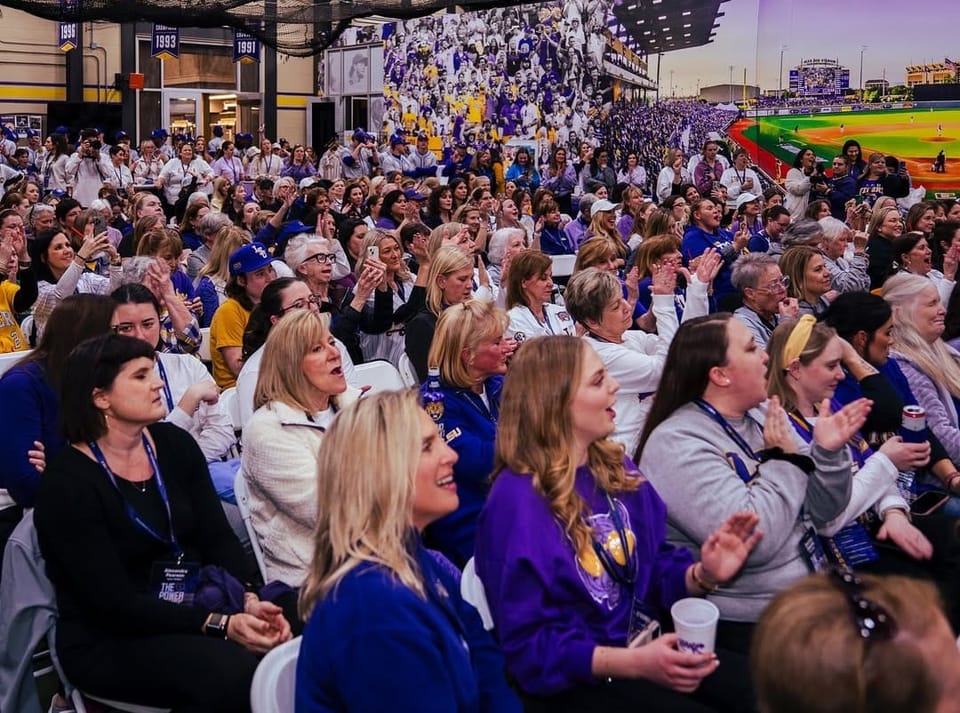
Last night at LSU Baseball, something subtle but powerful happened inside Alex Box Stadium.
But It wasn’t a game or a trophy presentation. And it wasn’t a recruit visit or a donor dinner.
It was a brand activation — the kind most programs talk about but few actually execute with intention.
Or execute well.
LSU Baseball hosted its second annual Women's Clinic that gave roughly 250 women something almost no fan base ever gets: a real, tactile, inside-the-lines baseball experience. Not from the stands. Not through a giveaway. But on the field, station by station, role by role, learning what it actually means to be an LSU baseball player.
And as someone who has worn that uniform, pitched on that mound, and now studies sports through a business and brand lens, I sat back thinking: this is genius.
LSU Is a Billion-Dollar Brand — and It Acts Like One
Let’s call it what it is. LSU athletics isn’t just successful — it’s a billion-dollar sports brand when you factor in revenue, media rights, donor ecosystem, NIL infrastructure, and cultural gravity.
But what separates elite brands from merely wealthy ones is how they engage their most loyal communities.
Great brands don’t just broadcast. They invite.
Under Jay Johnson, LSU Baseball has leaned fully into micro-communities — not in a gimmicky way, but in a thoughtful, strategic one. This event wasn’t designed for mass reach. It was designed for depth.
Women who love LSU Baseball didn’t just watch it last night.
They felt it.
They rotated through stations. They learned the discipline. They saw the craft.
They understood the routines, the preparation, the details that separate college baseball from everything below it.
And they got to do it with the players, who turned it on for the ladies, for sure (as they should).
That’s how loyalty compounds.
This Wasn’t a Photo Op — It Was an Experience
Importantly, this wasn’t a single-host show or a surface-level activation.
Yes, Abby Alonzo served as the MC — and she was phenomenal — but this night belonged to LSU Baseball as an organization.
The coaches. The players. The players’ wives. The staff.
Everyone participated.
The women who walked onto that field didn’t feel like guests — they felt like insiders. And when Jay Johnson wrapped up the night joking that he now expects to hear them heckling umpires at games, that wasn’t just humor.
That was ownership.
0:00
/0:16
Jay Johnson closes out the 2026 LSU Baseball Women's Clinic
Why This Matters From a Marketing Perspective
Here’s the part most programs miss: brand equity isn’t built through impressions — it’s built through identification.
One of the most quietly brilliant parts of the night wasn’t on the field at all — it was around it.
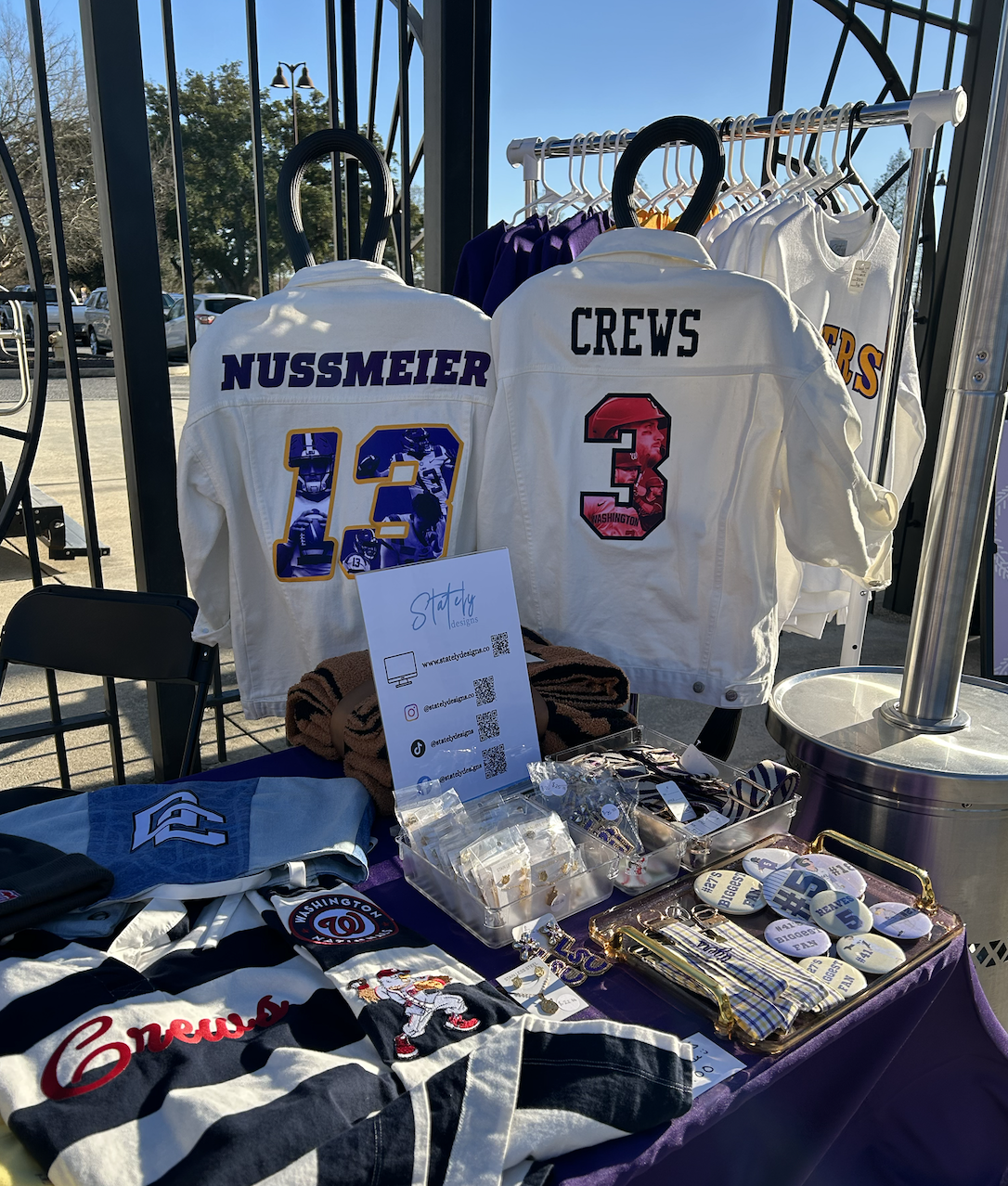
LSU didn’t just invite women into the experience; they curated the ecosystem around it. Roughly six boutique brands were set up, each offering custom women’s LSU pieces — hats, jewelry, apparel, purses — the kinds of products fans actually want to wear, not just collect.
By integrating local and boutique vendors into the event, LSU Baseball turned fandom into lifestyle — and community into commerce. That’s an important distinction. Big brands don’t just sell logos; they create platforms where culture, creativity, and connection coexist.
One standout was Stately Designs, owned by Carly Illane — the designer behind Abby Alonzo’s MC look for the night. Illane’s work is deeply embedded in the athlete ecosystem, regularly designing custom pieces for professional athletes’ families, including those connected to Dylan Crews and his fiancée Jane Carson. That kind of crossover plays in a community like LSU.
Because when fans see brands trusted by players, families, and inner circles, credibility transfers instantly.
From a marketing standpoint, this does three things exceptionally well:
- It supports women-owned and LSU-adjacent businesses, strengthening local brand equity
- It creates natural NIL and partnership pathways without forcing sponsorship language
- It reframes LSU Baseball as a cultural hub, not just a team
This is how modern sports brands expand without overextending. You don’t just host an event — you host a marketplace of belonging.
And when fans leave with both memories and pieces that let them carry that identity into their daily lives, the brand doesn’t end when they walk out of the stadium.
It follows them.
Last night created deeper emotional attachment, stronger word-of-mouth marketing, social amplification that feels organic, and a sense of “this is our program."
Women don’t need pink hats or surface-level acknowledgment. They want access, respect, and understanding — and LSU Baseball delivered exactly that.
This is the same philosophy LSU Football tapped into years ago when they invited women onto the field to wear pads and experience the game firsthand. The template works because it’s rooted in authenticity.
And authenticity scales.
LSU Baseball Is Still the Mecca
After a national championship, programs can easily get distracted. They can ride the high, sell the merch, reap the benefits of increased season ticket holders and prep for Opening Day.
LSU Baseball did the opposite.
They doubled down on community. They invested in experience. They expanded their base without diluting their identity.
That’s how dynasties are built — not just on wins, but on belonging, and being part of something bigger.
Skip Bertman started it in the 80’s by going to door to door and to schools to invite families out to the park. He incentivized them with ticket and food packages that made them come to games and produced a winning team and electric environment.
And by the 90’s, LSU Baseball fans felt like they were part of building something.
I see Jay Johnson doing the same things in his own way, and it all continues to make me proud to be an alumni.
College baseball has plenty of North Stars. LSU remains one of them, not because of tradition alone, but because they continue to set the precedent for what modern, intentional, community-driven sports brands should look like.
Last night wasn’t just a fun event. It was a case study.
And once again, LSU Baseball showed the rest of the country how it’s done.