How DJ LeMahieu & Anthony Ranaudo Are Building a Pro-Style Training Environment in Michigan
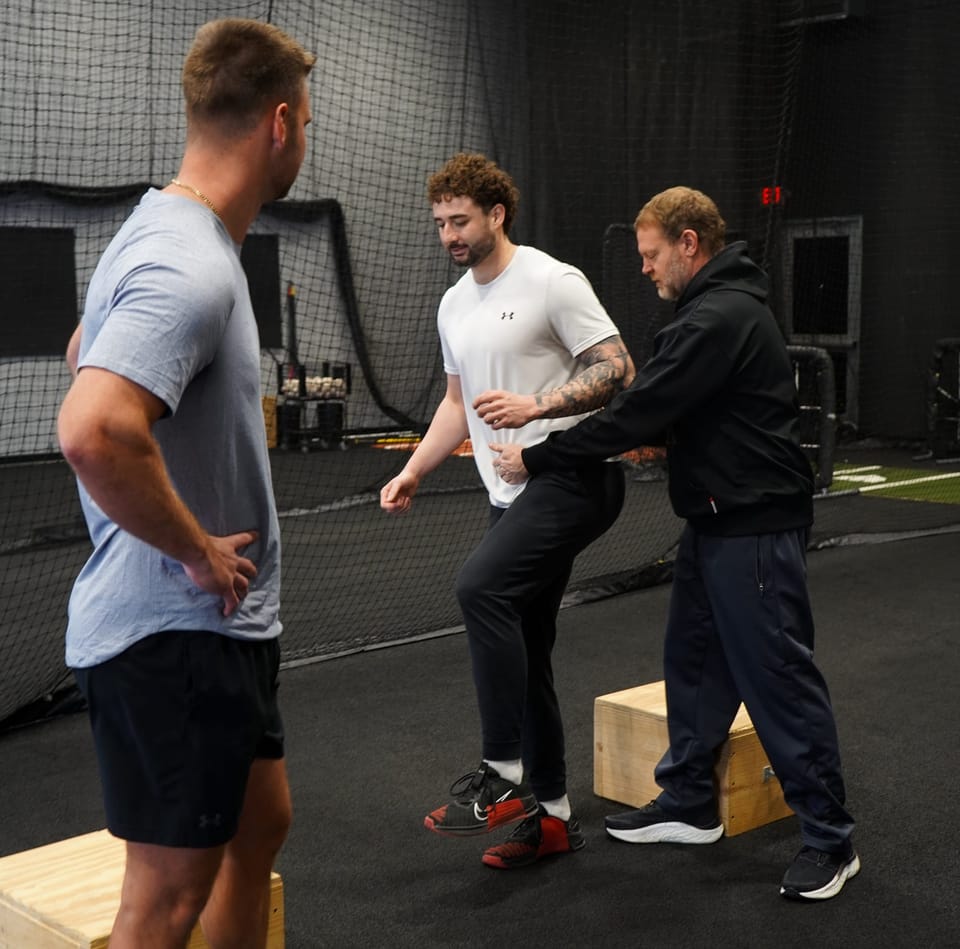
For most players, development happens in silos. High school guys train with high school guys. College players stay in their lanes. Pros disappear into private facilities or spring complexes.
At Stevens Complex, that separation is intentionality broken.
Built with the input of former Major League players DJ LeMahieu and Anthony Ranaudo, Stevens isn’t just a training space — it’s a development ecosystem shaped by people who’ve lived the full professional arc of the game.
And the result is something rare in amateur baseball: an environment where shared experience becomes a resource.
From “The Show” to Stevens
LeMahieu and Ranaudo both came up in professional systems that demanded more than raw ability. They learned how preparation, routine, and accountability separate players who last from those who don’t.
Now, that same knowledge — and many of those same resources — are being applied at Stevens.
Not through branding or slogans, but through personnel.
The goal isn’t to recreate pro ball; it’s to expose players to pro standards earlier, without stripping away individuality.
Why Training Together Accelerates Development
One of the clearest examples of Stevens’ model comes from pitcher Derrick Edington.
A native of Michigan’s Upper Peninsula, Edington developed under pitching coach Mike Steele before earning a spot in the Tampa Bay Rays organization.
Now, when he trains at Stevens, he does so alongside other professionals, college pitchers, and high-level amateurs — not in isolation.
That proximity is game-changing. Literally.
Instead of guessing what “next-level” looks like, younger players see it daily. How pros warm up. How they structure throwing programs. How they recover. How they talk through failure.
The learning is organic and constant. And it resembles MLB environments, where more and more younger players are reaching Big League clubhouses earlier.
Coaching as an Asset, Not a Product
At the center of Stevens’ pitching development is Mike Steele, whose career path mirrors the complexity of modern baseball.
Steele pitched professionally, coached at the college level, and spent years inside Major League organizations. That background informs how he works now — blending modern data with old-school accountability.
He isn’t teaching one system.
He’s teaching problem solving.
Steele’s value is mechanical AND contextual.
He understands how a pitcher’s background, injury history, mental state, and role all intersect — because he’s lived it.
That’s the difference between instruction and development.
Experience You Can’t Replicate With Tech Alone
The same philosophy applies to former big leaguers like Paul Fry, who train and work within the facility.
Sure, technology and metrics matter. But experience still fills gaps data can’t.
For players, access to those voices reshapes expectations.
For the facility, it builds credibility that can’t be marketed — only earned.
Proof in the Outcomes
Pitcher Trey Braithwaite knows that impact personally.
Drafted by the Reds and later playing independent ball with the Chicago Dogs, Braithwaite trained at Stevens during a pivotal stretch of his career.
For players like Braithwaite, Stevens wasn’t JUST about reinventing mechanics.
It was about refining habits, sharpening intent, and understanding what sustained careers actually require.
The Business of Shared Development
From a business standpoint, Stevens’ advantage is simple but rare: integration.
Instead of separating players by level, the complex leverages shared space, shared knowledge and shared standards.
That creates efficiency, accelerates learning curves, and builds trust — not just between players and coaches, but between athletes and the facility itself.
In an era where youth baseball often over-indexes on specialization and isolation, Stevens is betting on something different: that development works better when experience is visible — and shared.
And for the players walking through its doors, that might be the most valuable resource of all.