Bob Riker and Brother Rice: Building a Legacy
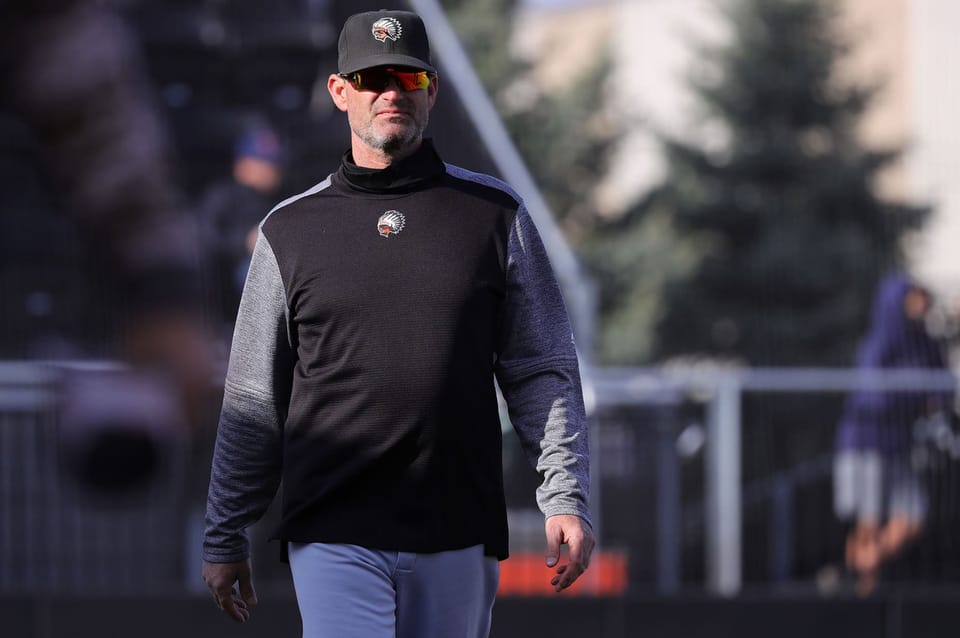
There are certain moments in baseball that don’t feel like much when they happen.
That’s how this story begins.
Bob Riker sits across from Tom LeMahieu, talking about an eighth-grade boy named DJ — a good player, a serious kid, the kind of athlete you can tell is wired a little differently. The conversation is simple on the surface: where to go to high school. Is it a good fit? What are the expectations?
But behind Bob’s eyes, something else is happening. Because Bob Riker doesn’t hear “eighth grader” and think about next spring.
He thinks about what a program can become if it’s built the right way — not for a season, but for decades.
Not just for wins, but for people. Not for the attention of the moment, but for the quiet, compounding force of standards.
Little did he know that conversation would turn into a 30-year arc — one that would eventually loop DJ LeMahieu back into the very place that helped shape him, and ignite Bob’s original vision with gasoline.
Because what Brother Rice Baseball has become isn’t an accident.
It’s the product of a man who has been showing up, daily, for nearly four decades — and treating baseball like the most honest classroom a young man will ever sit in.
Bob Riker on The Up and In Show with Anthony Ranaudo
Bob Riker Never Wanted to Coach
Bob says it plainly: he never wanted to teach, never wanted to coach.
He was a public school kid who ended up at an all-boys Catholic school almost against his will — and his mother made sure he stayed. The image is too perfect not to be true: young Bob walking in the door after another hard day, and a box of Kleenex getting tossed at his head.
Not cruel, just direct.
“You’re going to be there for four years and don’t even think about flunking out.”
That’s the through-line of everything Bob built later: love with spine. Care with expectation. Belief with consequence.
And Bob will tell you something that matters if you’re a parent deciding where to invest your son’s most formative years:
He didn’t appreciate Brother Rice at first.
He understood it later.
When he got to Central Michigan and realized he was more prepared than almost everyone around him — not just as a player, but as a human being who could handle hard days, uncomfortable rooms, and adult responsibility.
That’s when the education clicked.
Not the academics — the formation.
The Real Competitive Advantage: Standards
A lot of coaches talk about “culture.” Most don’t know how to build it.
Bob does, because he came up under men who didn’t confuse being liked with being respected. He references his teachers and coaches the way players talk about the people who saved them — because in a lot of ways, that’s what the best coaches do. They keep you from becoming the “lesser version” of yourself.
He names them like family: Coach Al Fracassa, Eddie Giacomin, Brother Mac, Mike Popson. The tough-love teachers who were hard on you precisely because life was going to be harder later.
And then Bob says what more coaches need to have the courage to say out loud:
“Don’t be their buddy.”
Not because kids don’t deserve warmth — they do. But because leadership isn’t affection. Leadership is guidance. It’s a willingness to be disliked in the short term so someone can be stronger in the long term.
Bob’s blueprint is simple and brutal:
- Do the right thing (even when it’s the harder thing)
- Work hard (not dumb — but hard)
- Consequences for every action
- Listen to players, even when you don’t agree
- Put the team ahead of self, every day
This is why Brother Rice doesn’t just win games.
It produces men.
And it’s why the “Brother Rice network” is real — you can feel it the moment you step into the ecosystem. I’ve lived in elite baseball cultures. LSU has a tradition that’s almost mythological. Fenway Park is pretty historic and has its own tradition, and history. And I’m telling you, as someone who just moved to Michigan and walked into this world with fresh eyes: This place has something.
Not hype. Not marketing gloss.
Something built.
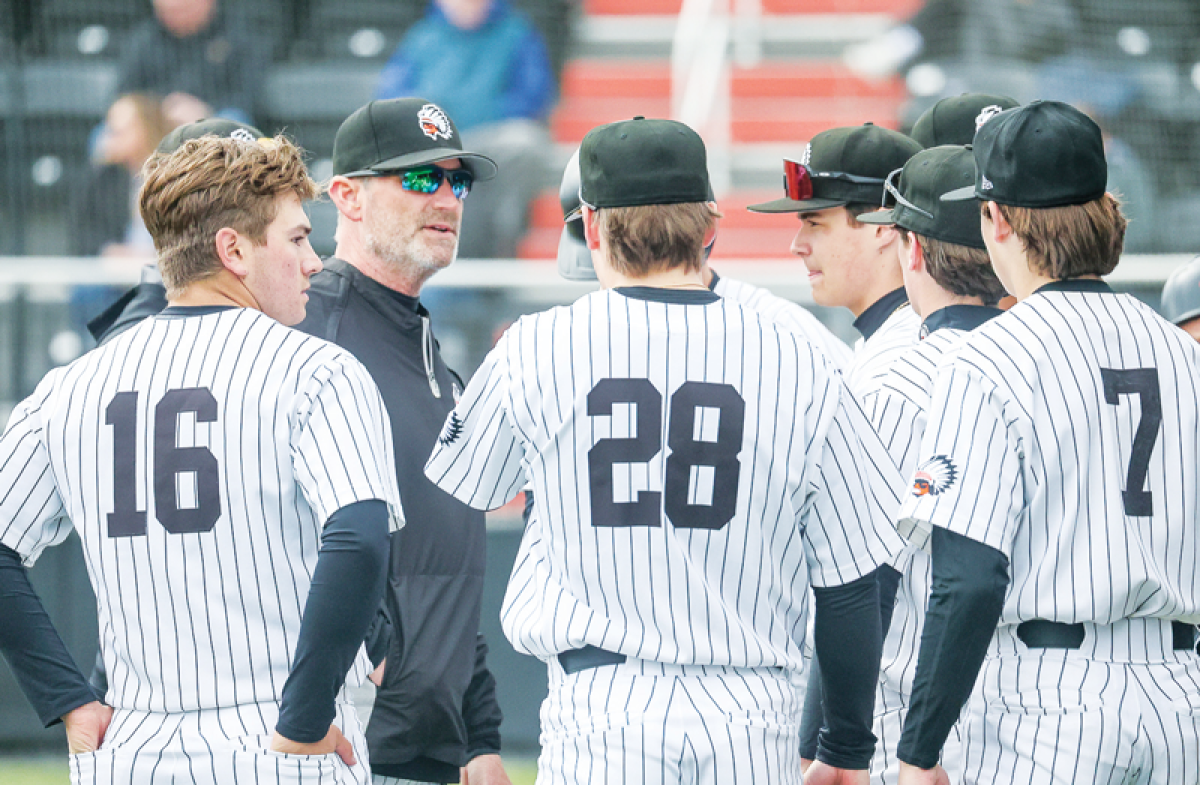
The Coaching Origin Story: “It’s Your Time to Give Back.”
Bob’s coaching career started the way a lot of meaningful things start: reluctantly.
After he got released from pro ball — a Tigers organization that literally handed him a $1,000 check and a roadmap to Bristol, Virginia — he did what most players do when the game stops calling every day.
He went back to the place that raised him.
He walked into Brother Rice to see his old coach, Ron Kal (Kalcynski), to say thank you.
Ron’s response?
“You want to coach with me?”
Bob said no.
Then he thought about it and came back to Ron and said yes.
And that “yes” turned into eight years as an assistant — and then the turning point that shaped the next 30:
After a season ended, Ron told him he was done coaching so he could go watch his sons play at Michigan and Michigan State.
Bob said: I’m done too.
Ron looked at him and basically said: no, you’re not.
The AD is on board. You’re teaching biology in Popson’s room. It’s already handled.
And then Ron gave him the line that should be framed above every youth and high school program in America:
“Listen… it’s your time to give back.”
Bob says he thinks about that every time he pulls into the complex.
That’s not nostalgia.
That’s operating system.
Why Brother Rice Became a Powerhouse
If you want the “resume” version, it’s all there:
- 38 seasons
- 700+ wins
- 80% winning percentage
- 120+ college players (many D1)
- Multiple MLB players
- Titles, awards, decorated history
But if you want the real reason — it’s this:
Bob never built Brother Rice around entitlement.
He built it around earning.
He tells the story of taking over as head coach and cutting older players — not out of cruelty, but clarity. He carried 11 varsity players on season. He kept freshmen when nobody kept freshmen. He played the best players immediately and refused to apologize for it.
When other coaches confronted him — “You can’t do that” — he said something every serious operator in any industry understands:
You run your program. I’ll run mine.
That decision didn’t just win games.
It sent a message to every young player in the region:
If you can play, you’ll play here.
If you can work, you’ll grow here.
If you want comfort, don’t come.
That’s how pipelines get built.
Not by Instagram. Not by travel ball politics.
By reputation.
And Bob’s “recruiters,” as he puts it, have always been his players — because when they leave, they leave better.
The Michigan Operations Thread: DJ as an Accelerator, Not a Replacement
Here’s the part people miss when they tell the Brother Rice story.
They think it’s “Brother Rice.” Period.
It’s not.
Brother Rice is the nucleus — but the bigger vision is Michigan baseball as an ecosystem. Metro Detroit as a development hub. The Midwest as a place where elite players don’t have to leave home to become elite.
Bob Riker had that vision before it was fashionable.
And DJ LeMahieu stepping back into the orbit doesn’t change the blueprint — it amplifies it.
DJ didn’t create the standard. He grew up inside it.
Now he’s pouring resources, professional perspective, and operational energy into accelerating what was already built — and it shows in the way the facility operates, the way players are developed, and the way the community is being assembled around something bigger than one roster.
This is what sustainable baseball development looks like:
- A program with identity (Brother Rice)
- A facility with infrastructure (The Stevens Complex)
- A youth pipeline (Warrior baseball)
- A professional bridge (DJ’s presence and credibility)
- A leadership spine (Bob’s standard)
- A community that trusts it (word-of-mouth over noise)
That’s not “baseball stuff.”
That’s a model.
Warriors Baseball: The Part That Makes This Whole Thing Real
If you want proof that culture is real, it’s not in the wins.
It’s in what people are willing to invest into.
Bob tells a story that should honestly be studied by every school administrator and every sports business person trying to “raise money” the wrong way.
One year, a man named Derek Stevens calls him around Christmas. A stranger who says he has a foundation and wants to donate to the program.
Bob thinks it’s for uniforms.
Derek says: I was thinking $50,000.
Bob assumes it’s a prank.
Then the real conversation begins: what do you want to build?
Bob’s answer is the most important line in the entire interview:
“A place where kids would come and they’d never want to leave once they were here.”
That’s it. That’s the vision.
And from that seed — with other believers stepping in, with money and real accountability — Warriors baseball is born. Not as a money grab. Not as an ego project.
As a pipeline.
Today it’s dozens of teams, ages eight through seventeen, and it’s an example of what happens when you do right by people and stop trying to sell them.
Bob says it plainly:
"If you treat people right — stuff comes back tenfold."
That’s business and band, too.
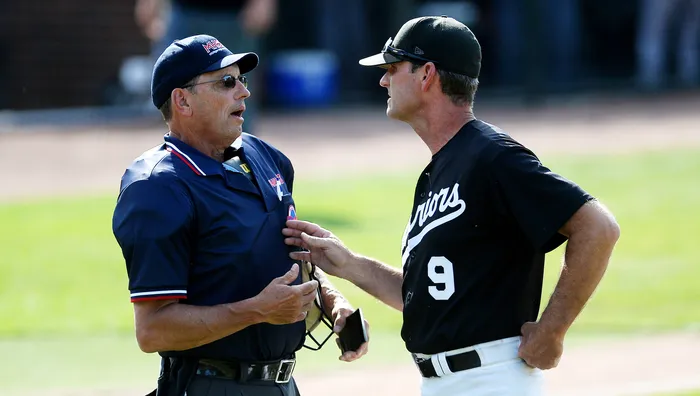
“I’ve Never Sold My Soul to Anybody Except My Players.”
This is where the article stops being about baseball.
Because Bob drops a line that doesn’t belong in a coaching clinic — it belongs in a life philosophy.
“I can truly say I’ve never sold my soul to anybody except my players.”
That sentence explains why people trust him. Why alumni come back. Why the program has longevity. Why even now, at nearly 60, he’s still connected and still hungry to do it right.
He doesn’t say he coaches to win. He says he coaches to develop.
And that’s why the wins take care of themselves.
The Real Legacy: Leave It Better Than You Found It
Bob keeps a sign in the locker room that his players’ moms created after a 43–2 season.
It reads: Leave it better than you found it.
That’s not a slogan for him. It’s a measurement.
And I’ll say this from my seat — as someone who’s been in elite baseball environments, who’s been around programs that claim tradition, who’s seen the difference between branding and substance:
Bob Riker has done it.
He’s left it better.
And now, with DJ’s involvement accelerating the infrastructure, with the facility becoming a true development hub, and with the Michigan operations vision evolving into something scalable, this isn’t just about a powerhouse high school anymore.
It’s about a region deciding it’s done outsourcing its talent.
It’s about Detroit-area baseball building something that lasts.
It’s about a standard that started with one coach, one conversation, and a long obedience in the same direction.
That’s what you’re feeling when you walk into Brother Rice and the Stevens Complex.
Not just a program.
A place you don’t want to leave.
And if you’re a parent, a player, or a coach wondering what matters most — not just for next season, but for the next 20 years of a young man’s life — the answer is sitting in plain sight:
Find the places that don’t let you get comfortable.
Find the places that teach truth and accountability.
Find the places that expect more of you because they believe more is in you.
That’s what Bob built. DJ didn’t replace it. He poured fuel on it.
And Michigan baseball is better for it.